A national climate assessment released on September 3 reveals that Canada’s coastline is being affected by rising ocean temperatures driven by human-caused greenhouse gas emissions.
Canada’s Changing Climate Report 2026, an update on the previous report published in 2019, is a scientific assessment of the past and future changes in Canada’s climate system.
The report shows that the global average sea surface temperature (SST) has increased by 0.88ºC since 1900, and it’s projected to rise through the 21st century.
The largest annual temperature increase is projected for oceans around Atlantic Canada and British Columbia, with Hudson Bay and the Beaufort Sea projected to see higher temperatures during the summer.
“The warming oceans have definitely changed a lot of what’s in [it]. We’re getting invasive species, [an] increasing number of whales and seals that have been found dead on beaches and some of our fish are decreasing,” said Dr. Judith Sayers, president of the Nuu-Chan-nulth Tribal Council. “We’re talking about fish which are so essential to the culture and lifestyle of the Nuu-Chah-Nulth that’s really critical to us.”
The ocean can absorb large amounts of carbon dioxide from the atmosphere, but too much absorption is increasing acidity in Canada’s sea water.
Sea creatures require an environment that isn’t very acidic. As carbon dioxide continues to dissolve into the ocean, pH drops and sea water becomes more acidic, making it harder for marine fauna to survive.
Under the surface, deoxygenation—the decline in oxygen content of ocean and coastal waters—has been observed across the Canadian coasts. Deoxygenation negatively impacts marine life by reducing habitat quality, slowing growth, interfering with reproduction, and increasing disease susceptibility.
While the causes of deoxygenation vary by region, the Pacific and Arctic oceans are expected to have higher acidity and lower oxygen levels in the future.
The ocean’s surface has become fresher off the coast of British Columbia and southern Atlantic Canada since the mid-20th century, while the deep water of the Gulf of St. Lawrence has become saltier because of the increase of subtropical water. This phenomenon hinders the transport of heat, carbon, oxygen, and nutrients between the surface and deeper ocean, which are essential to the marine ecosystem.
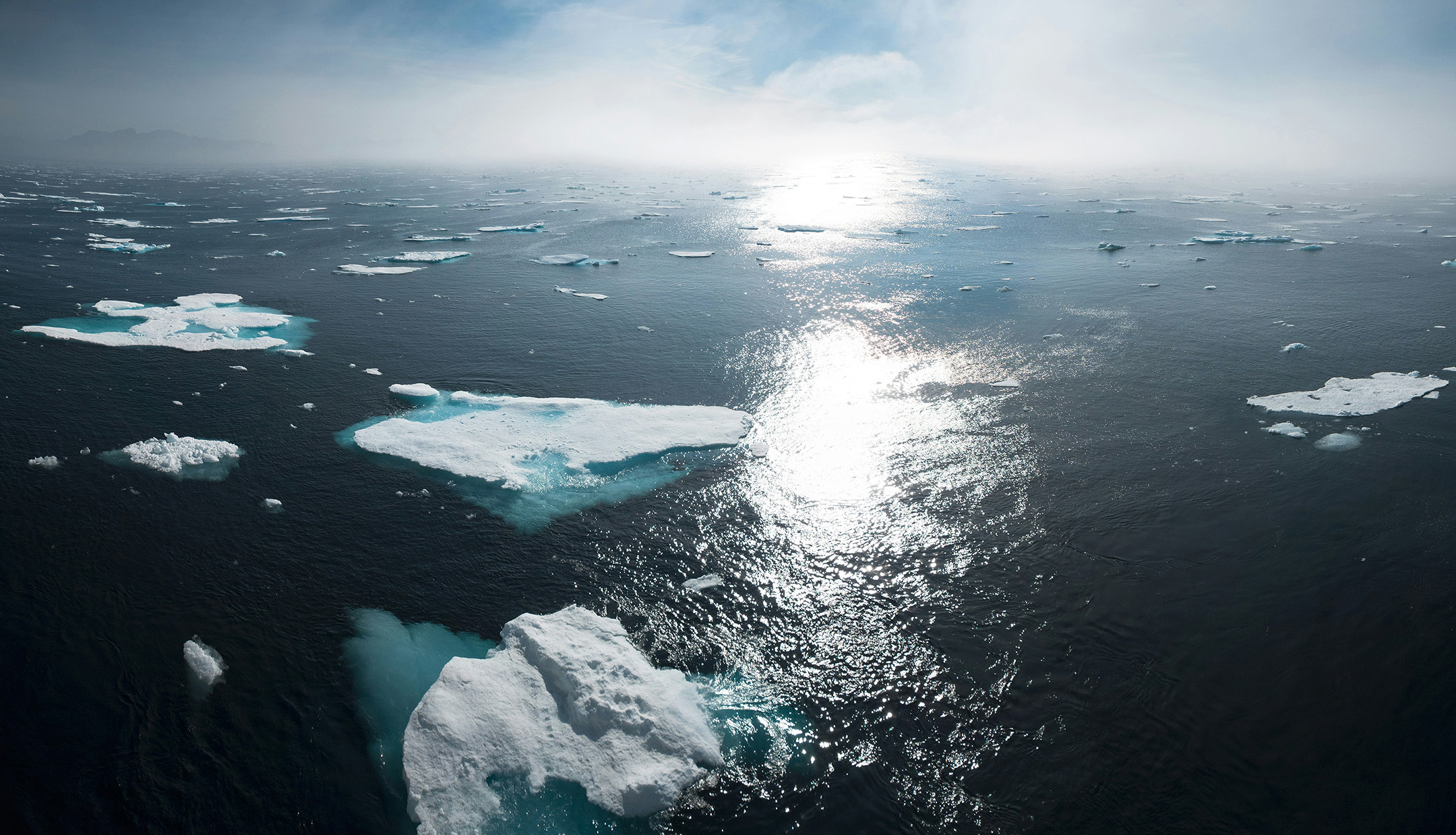
Sea level rise across Canada’s coastline, mainly caused by warming oceans and melting ice, depends on how much the local land is moving up or down. Sea level in Atlantic Canada has risen more than 30 cm per over the past century in Halifax, with a smaller increase in British Columbia. In Churchill, Manitoba, on Hudson Bay, local sea level actually fell nearly 100 cm this century because the land continues to rise.
While global sea level won’t rise much higher than a meter, sea levels are expected to rise faster in parts of Atlantic Canada and the western Arctic because the land is sinking. Rising sea level is a major concern for coastal communities, as buildings and areas could face flooding or severe storms that cause property damage.
Since the 1980s, marine heatwaves—similar to land heatwaves, where they involve
extended periods of unusually high temperature—have doubled in frequency, intensity and duration.
Marine heatwaves tend to last longer, develop more slowly, affect larger areas, and can have severe impacts on marine ecosystems, such as decreases in fish populations. Climate change caused by human intervention is a significant driver of more frequent and intense marine heatwaves, particularly in the tropical oceans and the Arctic.
“Temperature will rise rapidly if we don't continue to make further strides in reducing our emissions of carbon dioxide. And if we do a really great job, we can actually slow and stop this. It will be permanently higher than it was before, but it will continue to go off if we can stop emissions,” said Roberta Hamme, professor and directors of the School of Earth and Ocean Sciences
Researchers say the rise in temperature is linked to human emissions of greenhouse gases into the atmosphere, with Canada emitting over one per cent of total global emissions.
When we burn fossil fuels—whether it’s the gas in our cars, oil in factories, or power plants—it releases carbon dioxide into the atmosphere that was previously buried underground. That added carbon dioxide acts as an extra blanket of insulation around the planet, trapping heat and sending it back toward the earth’s surface and warming the oceans.
“The question is how much more mitigation can we do, and how can we raise our voices more to the government in British Columbia and Canada, to decrease greenhouse gases, which they’re just not inclined to do,” said Sayers. “Everything that Canada and B.C. are doing now is to increase oil and gas, which are great greenhouse gas emitters.”
The current political landscape has stalled progress on slowing ocean warming, with some nations backing away from the Paris Agreement—an international treaty to keep the global surface temperature from rising—which is crucial to climate change progress.
“To slow down temperature is a global effort,” said Xuebin Zhang, director of the Pacific Climate Impacts Consortium. “The fate of the future temperature is not determined by what we do here … but by how much we should reduce emissions, so we certainly need to do our part as global citizens.”
Political engagement and public education go hand in hand in addressing climate change. Educating the next generation on climate change, along with personal actions to reduce greenhouse gas emissions, are crucial steps to slow down rising temperatures.
“We live on a small planet, we might not think of it, but we really do affect one another. The term hi-shuk-ish-twalk means ‘everything is one’. What’s happening in Europe with all the forest fires affects us because everything moves around and everything is a part of us,” said Sayers.
“We need to kind of band together to do it,” added Hamme. “We need to make a choice about which things we want our representatives to prioritize. Keeping climate change in mind as an important priority to protect the earth for our children is something people should be considering when they vote.”