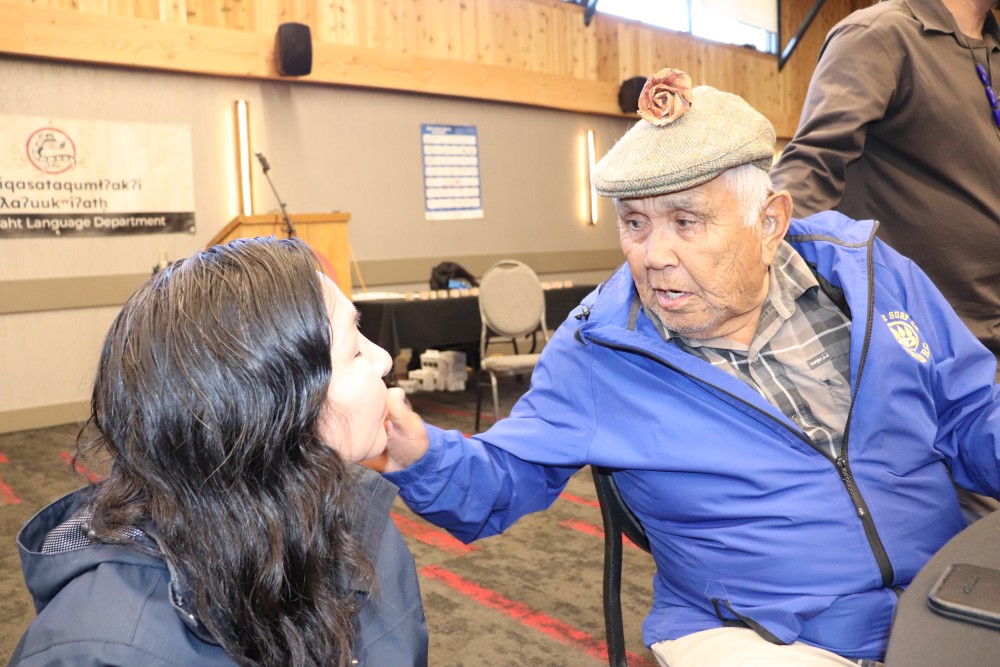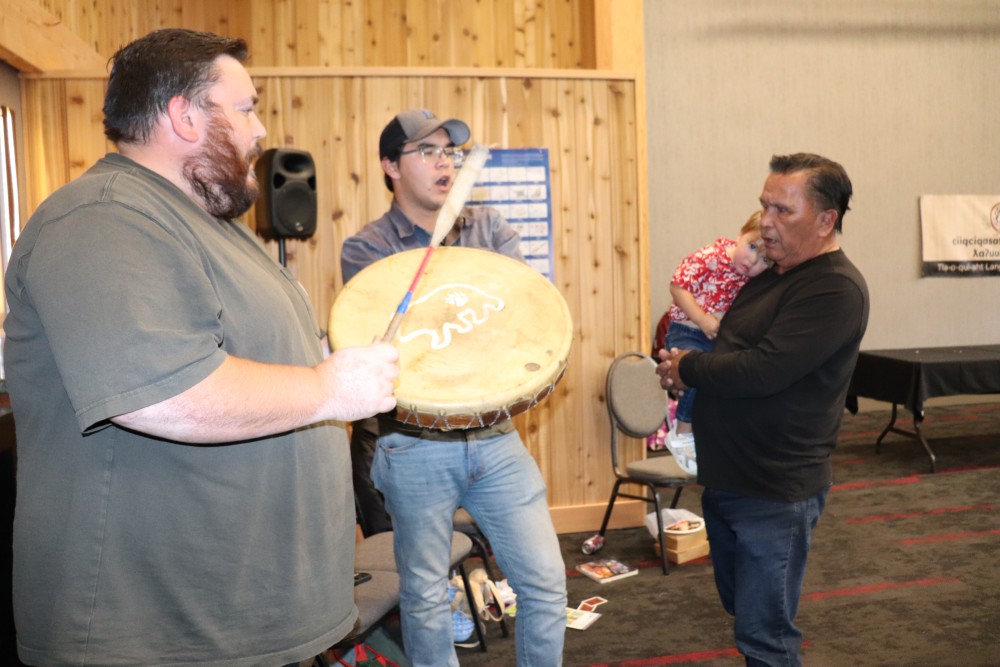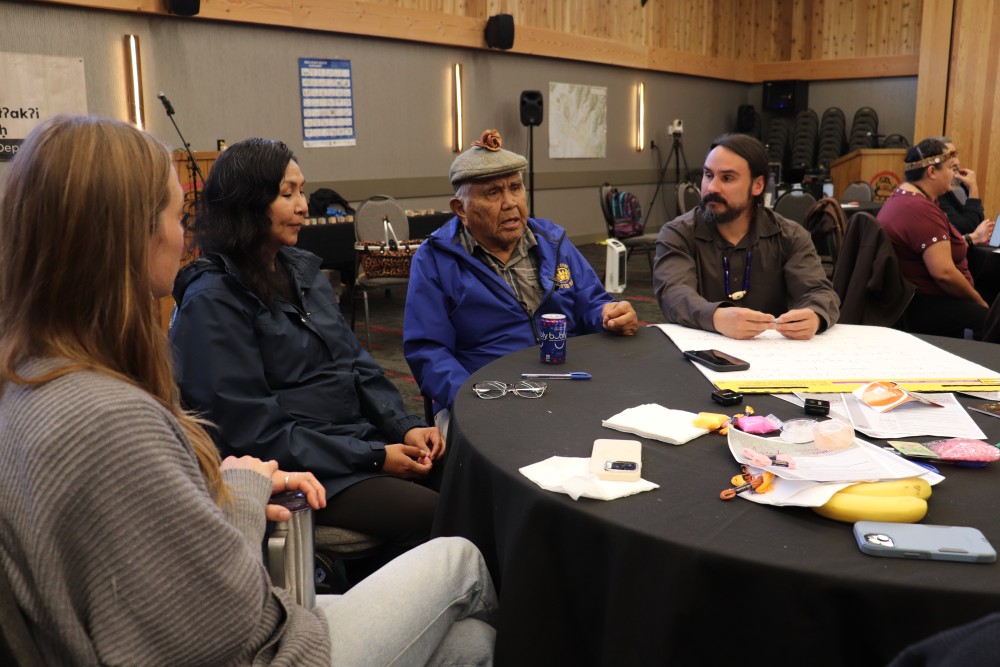
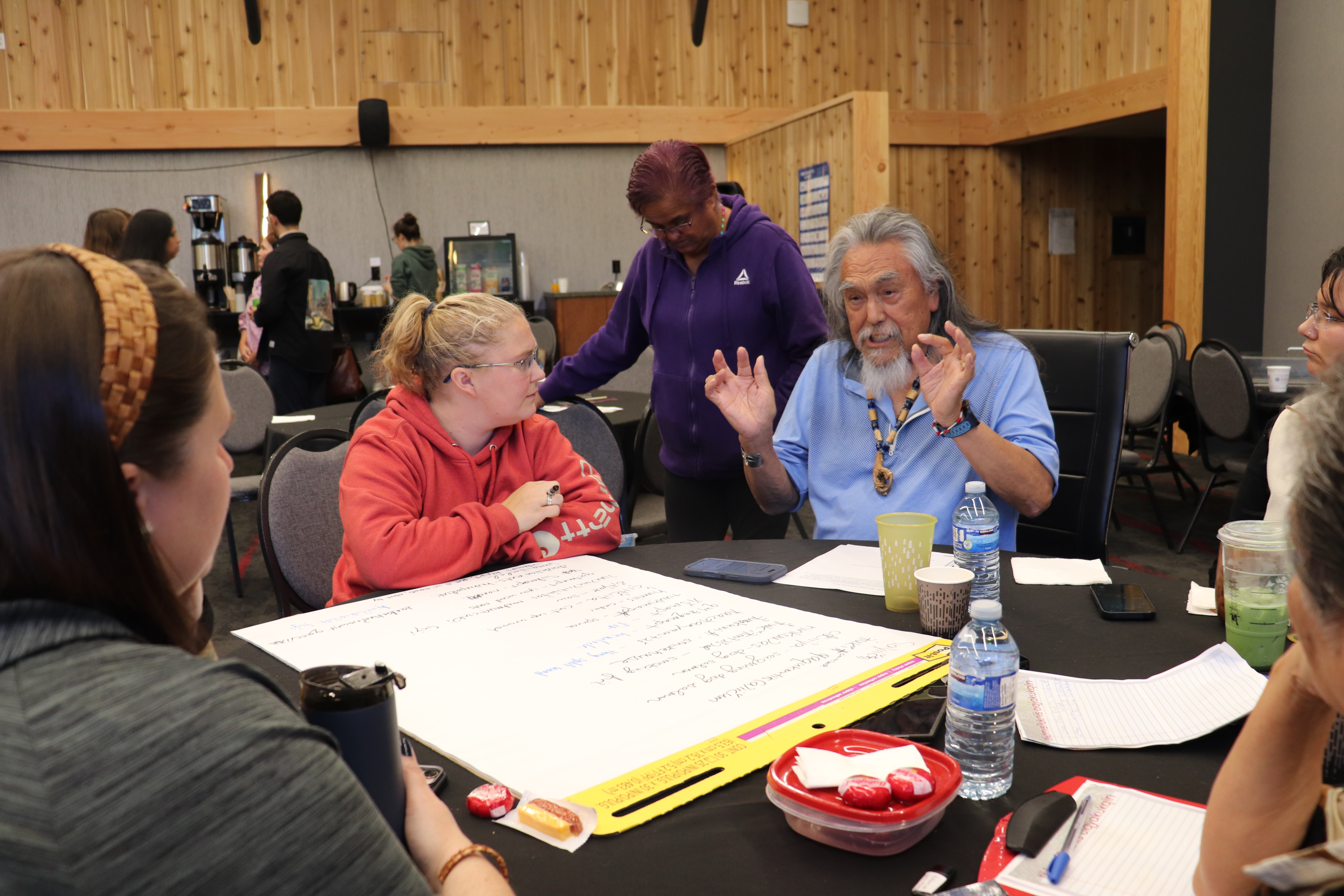
Progress is being made in saving Indigenous languages but so much more needs to be done. That is why Tla-o-qui-aht took the lead and invited educators, scholars, tech experts and learners to come together for a weekend of resource sharing at Tin Wis Best Western Resort on the weekend of September 24.
Luke McDonald (t̓ap̓atc̓umaʕuk) is Tla-o-qui-aht First Nation's Language Coordinator and Digital Archivist. He said the goal of the conference is to bring together all Nuu-chah-nulth learners, programs, and school staff to share information. “Because we know we are stronger when we work together,” he said.
Everyone there has the same goal of revitalizing their languages and improving on teaching tools and techniques. Bringing together people knowledgeable in language revitalization, the tools they use, the things they know brings an opportunity for sharing, growing, and improving.
McDonald said Tla-o-qui-aht will be launching its language resource website which they will share with other learners. “It’s the Tla-o-qui-aht dialect and anything approved for sharing can be used by other nations and can be adapted to their dialects – it’s resource sharing,” said McDonald.
He noted that the invited speakers represent steps the Tla-o-qui-aht language department has taken, tools they have used to improve their language revitalization work. Like Heritage Lab who are developing language and cultural preservation technology using AI or Artificial Intelligence. “We’ve had to adapt it to fit our needs,” he added.
There were about 60 people in attendance including language educators, learners, elders.
Evangeline Provost presented on behalf of the First Peoples' Cultural Council where she helps facilitate language learning and tool development.
She said her late grandfather, Chaasta, (Peter Charlie Sr.) of Ahousaht attended residential school and therefore, didn’t learn the Ahousaht language until later in life. What he learned, he tried to teach to his family.
She said FPCC and First Voices work with language groups around the province to develop language learning resources and other things to save First Nations languages. In the 20 years Evangeline has been at First Voices, she has seen the language resources available through the website grow. There are recordings of people speaking First Nations languages, books, flashcards, games and other tools that help people learn any of the languages available on the website.
The Nuu-chah-nulth languages supported on the First Voices website are Tla-o-qui-aht, Tseshaht, Ehattesaht, and Hesquiaht.
The FPCC has developed the First Voices app suite that can be downloaded to your phone or device. Through the FPCC website, the user selects which language they want to learn then downloads the app. Through the app, the user will hear daily words and phrases or they can practice spoken language with tools like flashcards.
The website itself has language learning resources and some of its features are buildable, meaning the user can input words and names. A map on the website, for example, allows users to add First Nations place names.
Prevost said that the First Voices website is loaded with language resources and the organization provides support to train people in audio recording editing. Audio recordings of spoken language can then be uploaded to computers to be shared.
Joshua Shaw works for Uchucklesaht in language fluency. He started learning the Nuu-chah-nulth languages from several elders including two that have since passed away, Julia Lucas and Hudson Webster.
Having more than one fluent speaker to learn from is a blessing, but, sometimes, Josh admits, he mixes up his dialects when speaking. The Nuu-chah-nulth language has at least three distinct dialects, some say there are more dialects.
Using the Nuu-chah-nulth language, Shaw shared a story he heard from elders, including Julia Lucas. The story was about whalers that harpooned a whale and were dragged far offshore by the wounded animal. Having lost their paddles and with no food or water, the whalers were afraid they were going to die.
The story goes on that one of the whalers began praying to the Creator, asking that they be saved. Finally, a bird came and landed on the harpoon. It chanted a prayer and flew off. When the whalers repeated the chant, the whale miraculously revived and brought them back to shore.
Shaw says the central teaching of the story is to always have faith. To pray, because everything good comes from the Creator.
Speaking about his shyness while learning the language, he remembered something Julia used to tell him. “Joshua, you are not a chicken. You are an eagle. Don’t be afraid to spread your wings and fly,” she would tell him.
LeRae Wiley and Christopher Parkin, are a husband and wife team that created the Salish Fluency Transfer System and Curriculum. The couple delivered their presentation from their Spokane, WA. home via Zoom.
Language, they say, is the foundation of cultural identity. LeRae set out to learn the language at a time when there were very few Salish speakers left to teach. Her ultimate goal was to teach it through her work at the Salish School of Spokane.
She found a fluent elder that graciously invited the young family to move in with her so that they could learn Salish. The family learned the language by immersion.
When their grandchildren came along, the couple vowed never to speak English to them. Today, they have five grandchildren that are all fluent speakers.
In Spokane, the couple helped launch a school with programs that teach Salish language as part of their curriculum. More importantly, they are working to teach older people because there are so few fluent elders to teach it. These languages are endangered, they said.
The Graded Intergenerational Disruption Scale (GIDS) is an 8-level tool created by sociologist Joshua Fishman in his 1991 book Reversing Language Shift to measure the threat of endangerment to a language based on how it is passed down between generations.
According to Wiley, their community sits at level 7 on the GIDS. This means that only the child-bearing age people know the language but are not passing it onto the younger generations. Level 8 is the last level to extinction of a language, that is where only the elders know the language.
“If we’re critically endangered, we need to invest in strategies to develop advanced fluent adults...and that means full immersion,” said Wiley.
Through their ILFTS (Indigenous Language Fluency Transfer System) website, https://ilfts.org/ language groups can find tools and resources to assess their community language fluency and see ideas for growing fluency.
According to their website, the Indigenous Fluency Transfer System and Curriculum is a comprehensive, sequenced curriculum project designed to help new learners become proficient in their Indigenous or endangered language.
The system focuses on conversational fluency, teaching people how to effectively communicate in their language. “The foundation of the curriculum are hundreds of hours of audio recordings from fluent Elders or proficient speakers. These recordings form the core support for learners,” they stated.
The curriculum comes in two books, one with instructions and the other, a story book. There is Immersion teaching support provided with a direct acquisition teacher's manual containing immersion teaching activities for the lessons.
The curriculum model and its organization are provided by Christopher Parkin and LaRae Wiley and may, with permission, be adopted for different languages.
Annika Benoit-Janssen, is a busy mom and also serves as the Tla-o-qui-aht First Nation Language Planner.
She has taken the ILFTS curriculum and translated it into Tla-o-qui-aht language with help from fluent speakers, and now it is being introduced in schools that TFN children attend.
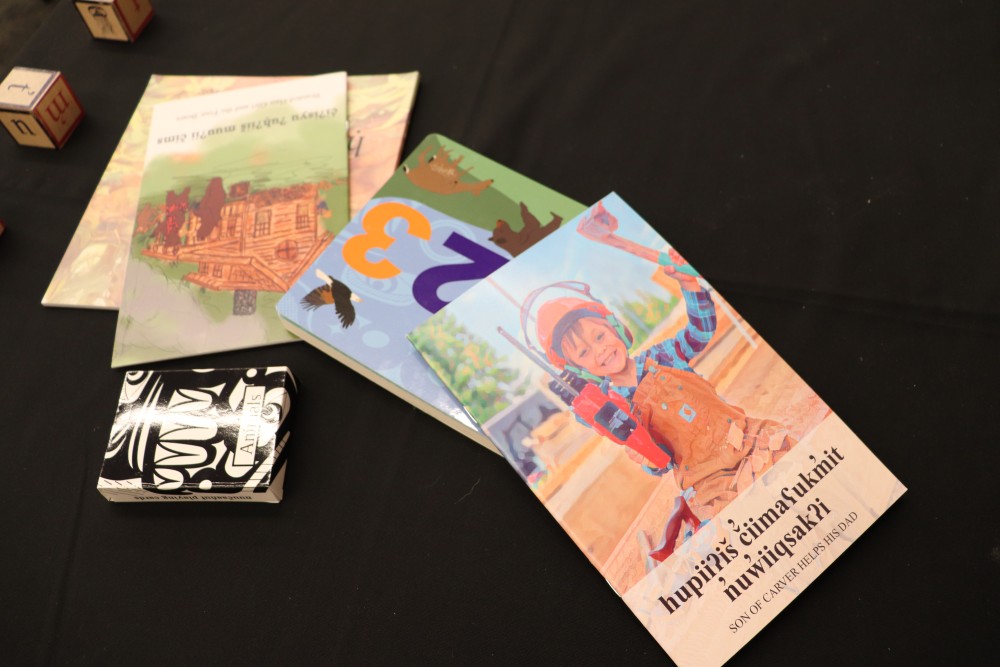
Coming from a family that is passionate about revitalizing the language, Annika has plenty of support to help her in her work. Starting with her brother-in-law Timmy Masso, who from a very young age began learning TFN language. He started a university program at the age of 10 and graduated with a teaching degree at age 19. It was Timmy that developed wooden language blocks for children.
Her husband Hjalmer is an educator and artist. The couple are raising their young children in fluency. She speaks only the Nuu-chah-nulth language to her infant son and the rest of the family are helping with that.
Learning language is hard, she said. Annika knows a lot of Nuu-chah-nulth words but it is the conversational part that she needs to work on. It is especially difficult when adults are also learners. “We’re constantly making mistakes, constantly being corrected by elders, but that’s okay, it’s part of learning something well,” she shared.
Annika says she has developed an app featuring downloadable language flash cards called Anki Flashcards. The family has also created children’s language books. “We need more ‘See Spot Run’ type of books,” she said, adding her own children love those types of books and will read them over and over.
Crystal Frank leads Ahousaht’s language revitalization program and spoke about their post secondary adult-based learning opportunities. The nation uses provincial reconciliation funding to build fluency among Ahousaht’s adults through an Indigenous Fluency program offered at North Island College.
The challenge, she says, is to find language instructors because all their fluent language teachers are in high demand and busy with other projects. Ahousaht is conducting language surveys with their members to determine language fluency and desired methods of learning. Ahousaht, Frank said, is at the very beginning of developing its language program.
Deborah Mack teaches language at Ditidaht Community School at Nitinaht. For the past decade she has been teaching grades K-12 language. She incorporates fun games into language lessons, making the kids sometimes forget that they are learning.
Mack picks up ideas from her students, and from the Internet. She adapts what she sees to the Ditidaht language language and makes it her own. “People learn in different ways and at different speeds,” said Mack. Some learn through what they hear and others do better with written words. Learning can be fun through games.