
One year after more than 7,000 litres of diesel spilled from a fish farm site west of Vancouver Island, shellfish harvesting has resumed for those living in the coastal area – but with the hope that such a disaster will never happen again.
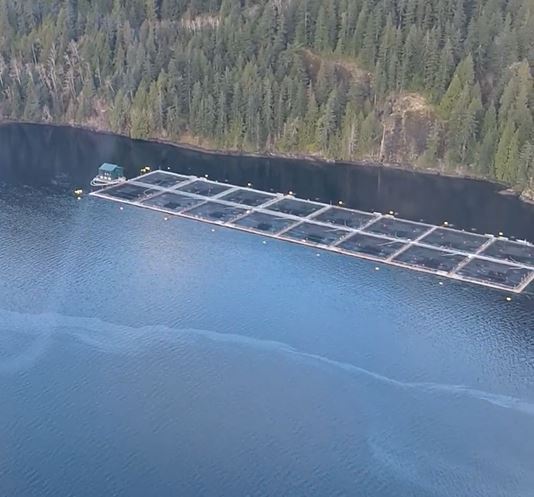
On Dec. 14, 2024 between 7,000 and 8,000 litres of diesel fuel spilled from a barge operated by Grieg Seafood at its Lutes Creek salmon farm in Esperanza Inlet. The spill was due to human error during a fuel transfer on the floating concrete platform, which is off the north coast of Nootka Island and south of the village of Zeballos.
Two days after the spill was reported, Fisheries and Oceans Canada closed all shellfish harvesting in Esperanza Inlet. Further analysis determined that the closure would be expanded to include Zeballos Inlet and Hecate Channel.
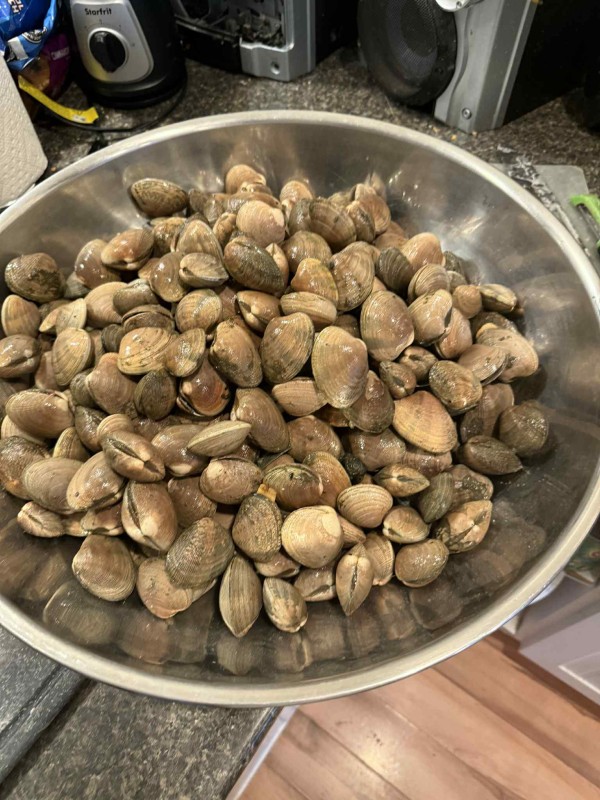
This wasn’t lifted until Aug. 14, 2025 after Health Canada found no continued hazard in consuming shellfish or vegetation from the areas affected. By this fall those living in the region were back to picking clams, including Ehattesaht member Kyle Harry, who gathered several bags for eight families in Zeballos and Campbell River.
On Dec. 10 DFO gave an update on the situation to the Nuu-chah-nulth Council of Ha’wiih Forum on Fisheries.
“This incident here lasted for about 10 months,” said Cynthia Johnston of the federal department’s Spill Response Program, referencing the ongoing testing, monitoring and meetings that followed. “That’s a lot for folks to have to continue to engage on.”
Canadian law requires Grieg Seafood to be responsible for clean-up costs, and the company retained the services of Strategic Natural Resource Consultants. This firm is majority owned by the Ehattesaht/Chinehkint First Nation in whose territorial waters the spill originated. After the spill, sorbent and containment booms were spread around prioritized areas, but a storm hit coastal areas, spreading the fuel far and wide.
“We had booms go across the clam beaches, that was our one priority,” noted Judae Smith, a fisheries technician with the Nuchatlaht First Nation. “They weren’t really effective because of the storm.”
Johnston reflected that little diesel could be recovered due to the weather conditions.
“In this instance, there wasn’t a lot of clean up in terms of vessels on the water actually cleaning it up,” she said. “There was storm weather and it spread to such a thin level that you couldn’t recover the oil. The oil has to be a certain thickness for you to be able to recover it.”
By early April 2025 people were still advised not to eat shellfish from the region. Testing showed Polycyclic Aromatic Hydrocarbons, particularly in oysters, which are cancer-causing agents that are formed during the incomplete burning of things like coal, oil, gas, wood and charbroiled meat.
Although shellfish in the affected areas are now deemed safe to consume, Smith reflects that the initial response could have been faster.
“I think we didn’t react to the spill as quickly as we could have,” she said. “We observed the diesel right off the bat, just outside the fish farms in the inlet.”
A Unified Command was established in Zeballos, which included DFO officials and representatives from Grieg Seafood as well as the Nuchatlaht, Ehattesaht and Mowachaht/Muchalaht First Nations.
“We kind of had to react quick and get DFO and other contractors and everything up to Zeballos so that we could do testing and monitoring,” said Smith.
“There was a 12-hour time lapse before it was reported. How do you correct that?” said Nuchatlaht Councillor Archie Little during the recent fisheries forum. “All we really want is that it never happens again.”
After a full review of the incident, Grieg Seafood has made “comprehensive changes” to how its employees handle fuel.
“All fuel handling now requires a trained Grieg representative and manual equipment which is locked out when not in use,” stated the aquaculture company in an email to Ha-Shilth-Sa. “This equipment is now standard across all Grieg farm operations.”
The spill occurred in Ehattesaht territory, but spread to coastal areas that the Nuchatlaht has in recent years gained Aboriginal title to, according to a 2023 ruling from the B.C. Supreme Court.
“We want to manage better, we want to protect better, and we want to own better,” said Little.