
Washington and Alaska are raising concerns about potential environmental harm stemming from mining projects approved by the Canadian government.
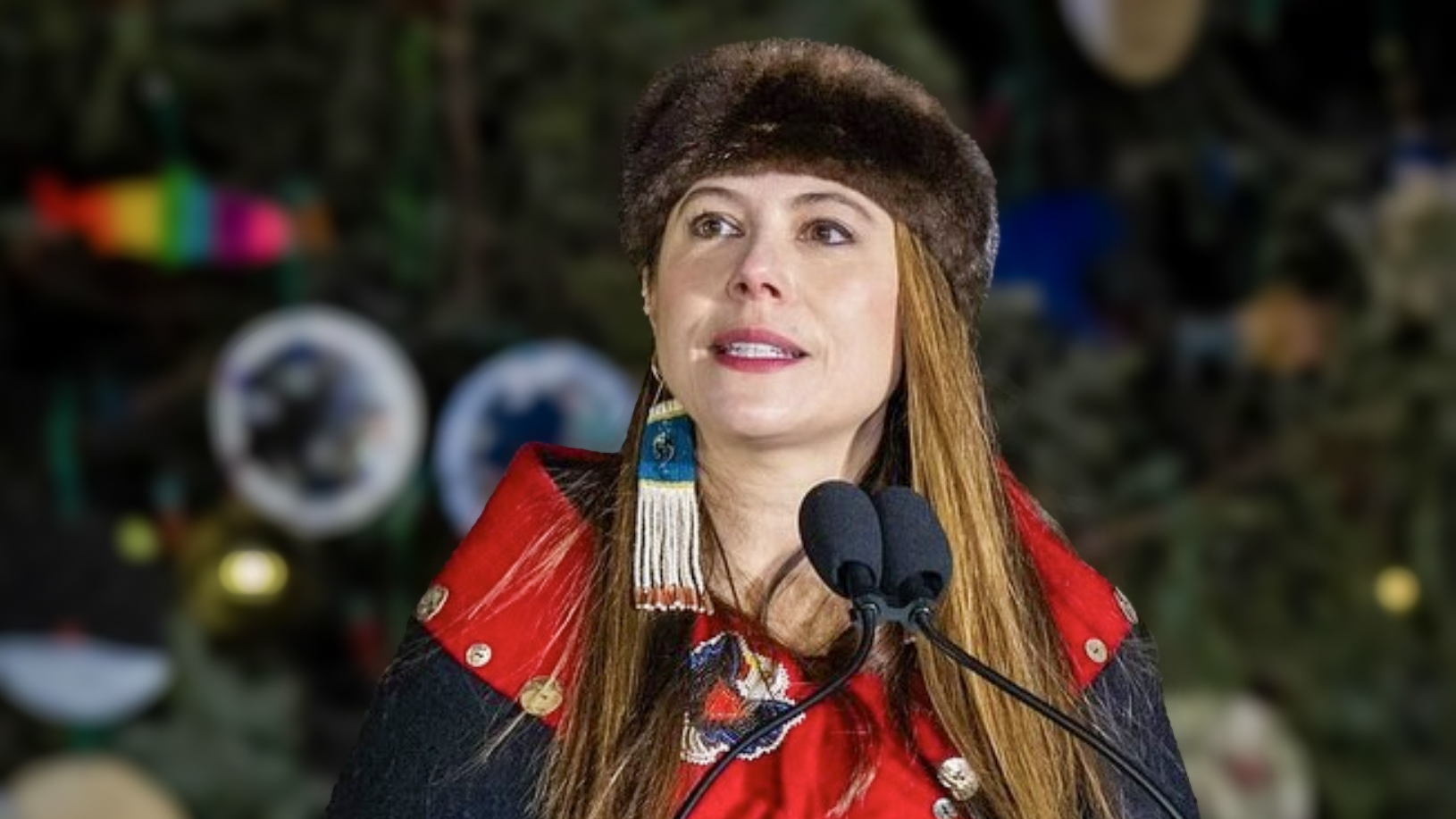
“British Columbia is transforming the headwaters region of our wild salmon rivers into a mining district without our consent while excluding our sovereign Tribal governments from meaningful participation,” said Esther Aaltséen Reese, President, Southeast Alaska Indigenous Transboundary Commission (SEITC).
Minister of Mining and Critical Minerals Jagrup Brar announced the Northisle Copper and Gold Inc.’s North Island Project, Surge Copper Corp.’s Berg Project and Defence Metals Corp.’s Wicheeda Project on February 20, 2026, in Port Hardy, B.C..
The Tribes of SEITC and the Lummi Nation in Bellingham, Washington, warn that their exclusion from the environmental assessment could lead to an incomplete consideration of risks, affecting salmon populations, water quality, sacred sites, and Indigenous food security and way of life.
“We have stewarded the Taku, Stikine, and Unuk Rivers since time immemorial. Our ancestors left us these life-giving waters and it is our responsibility to ensure they remain for the next generations,” said Reese.
In 2024, the SEITC requested that the Inter-American Commission on Human Rights pause the mining activity that violated Indigenous Peoples' human rights. The rivers affected by the mining activity—the Unuk, Stikine and Taku—hold part of the living oral history and have significant cultural importance to the Tribes.
“The Taku, Stikine, and Unuk support wild salmon runs that feed our communities, our economies, and Southeast Alaska's temperate rainforests. Contamination or failure at the headwaters would travel downstream across the border and through one of the most intact salmon systems left in the world,” said Reese.
The watersheds are key to sustaining the Tongass, the world’s largest temperate rainforest. With the annual return of salmon, ancient cedar and hemlock receive the nutrients they need to sustain themselves, and the ecosystem depends on their survival, including black and brown bears, coastal gray wolves, and countless other wildlife species.
Canada’s Ministry of Land, Water and Resources Stewardship denied the sovereign rights of the Tribes living downstream.
“Making a false distinction between Indigenous Nations based on a line not of our making sets up a situation, as in the case of the Unuk watershed, where an upstream Nation negotiates protections and benefits, while our Tribes downstream, whose salmon, waters and sacred sites face documented harm, are excluded from the process,” said President Reese.
An article, “Risk of mining to salmonid-bearing watersheds,” published in 2022, noted that mines are a source of contamination in salmonid-bearing watersheds due to toxic contaminants, stream channel burial, and man-made changes to stream flow.
“BC has acknowledged that even one project, Eskay Creek, poses risk to us downstream. The cumulative impacts of multiple large mines magnify that risk. This means our way of life is on the line,” said President Reese.
Chief Counsellor Simon John calls on the Minister of Mining and Critical Minerals to follow the UNDRIP (The United Nations Declaration on the Rights of Indigenous Peoples) obligations regarding consent to all First Nations communities that could be affected.
Chief John shared with the Ha-Shilt-Sa how the economic investment could aid in growing the community and creating job opportunities, but acknowledged that past mining activities caused negative effects, noting that future projects should be handled differently. He added that steering towards consent-based approaches is a positive change, providing greater opportunity for investors while ensuring stronger protections for local lands and waters.
The three projects, North Island, Berg, Wicheeda,have not reached the environmental assessment stage. The Environmental Assessment Office (EAO) is aware of the projects and anticipates they will enter the environmental assessment process sometime in 2026.
In an online statement, the Critical Minerals Office said it does not change environmental standards, consultation obligations, or regulatory decision-making processes. Its role is to support early coordination between project proponents, government agencies and First Nations as projects prepare for environmental assessment and permitting.
Assessments follow a clearly defined process under the Environmental Assessment Act, with deep participation from First Nations. It examines how a project will affect the environment, economy, and First Nations and their rights, as well as health, social and cultural effects – direct, indirect and cumulative.
The EAO must consider whether some groups may be disproportionately affected, as well as effects on current and future generations and greenhouse gas emissions. If approved, projects must follow legally binding requirements applied to mitigate potential negative impacts on the environment, communities and First Nations rights. The EAO monitors projects throughout construction, operations and decommissioning to ensure compliance with all requirements.
“These are promising projects that are in early development. Each one represents a huge potential investment in B.C., bringing hundreds of jobs and economic growth,” Brar said.
According to Brar, the Northisle mining project is set to generate 498 full-time permanent jobs during the mining operation. The other two projects are expected to créate about 200 jobs with 200 more jobs opening during the mining operation.
Brar said the mining project can help address the high unemployment in rural areas, a consequence of the recent U.S. tariffs.
“We believe that this project not only satisfied what the world needs, which is critical metals that drive the electrification and decarbonization, essential motivations for this world, but we can do it in a very responsible and inclusive way,” said Sam Lee, president and CEO of Northisle Copper and Gold Inc.
The province continues to work collaboratively with impacted First Nations, with the Critical Minerals Office supporting relationship building and coordination to ensure processes are clear and consistent. Some First Nations communities reiterated the importance of communication between the government and the communities affected by the mining projects.
“We appreciate the Province taking these projects seriously and ensuring there is a clear and fulsome process in place. Having a dedicated point of contact to support ongoing dialogue is important for our community as the North Island Project advances,” said Chief James Nelson, Quatsino First Nation. “We believe it is essential to balance responsible economic development with protection of the local environment, and we look forward to continued engagement and discussions and welcome continued improvements in the administrative processes.”


