Letters of support are stacking up for Tla-o-qui-aht First Nation and their fight to protect Clayoquot Sound from mineral exploration.
Tourism Tofino’s board of directors, the District of Tofino Mayor and Council and the Tofino Chamber of Commerce have all filed written concerns to the B.C. Government calling for an immediate rescission of the mineral exploration permits granted in the traditional territory of the Tla-o-qui-aht and Ahousaht First Nations.
“We are particularly troubled that these permits were used despite the clear and consistent opposition expressed by Tla-o-qui-aht First Nation throughout a two-year engagement process,” read the letter on behalf of the Tourism Tofino board of directors.
“The Nation repeatedly stated mining is not a permissible activity within their territory. Proceeding with exploration approvals despite this clear opposition raised serious concerns regarding the province’s commitment to reconciliation and the implementation of Indigenous Rights and Title,” the Tourism Tofino letter continues.
“Tofino would be exposed to all of the risks and none of the economic benefits of mining activities in a biosphere that is interlinked with Tofino’s business community,” said Tofino Chamber of Commerce president Myles Beeby. “Over the past decade, more than $5 million has been invested in habitat restoration within the watershed directly impacted by this exploration proposal.”
Selkirk Minerals, a subsidiary of Imperial Metals Ltd., obtained an exploration permit in early February 2026 for the Fandora mine site at Tranquil Creek, located about 20 kilometres northeast of Tofino, within Tla-o-qui-aht’s Tranquil Tribal Park designation.
Tla-o-qui-aht’s Tribal Parks designation are a “tool for the grandchildren to adapt and manage watersheds for the sustainability and interests of their grandchildren,” says the Tla-o-qui-aht Ha’wiih (hereditary chiefs).
In 1984, Tla-o-qui-aht issued the Meares Island Tribal Park Declaration to prevent logging on the island near Tofino. The Ha’wiih expanded the Tribal Park Declaration in 2014 to include Haa’uukmin Tribal Park (Kennedy Lake and Clayoquot Lake watersheds), Tranquil Tribal Park (Tranquil and Tofino Watersheds), Wanachus/Hilthuu’is Tribal Park (Meares Island) and the Hiisawista Peninsula Tribal Park.
Tla-o-qui-aht has been working with Redd Fish Restoration to rebuild salmon stocks in the Tranquil Creek watershed, an area decimated by poor forestry practices that once supported Chinook, coho, chum, pink and sockeye salmon. Records as far back as 1947 show a yearly average of 750 returning Chinook, according to Redd Fish Restoration Society. In 2018, only 59 were observed.
Tranquil Tribal Park overlaps with the Clayoquot Sound Biosphere Region, which was designated in 2000 by the United Nations Educational Scientific and Cultural Organization (UNESCO).
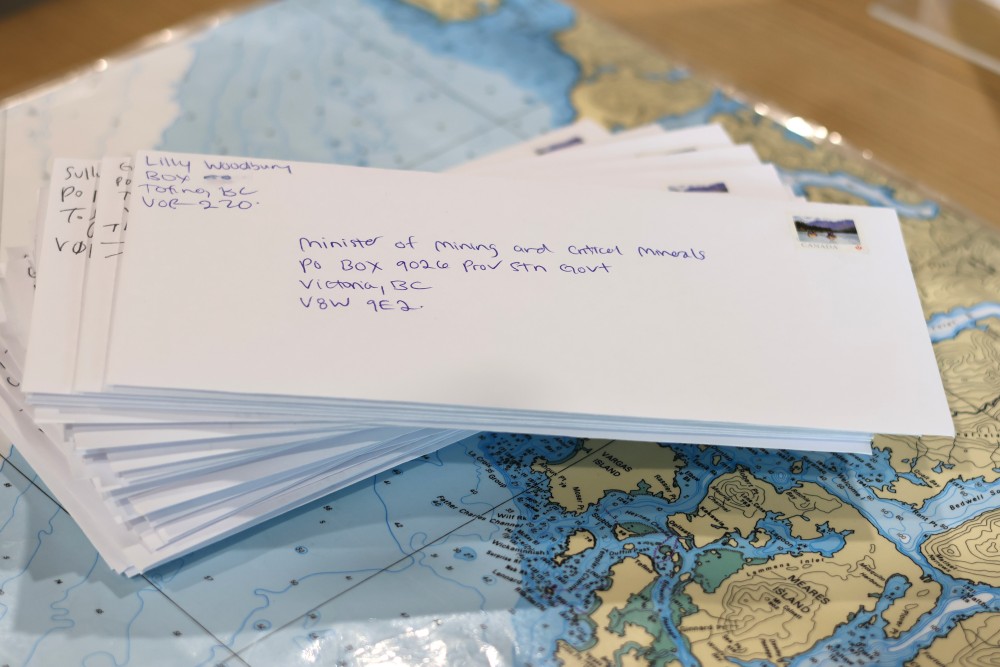
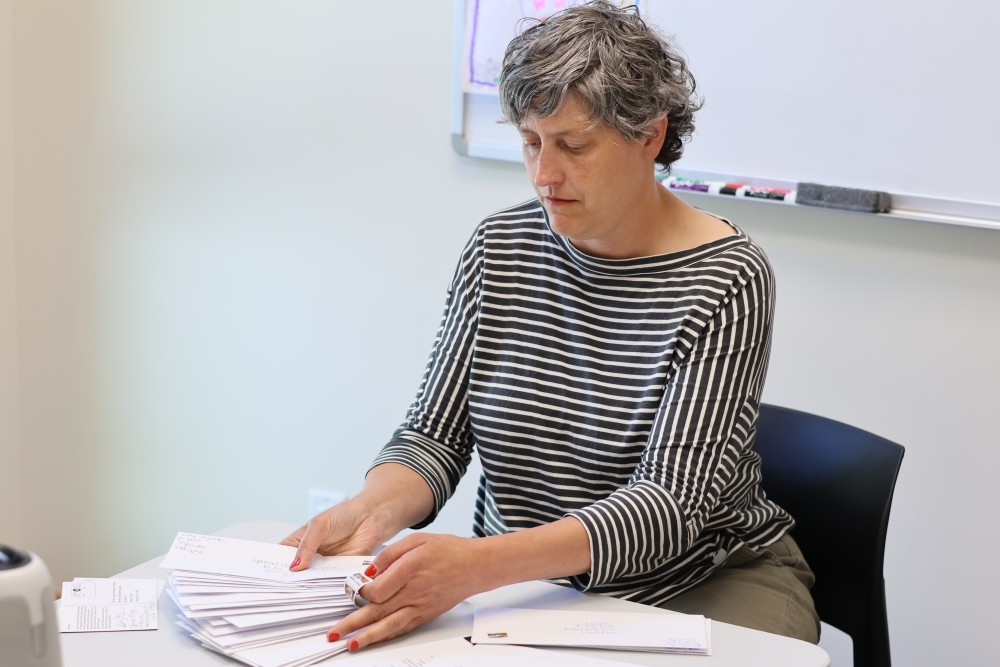
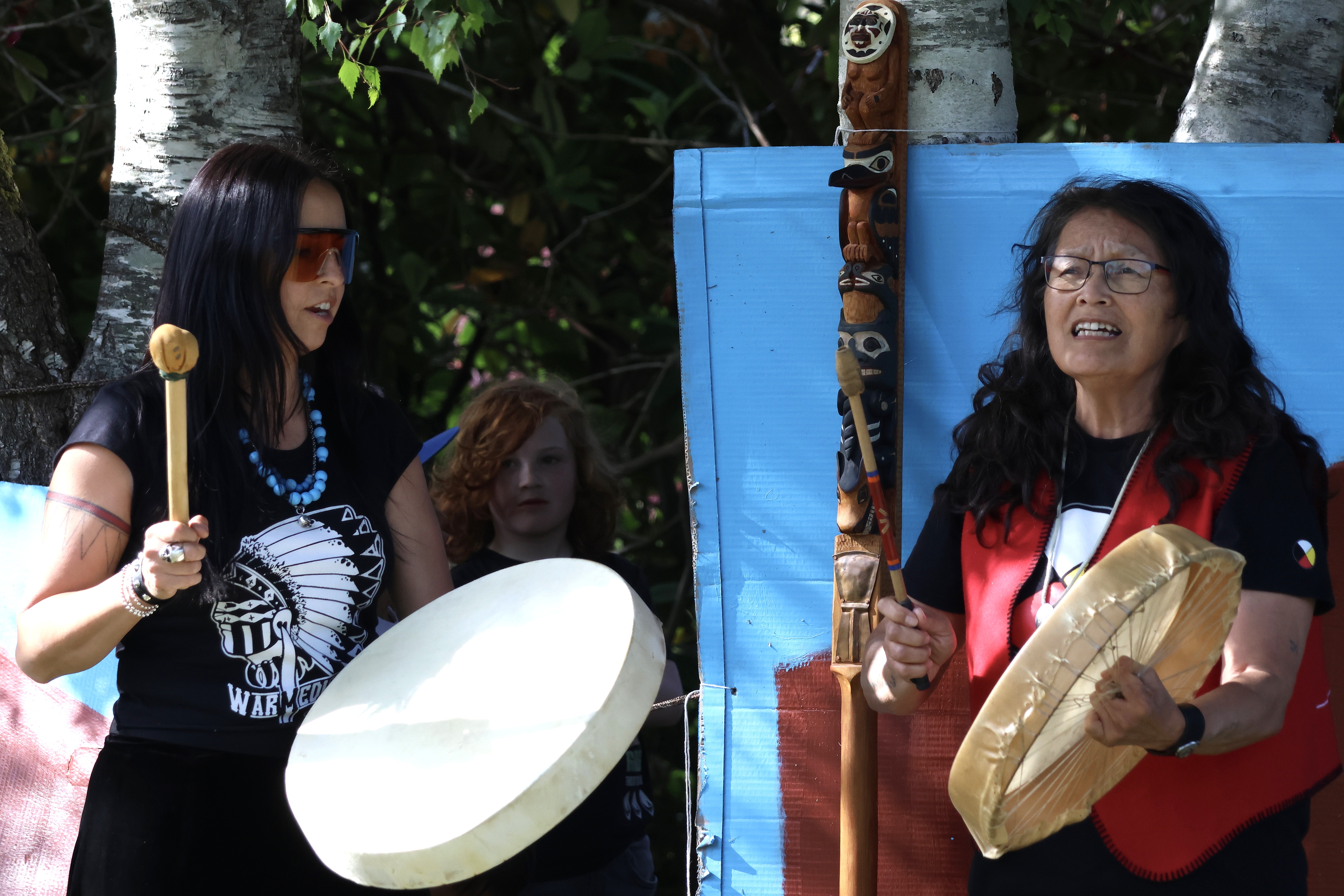
Tla-o-qui-aht Tribal Park guardian Gisele Martin attended a letter writing workshop in Tofino on July 14. The workshop was hosted by Tla-o-qui-aht Tribal Parks, Tourism Tofino and Coastal Queer Alliance in support of Tla-o-qui-aht First Nation opposition to mining in their territory.
Martin re-iterated that a lot of work has been put into to growing the “biological capital” of the Tla-o-qui-aht ancestral gardens.
“There has been a lot of effort in helping restore the river system after the effects of logging and landslide caused by deforestation. With that aside, it’s still an amazing habitat that is included for protection in the Tla-o-qui-aht land vision,” said Martin.
Permits for the Imperial Metals project include trenching at six locations and up to 22 drill sites, several of which require helicopter access.
“Helicopter traffic, sound pollution, whatever activity they are doing there, is not authorized by our nation,” said Martin.
“Even a little bit of industrial mining can cause such destruction,” Martin continued. “It is not the kind of destruction that, in some cases, can be reversed. There are areas where there has been contamination from gold mining. The contamination is constantly going to need to be managed, in perpetuity. The cost of that, thousands of years of people trying to manage thousands of years of contamination for a bit of gold, is ridiculous.”
The Ministry of Mining and Critical Minerals said they do not have the authority to cancel a Mines Act permit.
“In cases of ongoing, documented, non-compliance, the Chief Inspector of Mines may cancel a permit,” said the ministry.
“A Mines Act permit can be quashed as the resulting outcome of a judicial review,” the ministry continued.
They acknowledged that there is no consent agreement with Tla-o-qui-aht First Nation for mineral exploration in their traditional territory.
“However, we have worked to accommodate the Nation’s concerns throughout the process, and those accommodations were made in this case as well,” said the ministry, without further explanation of what exactly the “accommodations” are.
The Chief Gold Commissioner of British Columbia and Ehattesaht, a Nuu-chah-nulth First Nation on the northwest coast of Vancouver Island, remain in a years long legal dispute that tests the legal weight of the United Nations Declaration on the Rights of Indigenous Peoples (UNDRIP) in how it applies to B.C.’s mineral tenure system.
In December 2025 the B.C. Court of Appeal ruled that the province’s current system of granting mineral tenures goes against the constitutional rights of First Nations. The B.C. government brought the case forward to the Supreme Court of Canada, after the province lost its argument in two lower courts. The case is expected to come before Canada’s highest court in spring 2027.
- With files from Eric Plummer