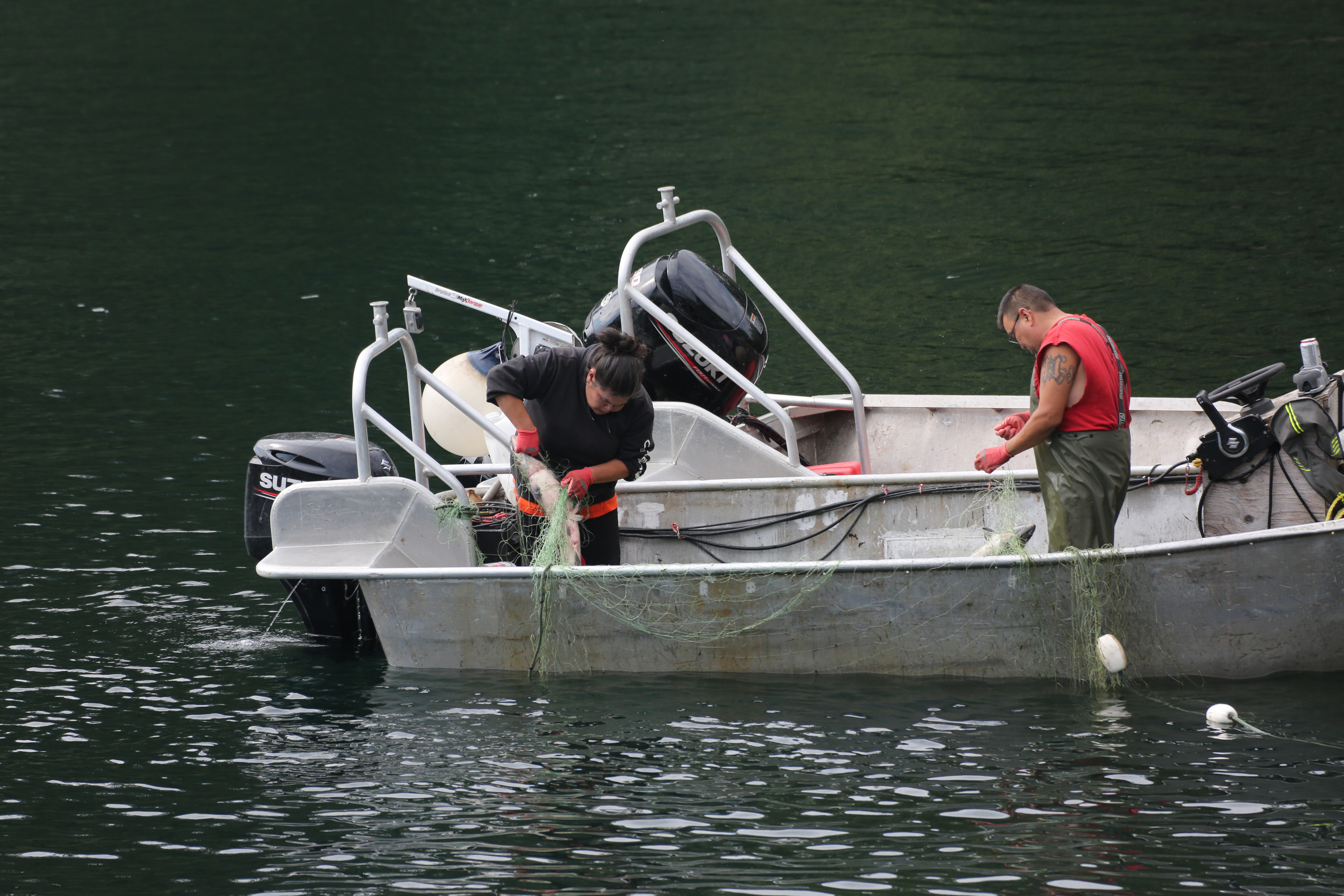
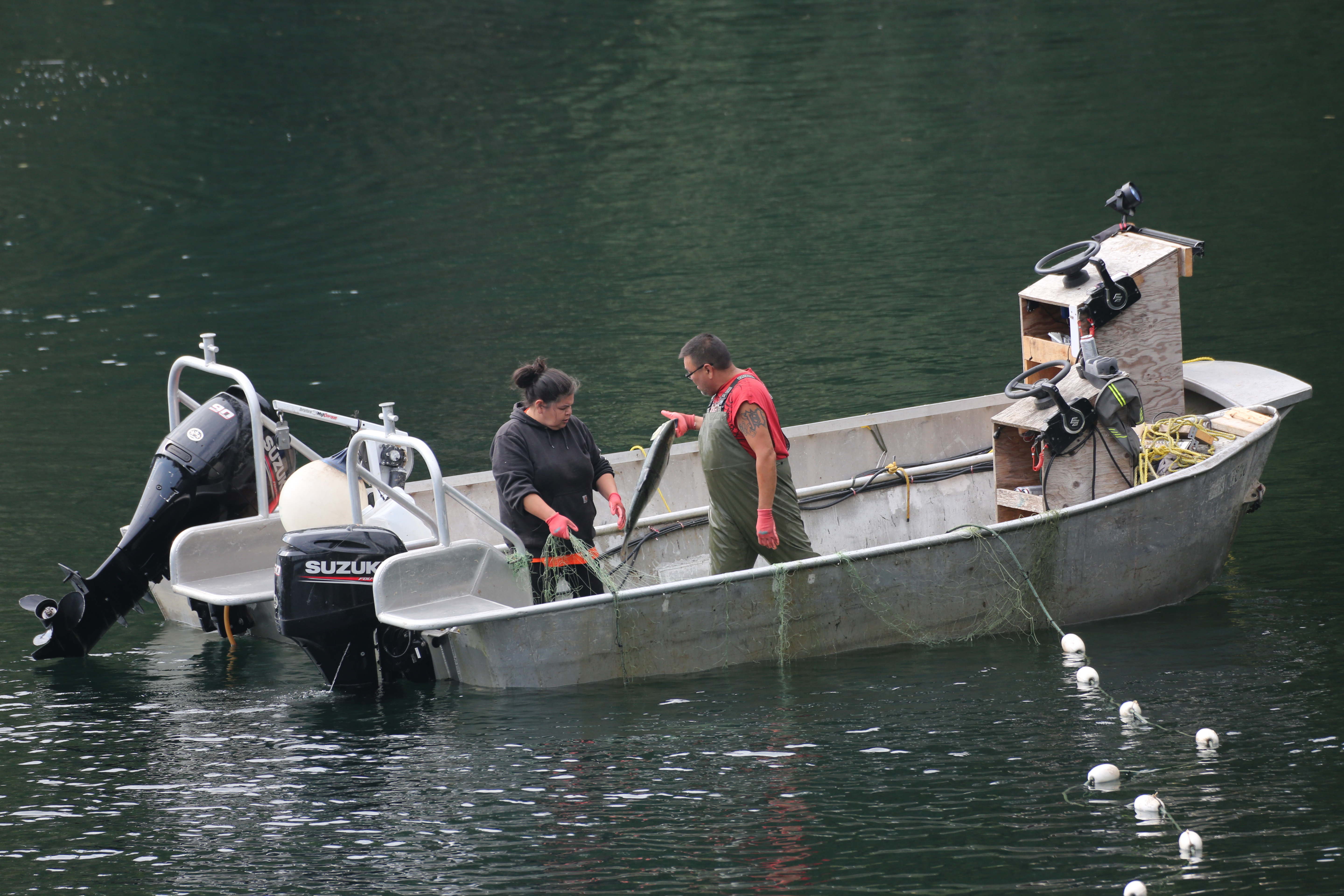
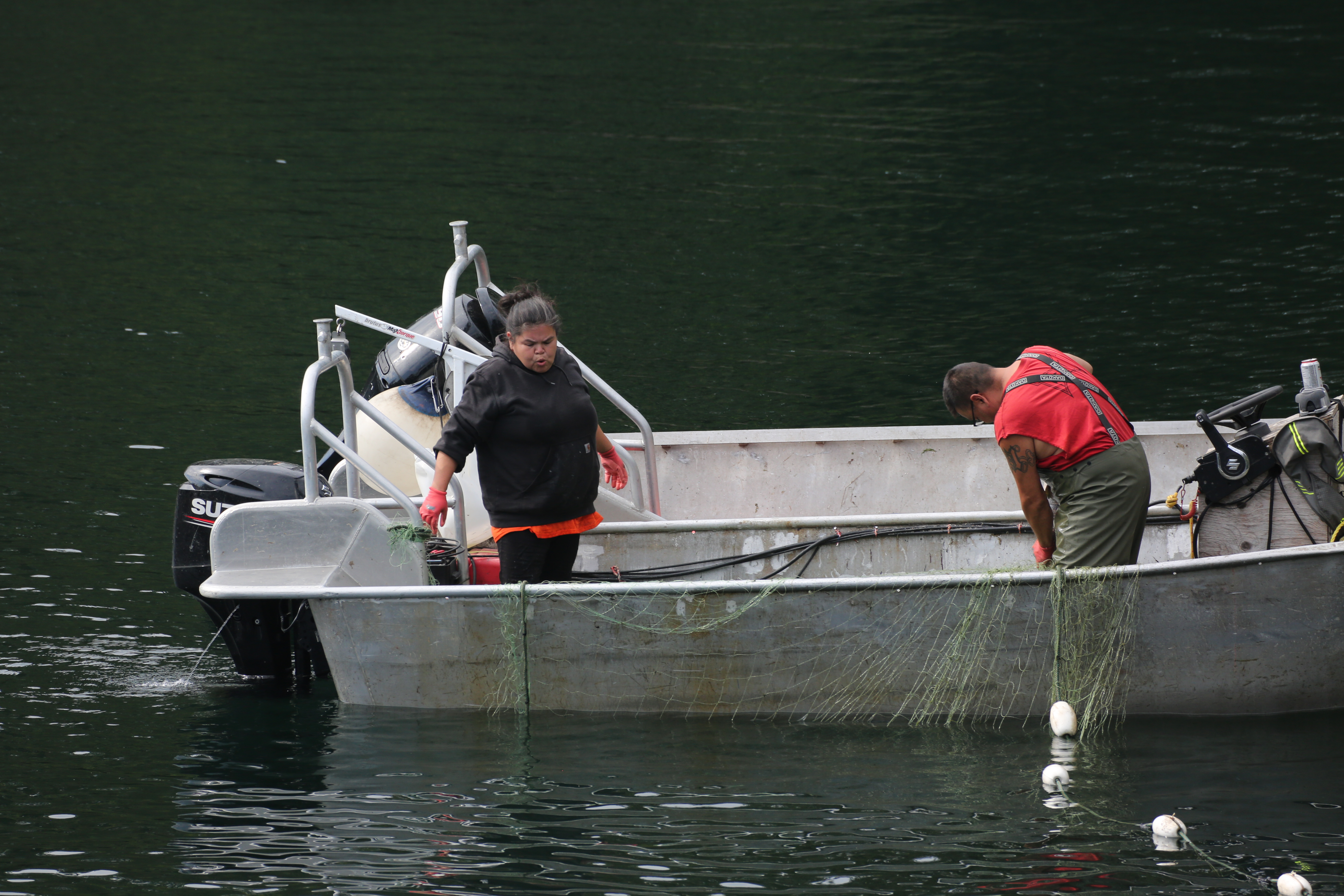
On the B.C. coast, fishing is a tradition that runs deep in the blood of Indigenous families – but the critical role women have had in sustaining this livelihood has at times been an untold story.
Rosemary Georgeson, who has Sahtu Dene and Coast Salish roots, took her first steps on her father’s old fish packing boat. To support his family living on the south of Galiano Island, George Georgeson was a commercial fisherman – a common occupation for coastal residents at the time. By the time Rosemary was 14 she was working on boats, and owned her first vessel later in her teens.
On the north side of Galiano Island, Connie Crocker shares a similar story, as she was raised to help in any way she could while on her father’s boat. One of the earliest duties was ensuring that the tobacco can full of paper records wouldn’t fall off the dashboard.
Crocker bought her first boat at the age of 24, and spent years trolling the Strait of Georgia. While her father Angus raised Connie to operate with confidence on the water, others didn’t always give women the same degree of respect in the 1970s and ‘80’s.
“It was really hard to get equal treatment when you’re a female on the boat,” said Connie, who is from the Penelakut First Nation. “I think a lot of times they would think a woman should be in the processing plant cutting up fish and not steering the boat or pulling in fish. It took a lot to get the status of being a respected deck hand, because you just had to get away from that part about being female.”
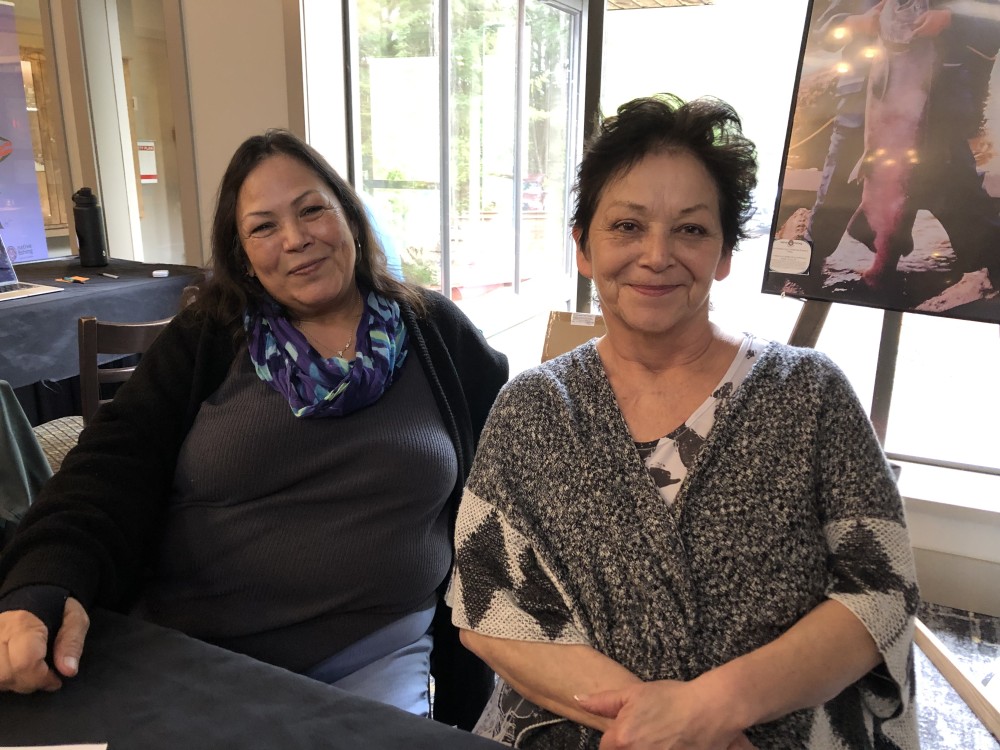
With perspectives from both ends of Galiano Island, Crocker and Georgeson shared their stories in early February at the Indigenous Seafood Conference, which was hosted by the Nuu-chah-nulth Economic Development Corporation, the Native Fishing Association and the Ha’oom Fisheries Society.
The pair described their intimate connection to commercial fishing, but as was seen across the West Coast, this industry hit a severe decline a generation ago. After decades of squeezing allocations, fishery closures and license retirement programs, B.C.’s commercial fleet is about half the size it was in the mid 1990s.
It was around this time that Crocker found herself struggling to cover the costs of running a vessel, as fisheries around the Gulf Islands were closing.
Georgeson also had to make a hard decision after a particularly harrowing trip home.
“I was a single mom, and I kind of got caught in a storm with my kids up on the ridge at Galliano watching,” she recalled. “I had to make a decision whether I wanted to be around for my kids or not. That’s when I stepped back in the business.”
As the pair watched salmon farms spread through the B.C. coast, they knew a decline in the fishing industry would follow.
“You started seeing the decline within two years of those coming onto the coast,” said Georgeson of the farm sites.
“It was just something that just hit you like a ton of lead,” added Crocker about the loss of commercial fishing. “You took it for granted.”
While eight to 10 weddings come to Galiano Island each week in the summer, a once widespread coastal fishing industry has long passed. Georgeson said many of the commercial boats were beached and gutted, and now none from her community are in operation.
“We just stripped them out, took out all of the lines,” she said. “They’re grave markers to a life.”
Success on the Somass
On the other side of Vancouver Island, an entirely different story is unfolding on the Somass River that runs through Port Alberni – and women fishers are taking a critical role. Composed of representatives from the commercial fleet, sports fishery, local First Nations and the Maa-nulth treaty nations, the Area 23 roundtable meets regularly to co-manage fishing on the Alberni Inlet and Somass River.
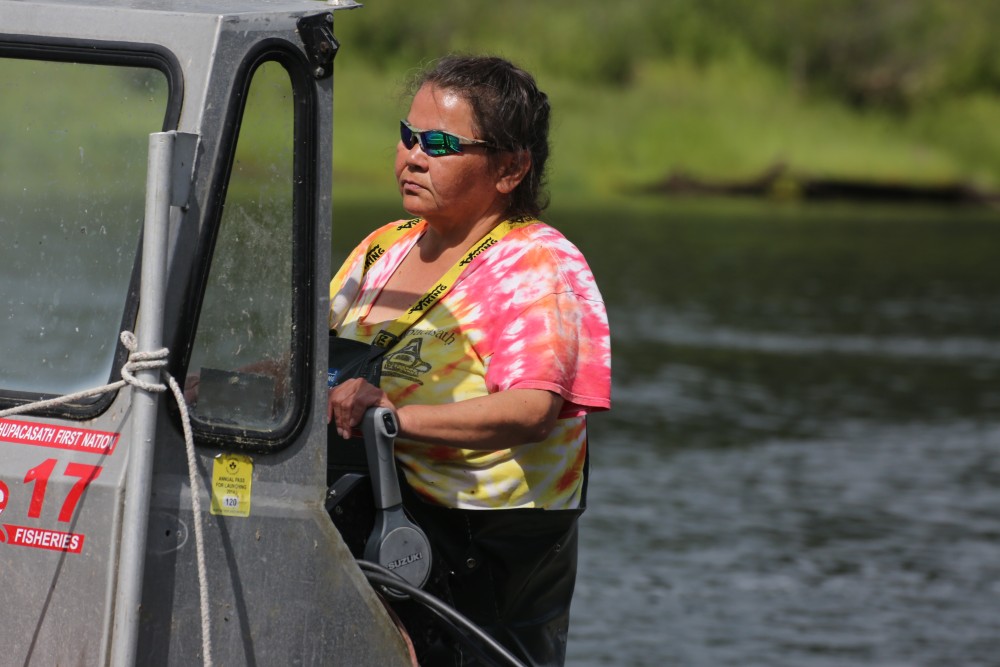
Through agreed-upon catch limits and a successful hatchery, Area 23 has sustained consistent participation from the various user groups over recent years. Each year the local Tseshaht and Hupacasath take advantage of an Economic Opportunity agreement with Fisheries and Oceans Canada that enables them to sell their catch to commercial buyers – something that keeps a significant portion of the First Nations busy and on the water through the summer months.
Tseshaht member Christine Fred usually starts in mid May, fishing what’s allocated to her community for First Nations food, social and ceremonial purposes (FSC). Later in June the Economic Opportunity usually starts, enabling Fred to fish sockey and chinook through the summer, before she finishes in late September catching chum salmon through her First Nation’s FSC allotment.
“It makes me so proud to be Tseshaht,” reflected Fred, who has been fishing on the Somass since she was 12. “I grew up around watching everybody fishing and providing for their families. It made me excited that one day I’m going to be able to do that for my family. It made me eager to learn.”
When Fred was growing up she doesn’t recall that women fishers were discouraged in her community, but the female involvement wasn’t nearly what it is today.
“For a long time there was only four or five of us on the river,” she said. “Now, it’s nice to see, there’s maybe 20 or 30 ladies out there just giving ‘er.”
Also from the Tseshaht First Nation, Shae Doiron was only nine when she started learning how to fish from her grandfather, Bob Thomas.
“My grandpa always said, ‘When the swallows are here, the fish are here’,” she said. “My grandpa always had a smokehouse. He taught my auntie Linda how to smoke fish. My grandma Rosie, his wife, was pretty talented with a knife too. Fishing has always been a part of our lives.”
Now she often fishes with her dad, Chuck Doiron, but also harvests for the community’s “Fish Days” by the Paper Mill Dam Park in the summer, an event held Friday, Saturday and Sunday mornings to collect salmon.
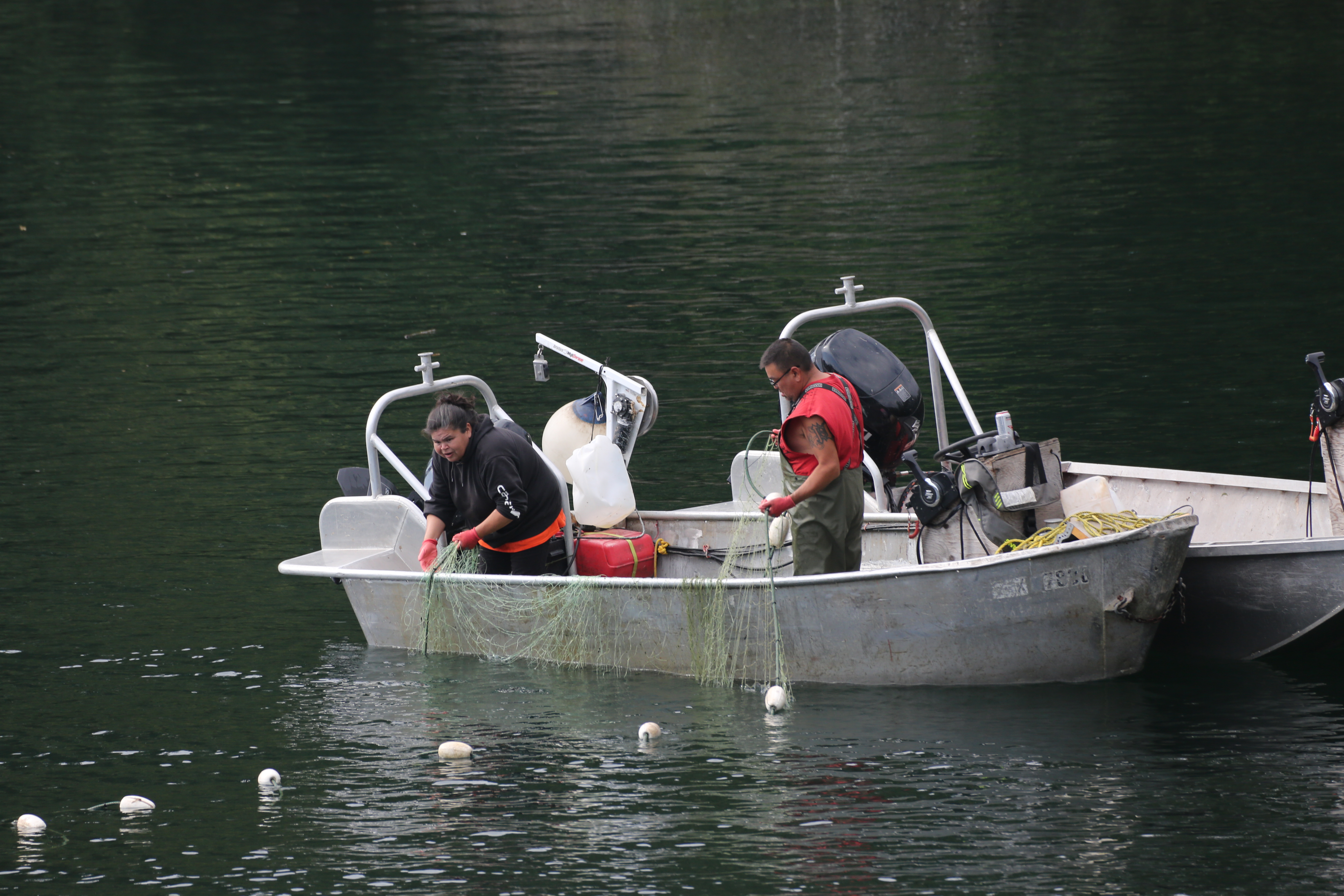
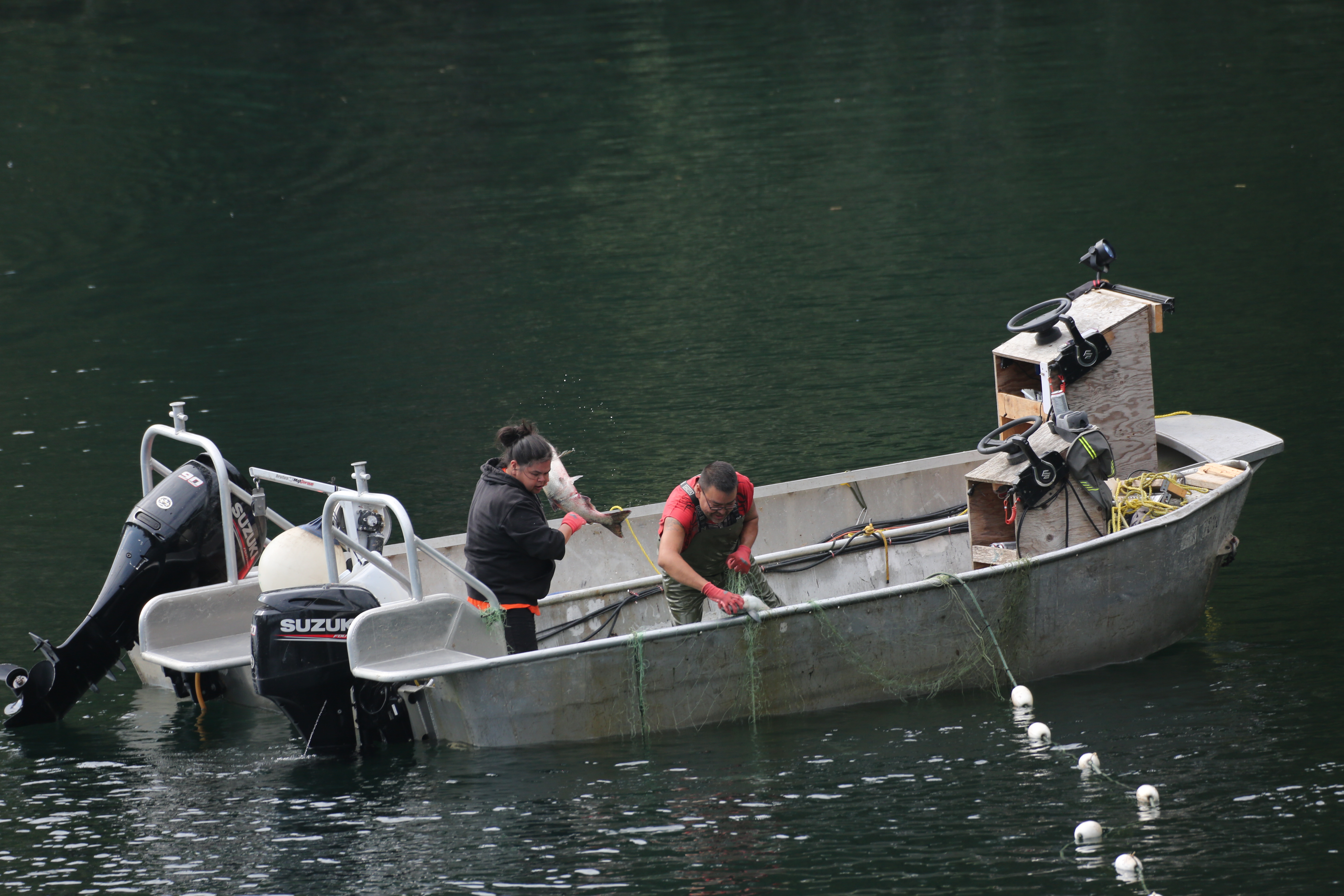
“We fish for our elders and our community – and our out-of-town community too,” said Doiron, who starts at 4:30 a.m. on Fish Days to ensure she can catch salmon in her lead-weighted net at the right time.
“Come high tide, fish will move, they’ll move up,” explained Doiron. “When the tide is up our net doesn’t reach the bottom of the river. That’s what you want, is to create a pocket, a horseshoe pocket of your mesh. You pull your lead line in quick and scare the fish into your net.”
Doiron recalls a time when her grandfather would row a boat out onto the river to set his net. Under DFO regulations, Tseshaht and Hupacasath couldn’t always fish commercially on the river, but years of advocacy from individuals like Bob Thomas led to change.
“Twenty, 30 years ago the fishery wasn’t as big as it is now,” recalled Doiron, who sees many successful women on the river taking advantage of more opportunity. “You see 200 guys out there. Twenty-five years ago there was about 40 guys out there.”
Fred learned to fish from her father, the late Gerald Fred Jr., which she remembers being the best time spent with him.
“I think of him every day and fishing season is no different,” said Christine. “My dad taught me, that makes it even more special because he’s been gone 20 years. Here I am now 46 providing for my family and teaching my nieces and nephews how to hang nets and smoke fish.”