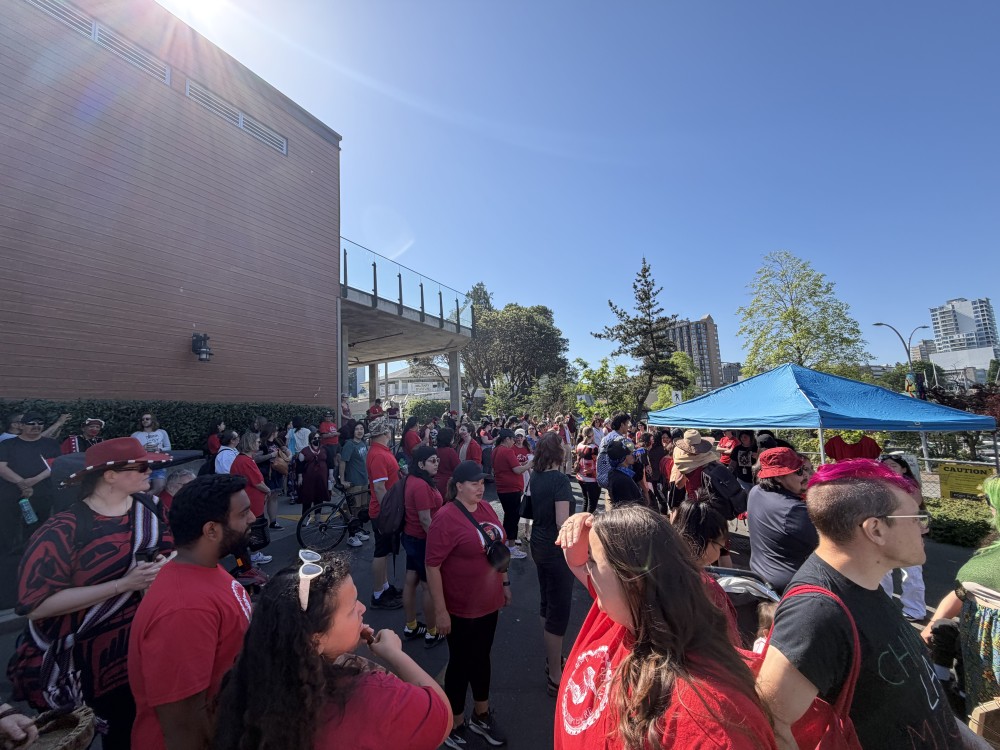
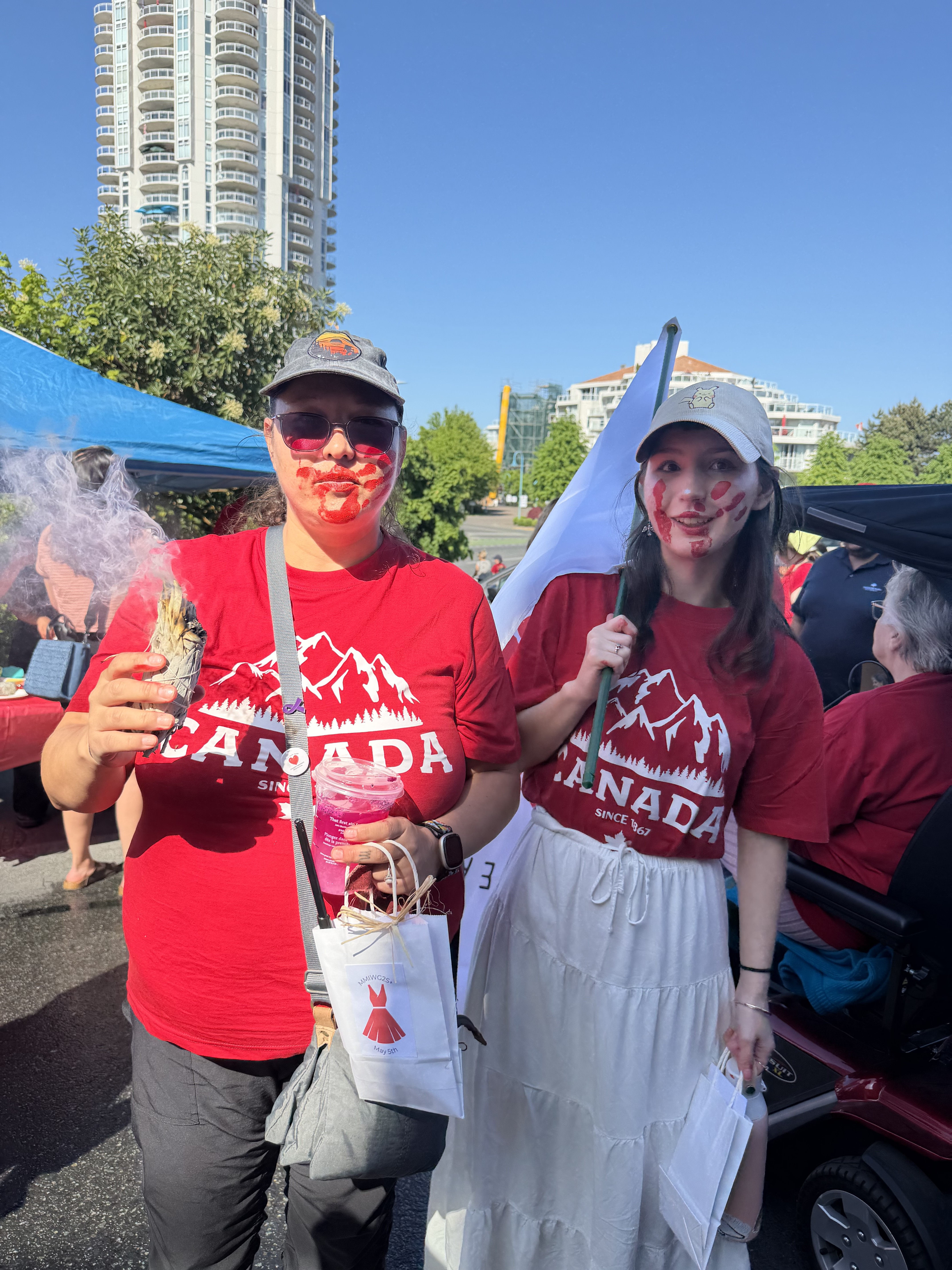
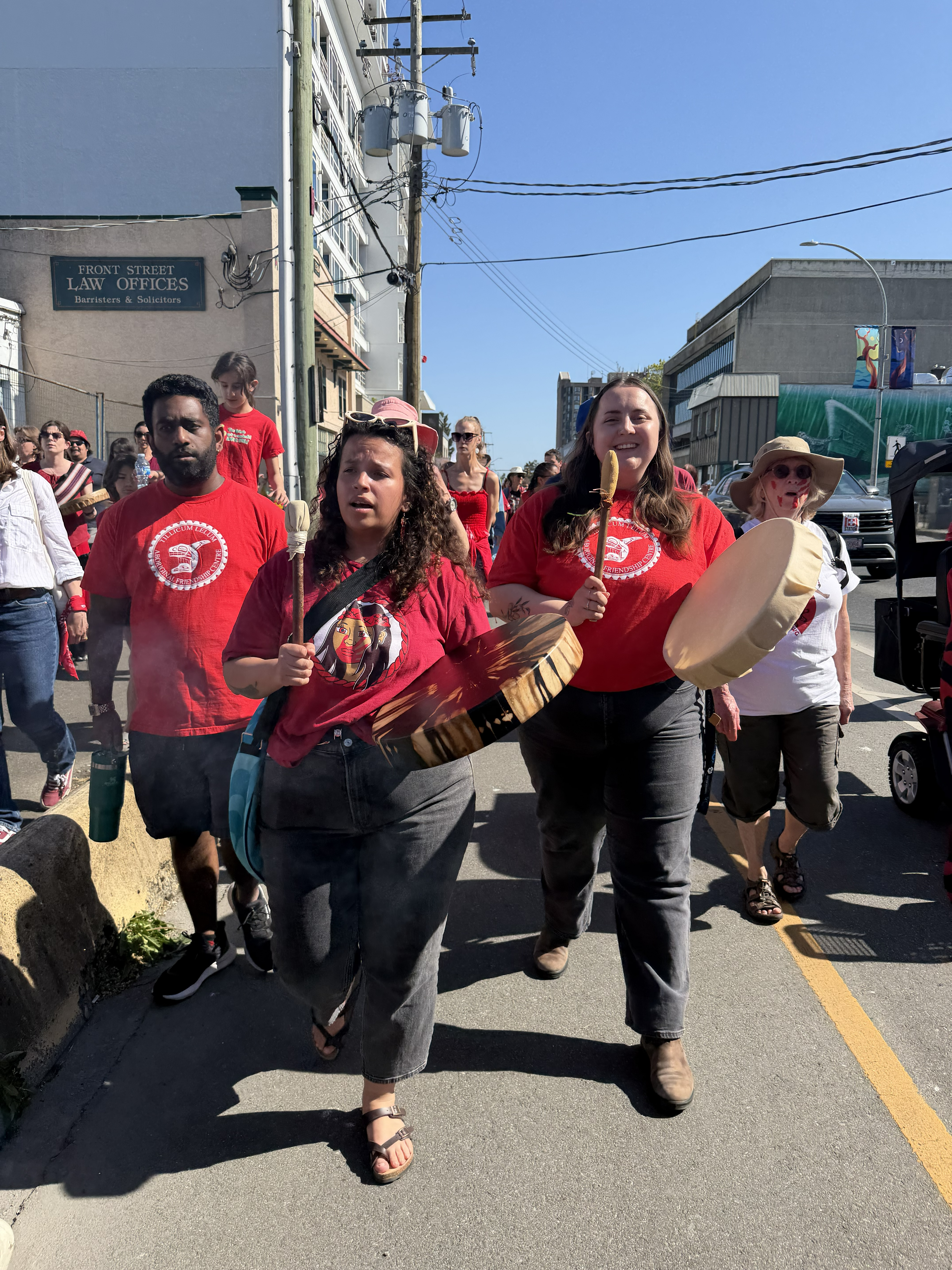
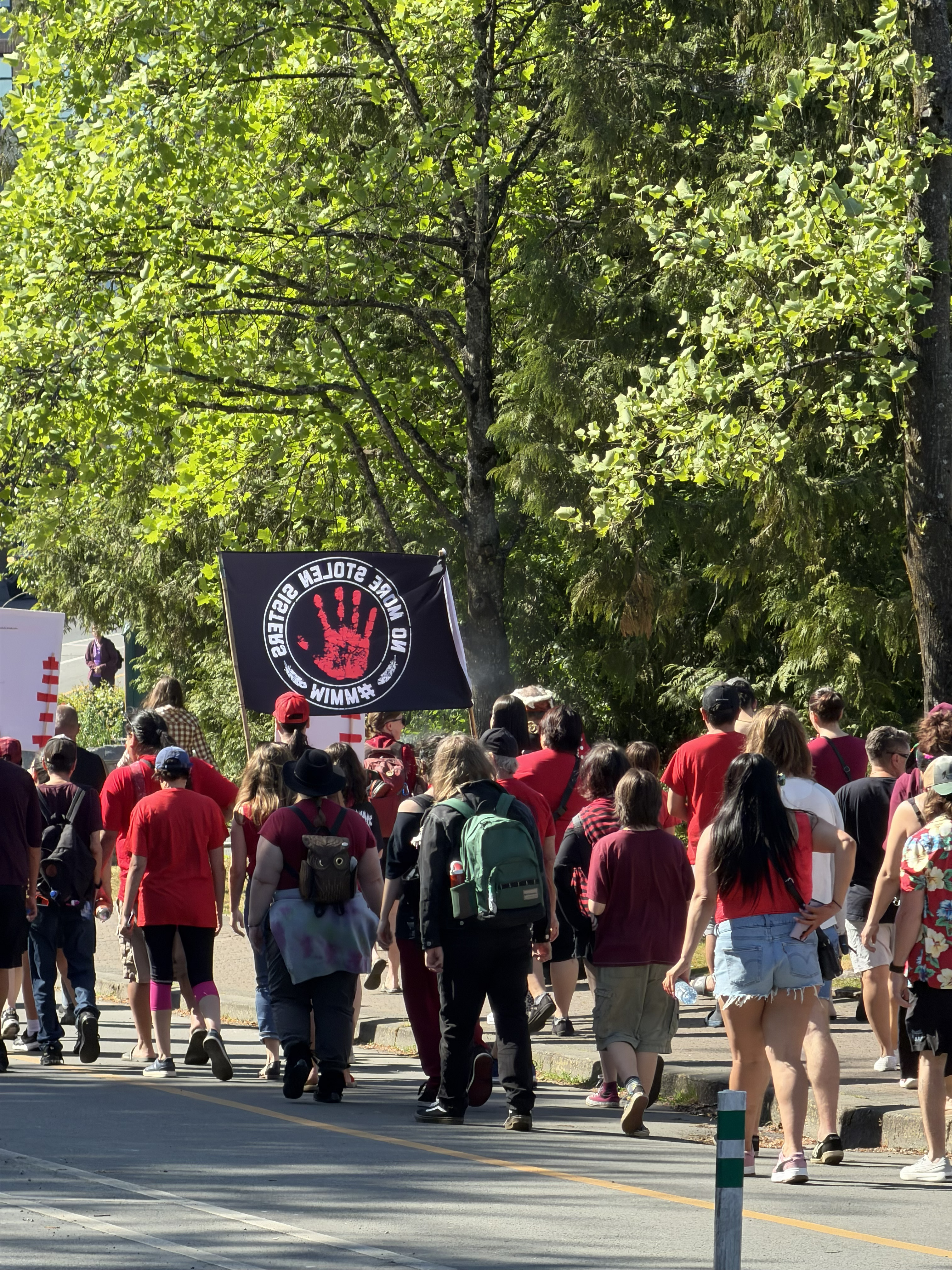
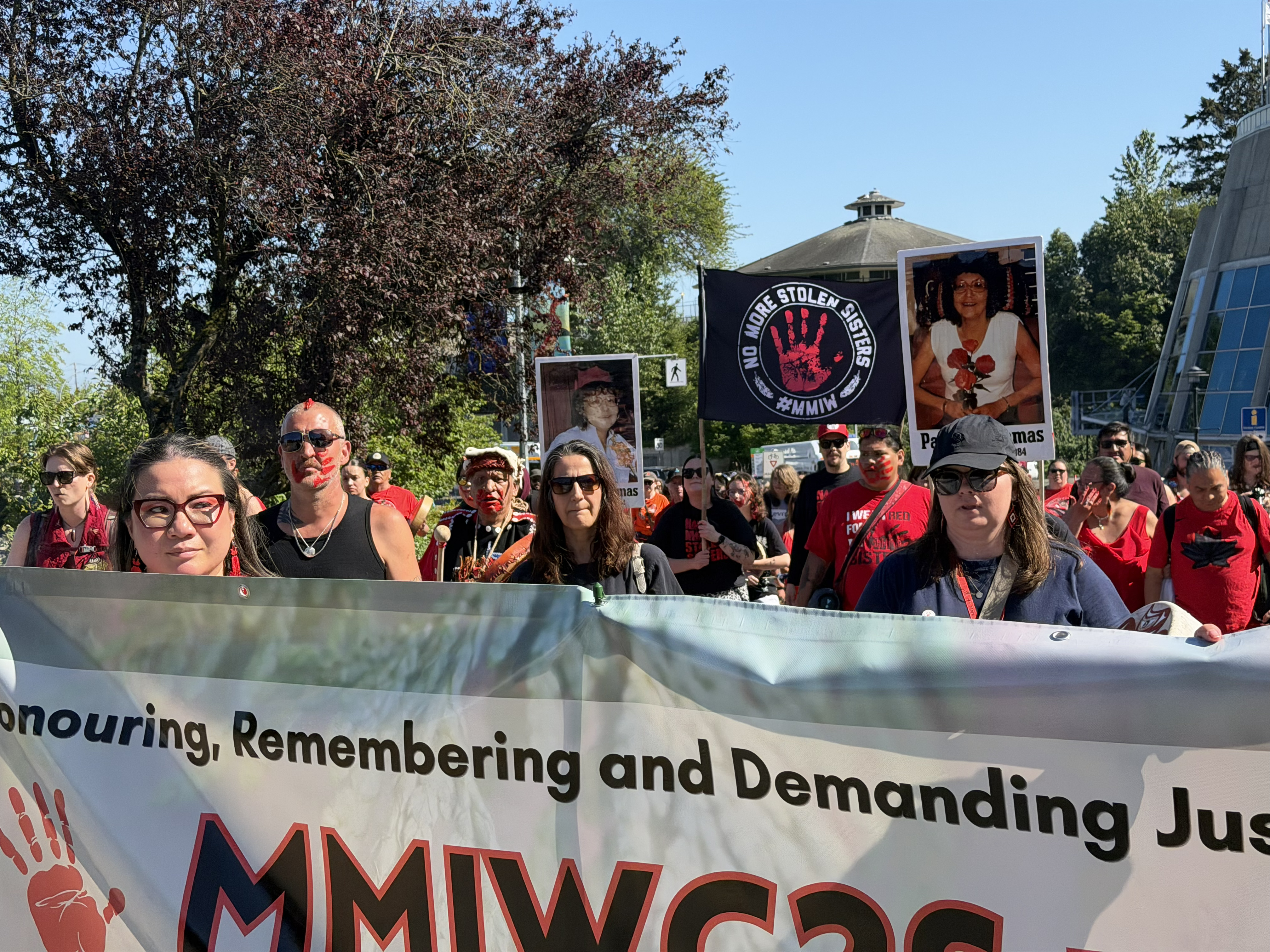
Scores of people dressed in red marched through downtown Nanaimo late Tuesday afternoon to honour missing and murdered Indigenous women, girls, and Two-Spirit people during the city’s fourth annual MMIWG2S+ walk and gathering.
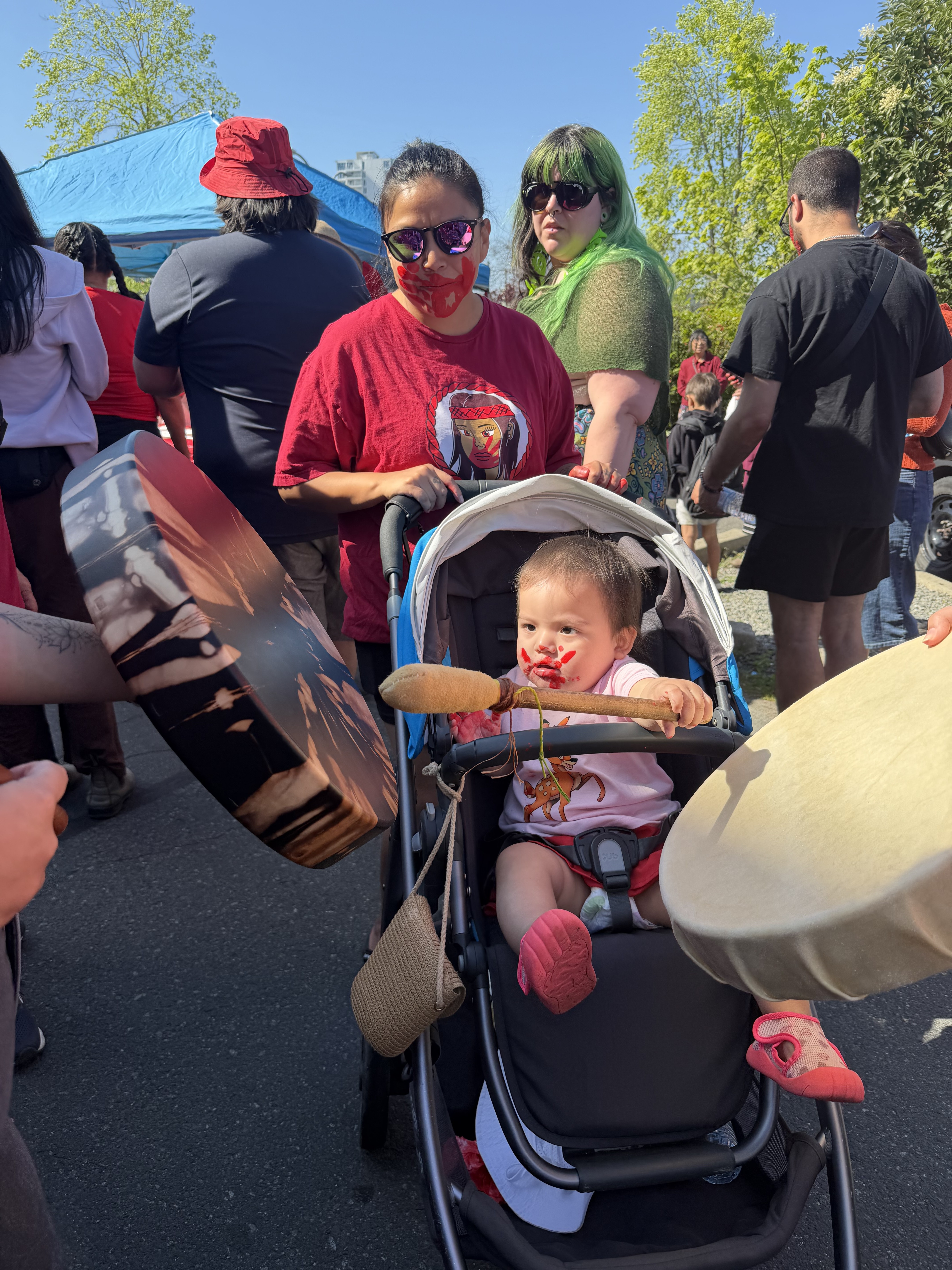
The May 5 march took place on the traditional territory of Snuneymuxw First Nation and brought together Indigenous families, community advocates and supporters carrying drums, signs, banners, and photographs of loved ones.
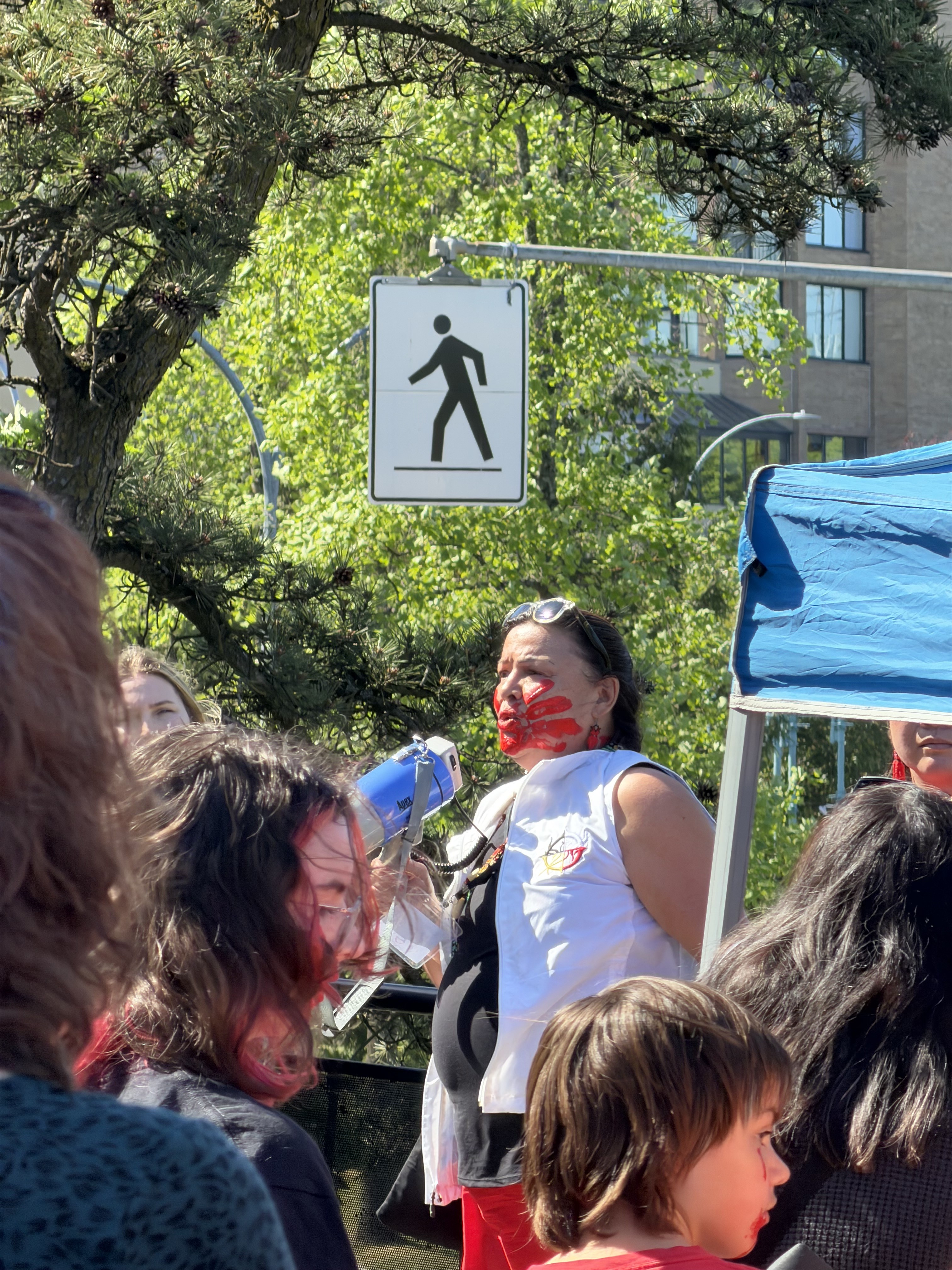
“This year marked the fourth MMIWG2S+ walk and gather in Nanaimo,” said Meagan Anderson, the Transition House director at Cedar Woman House. “We do it because it’s our responsibility to care for one another as human beings and to honour the thousands of MMIWG2S+ across Canada and their grieving families, most of which still seek answers and justice for the loss of their loved ones.”
Participants gathered before walking through downtown Nanaimo, while many drums echoed through the streets along with voices singing the “Woman’s Warrior Song,” as onlookers stopped to watch and support the procession. Many marchers wore red, a colour that has become symbolic in the movement to honour missing and murdered Indigenous women, girls, and Two-Spirit people.
The annual march is part of a broader national movement calling attention to the disproportionate violence faced by Indigenous women, girls, and Two-Spirit people across Canada. According to Statistics Canada, between 2009 and 2021 the homicide rate for First Nations, Métis and Inuit females was six times higher than the rate for their non-Indigenous counterparts.
Also known as Red Dress Day, May 5 has come to mark a Canada-wide movement for remembrance and activism towards the ongoing calls for justice that resulted from the National Inquiry into Missing and Murdered Indigenous Women and Girls. Anderson said the gathering is intended to be a call for political accountability and systemic change.
“It’s a call to action for our federal and provincial governments to uphold the demand for change in systems that consistently dehumanize and devalue Indigenous lives,” she said.
To start the gathering at Maffeo Sutton park, Snuneymuxw elder Lolly Good offered an opening prayer and song to welcome the participants before subsequent speakers took to the stage to share stories, personal tributes, and more. Organizers shared the importance of community solidarity and refusing silence around the topic of MMIWG2S+.
“I believe that silence creates complicity and the normalization of harmful views and actions; it’s where violence thrives,” Anderson said. “Our governments must lead Canadians by example. Words are not enough, it’s past time for action to create true systemic change and to make it clear that Indigenous lives matter.”
The gathering concluded with speeches, songs and community support, with many attendees remaining afterward to connect and reflect together.
“A lack of action is a choice, and it speaks volumes,” Anderson said. “It’s a choice that comes with the highest price, and that’s human lives.”