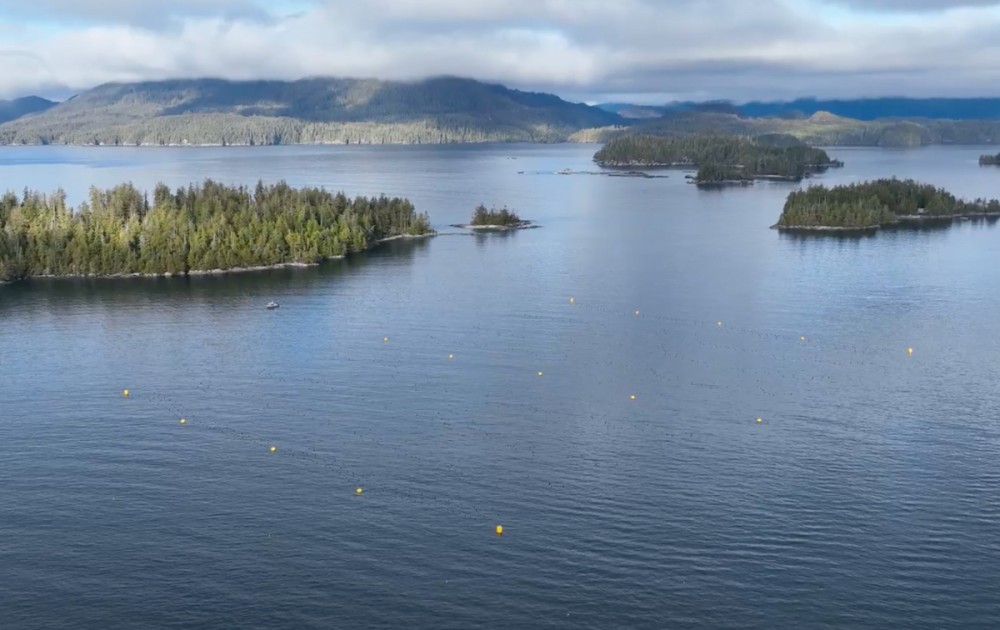
Throughout British Columbia’s coastline stretches vast forests of kelp, dense underwater vegetation that’s home to a diversity of species. Growing year-round under the ocean’s surface, this seaweed produces oxygen, stores carbon and helps to mitigate the effects of global warming.
As coastal First Nations have known for countless generations, kelp can be useful outside of the water as well. It offers nutrients and vitamins - a healthy meal component. The mineral-rich nature of seaweed can also boost plant growth, is good for the skin, and can even be produced into a plastic-like material. It’s also renewable, and giant kelp is one of fastest growing plants on earth.
North America’s first kelp farm was established in 1982, and Canadian Kelp produced food products from its location in Bamfield for 35 years. But despite its environmental benefits and product potential, the kelp industry has yet to hit its stride. It’s estimated that just 35 per cent of the total area permitted for kelp growing in North America is being used commercially, according to a report released in February from GreenWave, a network of “regenerative ocean farmers”. Meanwhile 27 per cent of the farms GreenWave surveyed reported a profit.
“It’s in a startup phase,” said Mark Smith, executive director of the Pacific Seaweed Industry Association. “I think we have all the pieces, we just don’t know how they go together yet.”
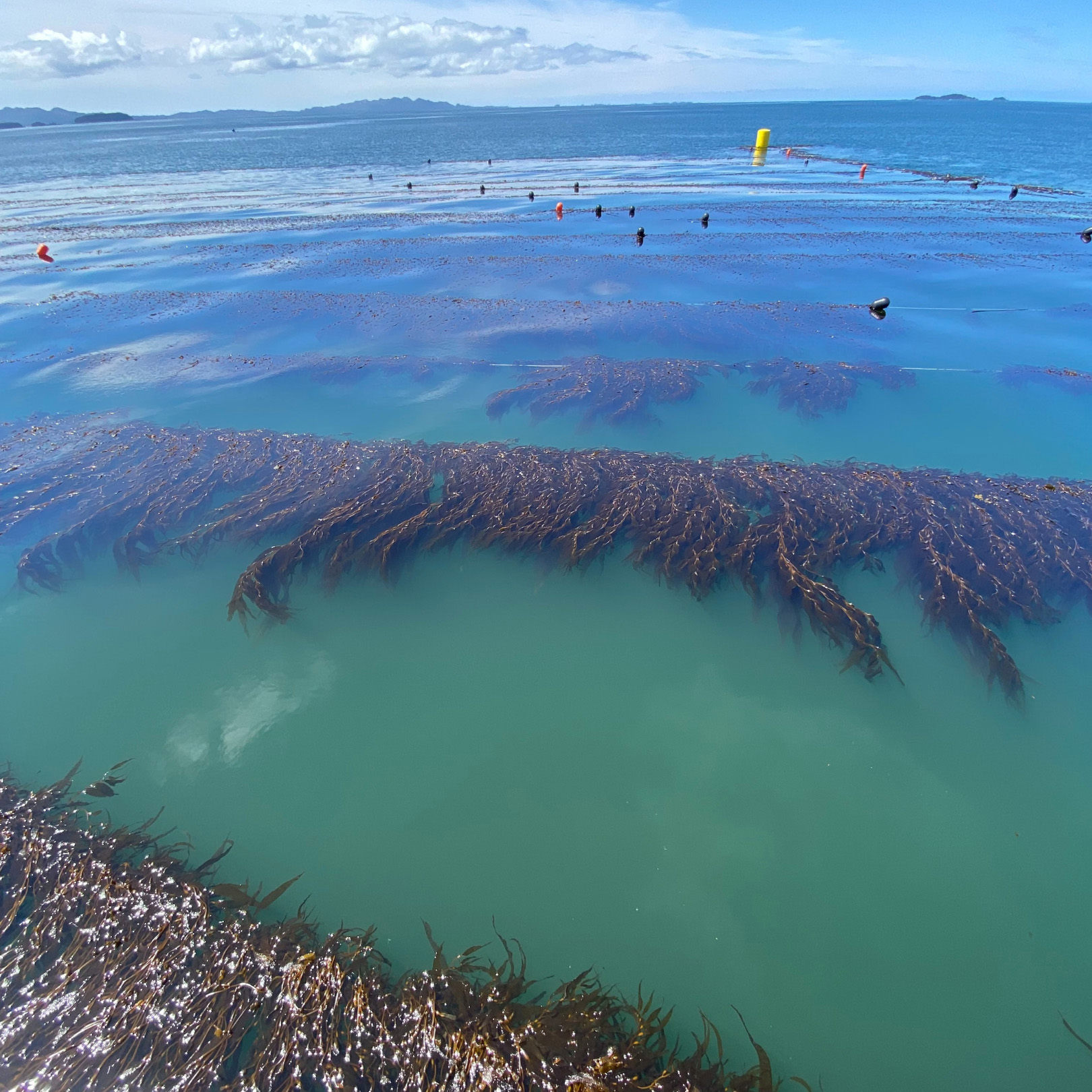
Even so, seaweed is considered by many to be the fastest growing aquaculture sector. In 2015 there were just a handful of kelp nurseries in North America, but over the last decade this has grown to 56. Seeded twine from these nurseries now go to 248 permitted farms in Canada and the United States, where rows of rope are suspended across the ocean for kelp to grow along the lines below the water’s surface.
Just over a quarter of what’s produced is for the food industry, according to GreenWave. The rest is spread across a diversity of purposes, including as a bio-stimulant for agriculture, textile production, bio-plastic building material and even as a component in skin care products.
Looking beyond the ‘hero ingredient’
GreenWave cites 20 kelp farms in B.C., covering a total 441 hectares of coastal water. The largest tenure is operated by Naas Foods, which farms 40 hectares in Clayoquot Sound at the northeast part of Ahousaht territory.
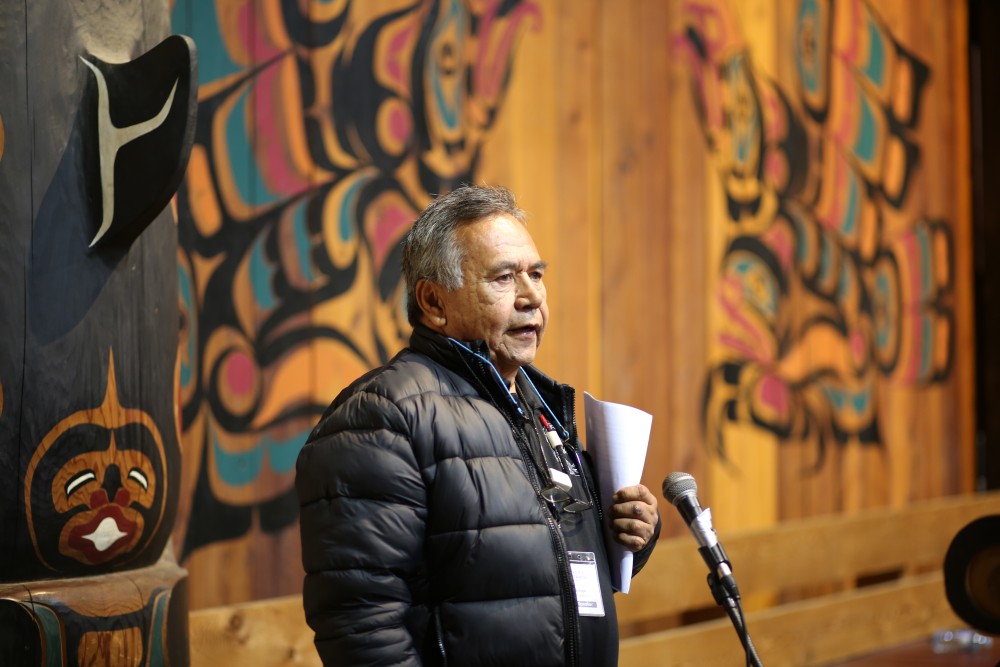
“The location was picked for the growth of the plant,” said co-owner and founder Stevie Dennis, who is from the Ahousaht First Nation, while he attended the Indigenous Seafood Conference in early February.
Naas Foods produces dried and smoked kelp flakes for eating, a product that’s sold from their store in Tofino, provided to restaurants in B.C. and sold through online orders. So far kelp has accounted for about 20 per cent of the company’s revenue, as they also process fish from recreational anglers and the Taaq-wiihaq rights-based fishery, but this year Dennis is expecting seaweed opportunities to grow.
“I foresee kelp this year probably hitting 40-50 per cent of revenue for the business,” he said.
Naas Foods has tapped into kelp’s reputation as being a nutrient-rich “hero ingredient” on the dinner plate, which was an emphasis in the early days of the industry, says Kendall Barbery, director of partnerships and industry engagement for GreenWave. But she also notes that for many other growers to last in the business they’ll need to look beyond food.
“There were some novel products that made it to market, there are some companies that persist to focus on condiments and things like that, but those don’t require large volumes of material,” said Barbery. “In fact, many of the companies that focused originally on food have either closed down or shifted gears.”
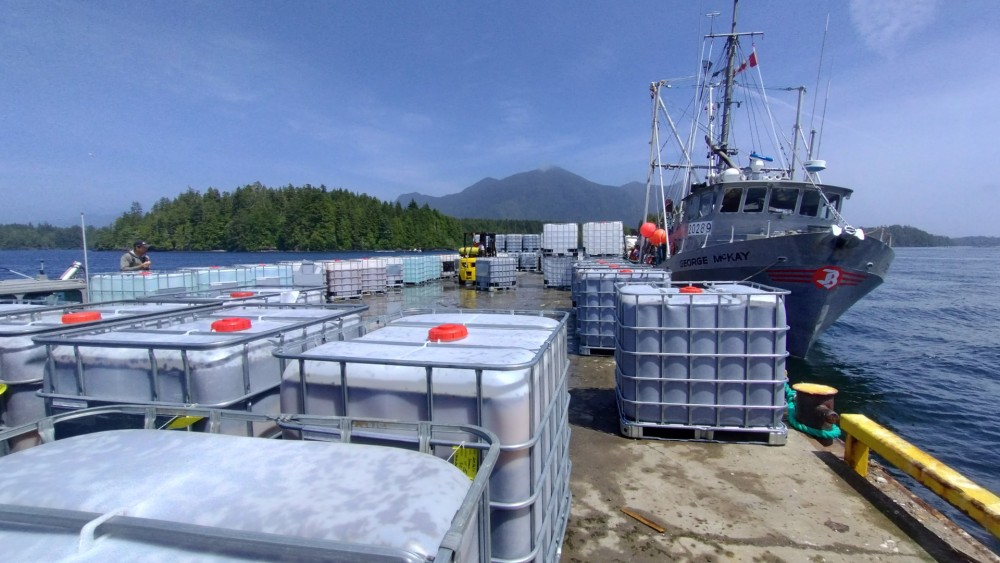
One such example is Cascadia Seaweed, a growing operation out of Sydney on southern Vancouver Island. Cascadia has shifted away from its food line to focus on bio-stimulants, liquid extracts that enhance crop yields.
“We’re not going to have a thriving sector if we don’t know where our market is,” said Jennifer Clark, Cascadia’s chief scientist. “There’s so many different uses for seaweed that we’re still learning about and still discovering.”
The company sold 100,000 litres of the product last year to agricultural producers, and even managed to get insurance from Farm Credit Canada. This is a novel sign of confidence for the kelp industry, which often still struggles to get backing from insurance providers and banks. Cascadia has farms on Vancouver Island’s coast through partnerships with the Tsawout, Uchucklesaht, Tseshaht, Ahousaht and Metlakatla First Nations.
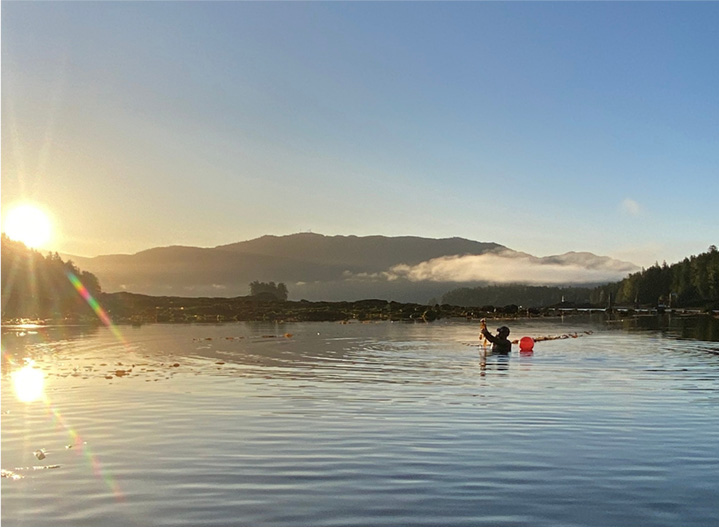
At the north end of Vancouver Island, Shaelynne Bood has spent the last several years growing a seaweed business that harvests wild kelp from the territory of her Kwagiulth First Nation. From April to October Bood’s boats are out on the water at daybreak to cut the kelp plants at low tide, enabling the bottom section of the canopy to continue growing underwater.
Her crews use small boats, cutting the growth with gaff hooks and knives. On a good day four boats bring in 16,000 pounds of kelp.
“We do all of our harvesting by hand, there is no machinery,” said Bood. “I am almost always the first person out on the water in the morning. I think that’s really, really special.”
Most of the product goes to a single supplier of crop-boosting bio-stimulants for agriculture, but Bood has also tapped into an arrangement with Estee Lauder.
“Our kelp is also the first ingredient in La Mer cosmetics,” said Bood. “We are flash freezing it for them to get the quality product straight to New York, then it goes through a fermentation process for about four months.”
Salmon farming’s leftover space
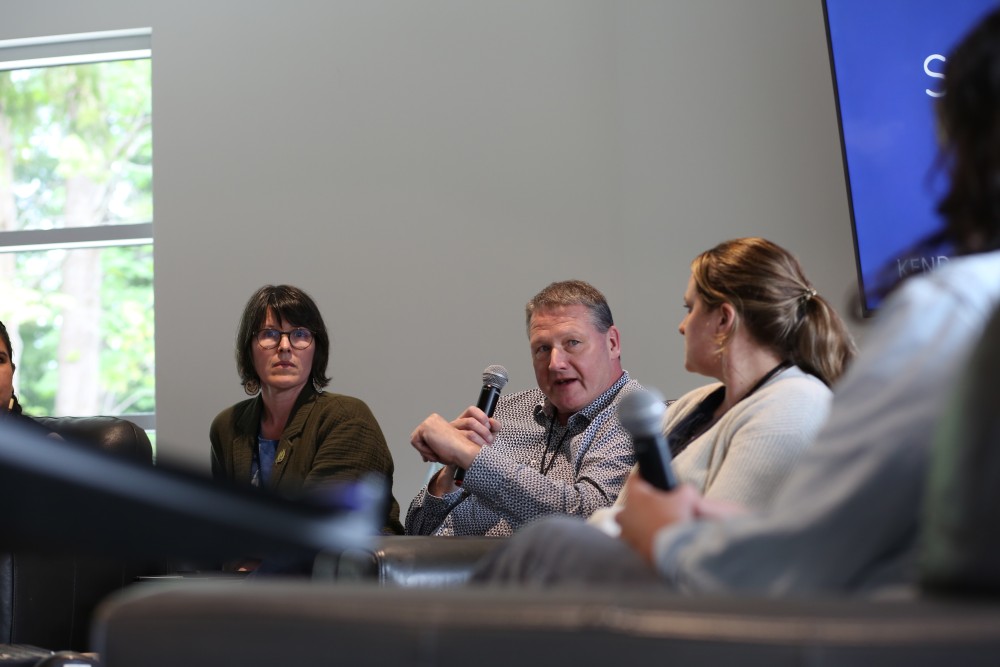
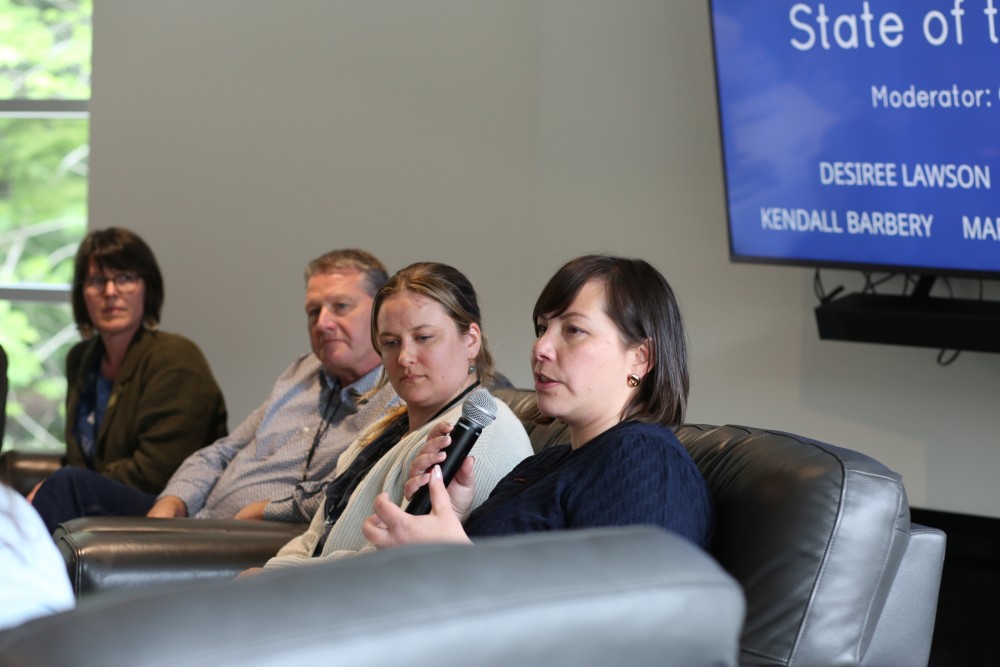
Smith, Barbery, Clark and Bood all shared their experiences at the Pacific Seaweed Summit, a three-day conference co-hosted by North Island College, the Wei Wai Kum First Nation, Heiltsuk Climate Action and the Pacific Seaweed Industry Association in Campbell River May 6-8.
Over the past decades the Vancouver Island city has hosted central offices for some of the major salmon farming operations on the B.C. coast, but the tide is clearly changing for this side of aquaculture. A federally mandated deadline of June 30, 2029 states that all open net pens – long the industry standard for salmon farming – must be out of the ocean, meeting the concerns of many that the practice is interfering with the health of migrating wild Pacific stocks.
For an industry that at one time accounted for more than three quarters of all salmon harvested in the province, the effects of this phase out are already apparent. In January the BC Salmon Farmers Association cited a 40-per-cent drop in the province’s production of farmed salmon since 2015. Over this same period Canada’s salmon imports have more than doubled, reported the association, with more shipments coming from Chile, Norway and other coastal exporters.
Amid what appears to be the sunset of one coastal industry are leftover vessels, equipment and personnel – leaving some to wonder if seaweed could claim some of the space left by salmon farming. The Wei Wai Kum has taken over salmon farming tenures that were previously held by Cermaq in the First Nation’s territory to explore opportunities in kelp farming.
“It’s naturally occurring,” said Wei Wai Kum Chief Councillor Chris Roberts of kelp’s benefits, drawing comparisons to salmon farming. “They’re a filter feeder, we’re not adding feed, we’re not adding a bunch of inputs in there.”
But with kelp aquaculture still in its early phase, Roberts cautions that questions remain about environmental impacts of the practice.
“Much like shellfish aquaculture as a filter feeder, there are impacts, so it’s important to understand the overall environmental context,” he said.
In B.C. even the provincial regulators admit uncertainty over how kelp aquaculture will impact coastal ecosystems.
“At this time we’re trying to follow that precautionary principle,” said Kylee Pawluk, an aquatic plant specialist with the B.C. Ministry of Water, Land and Resource Stewardship.
Currently the province puts limits on moving a species of kelp so that it doesn’t interfere with wild growth of another plant.
“We know that there are individual populations, and we don’t want any of the farming practices to impact those wild beds,” said Pawluk, adding that this is in place “so that you’re not moving one from down in Victoria all the way up to Haida Gwaii. We don’t understand what that could do.”
‘First Nations have to lead it’
The Pacific Seaweed Summit opened with a keynote address by Larry Johnson, president of Nuu-chah-nulth Seafood, who reflected on the lessons he gained from growing up in Huu-ay-aht territory in southern Barkley Sound. He recalled how an area known as ‘Kelp Bay’ hardly contained any of the aquatic plants, thanks to the historic overhunting of sea otters. Sea otters feed on sea urchins and abalone, but without the furry predators around this shellfish thinned out the region’s kelp beds.
“We eradicated sea otters; we didn’t think it would have an effect,” said Johnson. “The world relies on the exploitation of natural resources in silos. That’s why we’re experiencing climate change. It’s our own fault.”
As First Nations and ocean farmers explore the future of kelp growing, Johnson hopes that those tied to the industry will work together – never losing sight of the lesson that everything in our world is connected.
He recalled a tour of aquaculture sites along Norway’s coast, all connected by paved roads with cellular service.
“That’s really good infrastructure to support economic development,” said Johnson.
“I saw industry, the universities and research and development working together to solve the environmental issues,” he continued. “I thought, ‘Why can’t we do that in Canada?’ We can, but First Nations have to lead it. So don’t be afraid.”