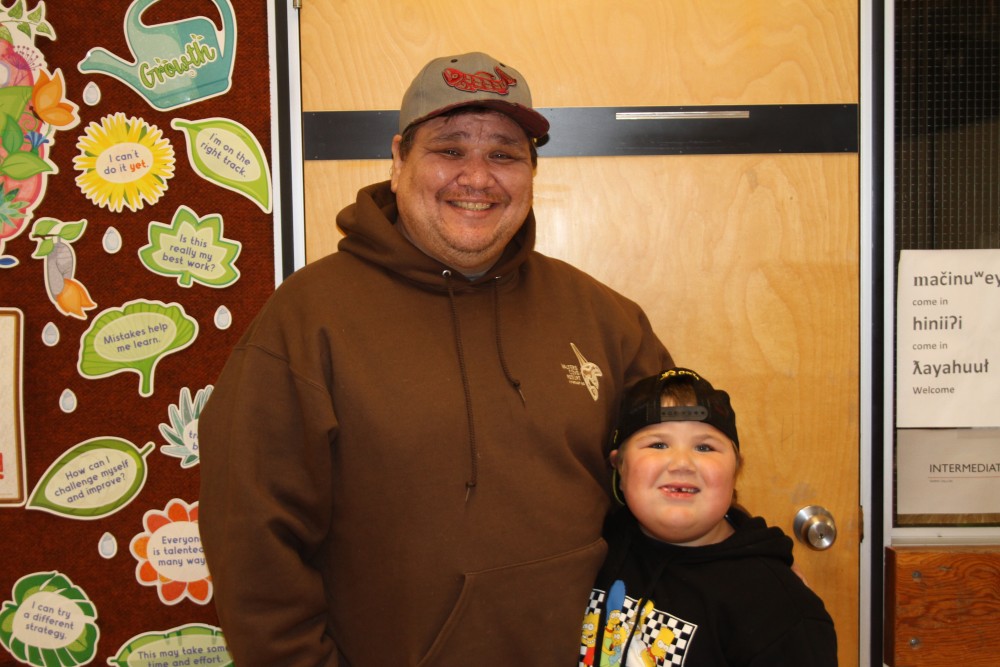
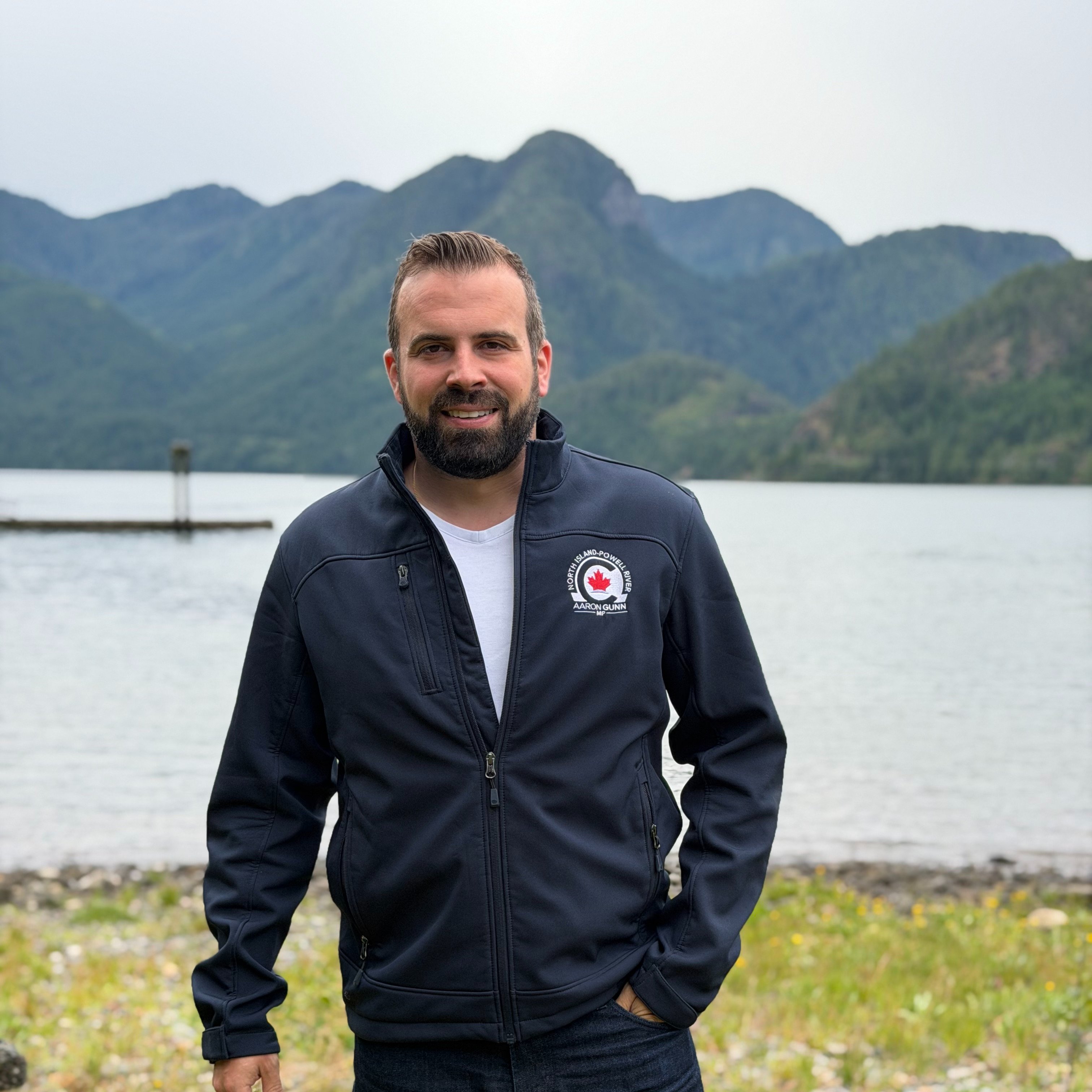
Two Ka:'yu:'k't'h'/Che:k'tles7et'h' members approached Aaron Gunn during the MP’s recent visit to Kyuquot to have a “tough conversation” with the MP about his past statements on sensitive First Nations issues.
Gunn became the region’s representative in Ottawa after earning 38.7 per cent of votes for the North Island-Powell River riding during the national election in April 2025. For Kyuquot and northern Vancouver Island, the Conservative Member of Parliament took over from a long stint of NDP representation, riding a massive blue wave of Conservative victories across most of B.C. and Alberta during last year’s election.
But Gunn entered the election with the controversy of comments he made online from 2019 to 2021 in which he downplayed the harm of residential schools.
“Residential schools were asked for by Indigenous bands,” wrote Gunn in one entry to the Twitter platform, which is now called X.
“There was no genocide. Stop lying to people and read a book,” wrote Gunn in another post. “The Holocaust was a genocide. Get off Twitter and learn more about the world.”
Some First Nations leaders called for the party to drop Gunn, but Conservative Leader Pierre Polievre stood by his candidate, who during the weeks leading up to the final vote made an effort to distance himself from being a residential school denialist.
“I have never wavered in condemning these institutions of abuse, where countless First Nations suffered at the hands of a patronizing federal government,” wrote Gunn in an X post from April 3, 2025. “We must acknowledge the terrible mistakes of our past and learn from our history while celebrating Canada as the greatest country on earth. I look forward to working with great candidates such as former Haisla Chief Ellis Ross, to repeal the Liberals’ radical anti-resource laws to quickly green-light good projects so First Nations and all Canadians bring home more powerful paycheques.”
While he stressed the need to acknowledge past mistakes, Gunn doesn’t like the recognition of a First Nation’s traditional territory, which has become a common practice before a public event in Canada. In March of this year Gunn said that the federal government must stop these land acknowledgements if it “truly believes in the private property rights of Canadians,” according to a social media post he made.
He also stated that the practice of land acknowledgements “reinforces the radical and dangerous legal concept that most Canadians live on ‘stolen land’,” he wrote. “This is Canada. One country for all Canadians.”
On July 14 Gunn travelled to Kyuquot to meet with residents. He planned a stop to Walter’s Island, across the bay the Ka:'yu:'k't'h'/Che:k'tles7et'h' First Nations village of Houpsitas.
“He did not reach out the KCFN directly,” said Legislative Chief Benjamin Gillette in an email to Ha-Shilth-Sa. “Our leadership do not see him as an advocate of ours, and I doubt we ever will. He met with fishing lodges in the area and very few local residents. If he wished to meet with us to engage in a meaningful way, the respectful thing to do would have been to reach out to our leadership directly.”
After an earlier version of this article was published, Aaron Gunn’s team clarified that they did contact employees of KCFN’s Tiicma Fisheries and the Walters Cove Resort, which is owned by the First Nation. Gunn’s team also informed Ha-Shilth-Sa that they contacted the KCFN offices in Campbell River and Kyuquot about the July visit.
Ka:'yu:'k't'h'/Che:k'tles7et'h' member Kevin Jules was determined to meet with the MP, and managed to find his whereabouts on Walters Island at the Government Dock. Jules quickly alerted his brother Brandon Smith, and they took the short ride from the small village of Houpsitas.
“He grabbed his drum and we got in the boat and went over,” said Jules. “It was a good respectful conversation.”
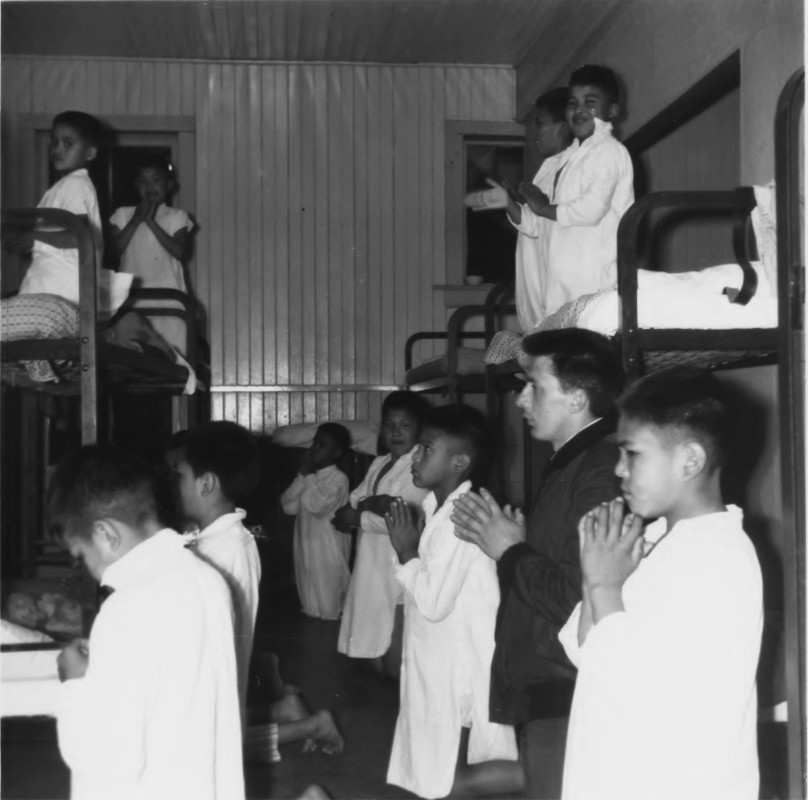
Jules admits that things were heated in the beginning, as they exchanged thoughts with Gunn about the legacy of residential schools. Jules mentioned a story shared by the late elder Hilda Hanson, who in the 1930s was taken from Aktis Island to live in a residential school. When young Hilda returned nine months later 24 big houses on the island’s shore had been destroyed after a government order was issued to enforce the potlatch ban.
“That’s a huge culture shock for a child to come home to nothing,” said Jules. “He didn’t believe it was a genocide type of situation. We had a good conversation about that, the effects it has had on us personally growing up with parents, grandparents who went to residential school.”
Jules noted that the Member of Parliament wasn’t aware that the First Nation is the result of the amalgamation of Ka:'yu:'k't'h' and its northern neighbour Che:k'tles7et'h' in 1962. Gunn also didn’t know that Ka:'yu:'k't'h'/Che:k'tles7et'h' is part of the Maa-nulth treaty, which came into effect in 2011.
“It was definitely a big teaching experience for him,” reflected Jules. “He didn’t understand that we are a treaty nation. He doesn’t really know anything about treaty compared to being an [Indian and Northern Affairs Canada] nation.”
While Gunn was in Kyuquot, Indigenous leaders from across Canada converged in Ottawa for the Assembly of First Nations Annual General Assembly. Two emergency resolutions were passed at that meeting, including a call for the federal government to criminalize residential school denialism.
“[T]housands of children were forcibly taken from their families, subjected to abuse, and many never returned home,” states the AFN resolution, which “calls upon the Government of Canada to explicitly criminalize the public condoning, denial, justification, or minimization of the Indian Residential School system, classifying such rhetoric as hate speech against First Nations.”
Conservative Leader Pierre Polievre has rejected the call to make such statements part of the Criminal Code, citing the concern of censorship of free speech. But looking forward, Jules feels that First Nations will need to find ways to find a common ground with government.
“We have to have these tough conversations, because in order for us to keep building and growing we have to be able to work with government,” he said. “If you’re really here to help us and speak for us, then you should be able to listen.”
Jules previously served for 12 years on his First Nation’s elected leadership during the early years of the Maa-nulth treaty implementation. He’s not sure if his brother and him were really heard during their conversation with Gunn, but believes that “more teachable experiences” will be necessary when the MP travels to the remote communities he was elected to represent.
“Our days of being at the table and pounding our fists and making demands are over,” said Jules. “We’re not above you, and you’re not above us. We’re seeing eye to eye and we’re working things out.”