A smile spreads on the face of Rowena Keitlah with the mention that Caldwell Hall, one of the two remaining buildings that were once part of the Alberni Indian Residential School, will be torn down.
Rowena first came to the institution at the age of eight, when she accompanied her six-year-old sister Agnes in 1967. She recalls a visit from police at the family’s home in Ahousaht, when her father Nelson Keitlah was informed that he would be put in jail if two of his daughters didn’t attend the boarding school.
Rowena remembers when her father came to Port Alberni with his daughters to say goodbye.
“It was scary. We didn’t know that we were going to the residential school,” she said. “We got out of the car, and he gave us a really big hug.”
That early time was particularly hard on younger Agnes. At night staff at the school had to get Rowena to accompany her sister.
“They would have to take her from her dorm to come sit beside me while I cried myself to sleep,” said Agnes. “She used to come into my room because I wasn’t making my bed right. They were hitting me, pulling my hair and telling me to make it over again.”
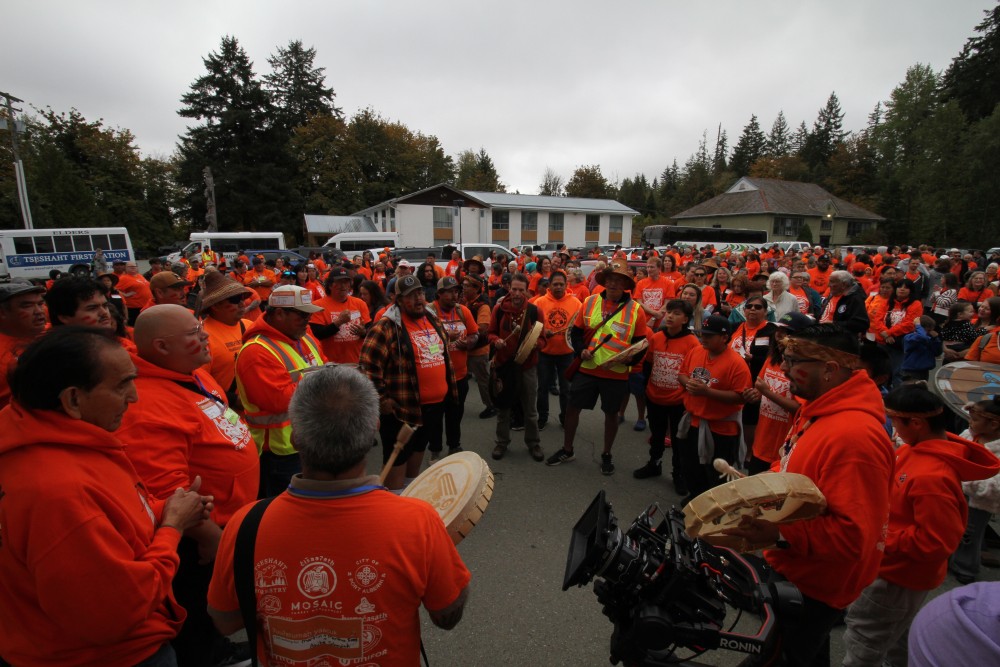
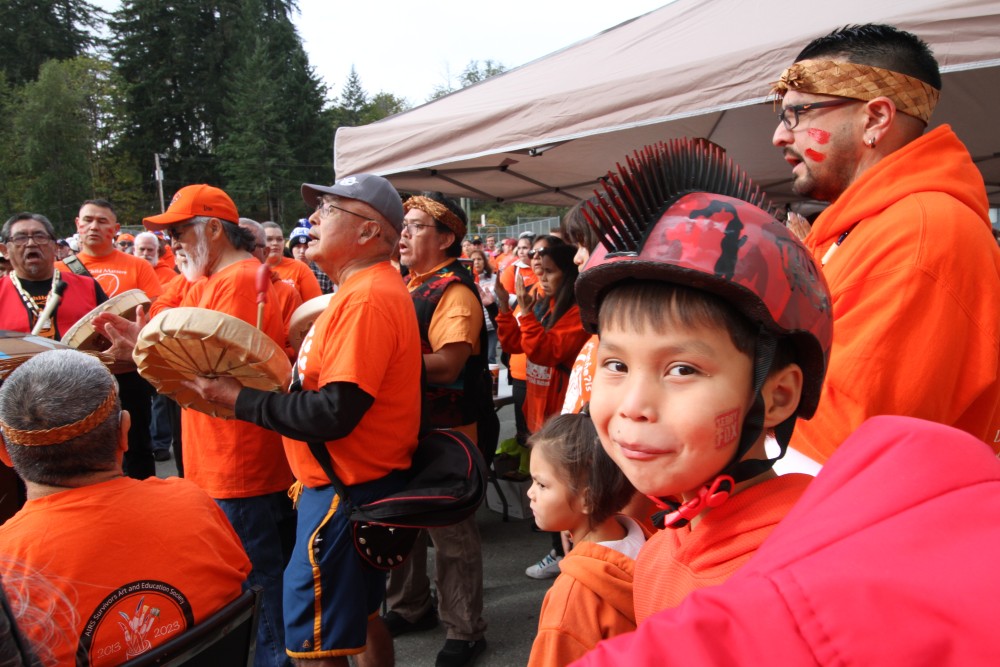
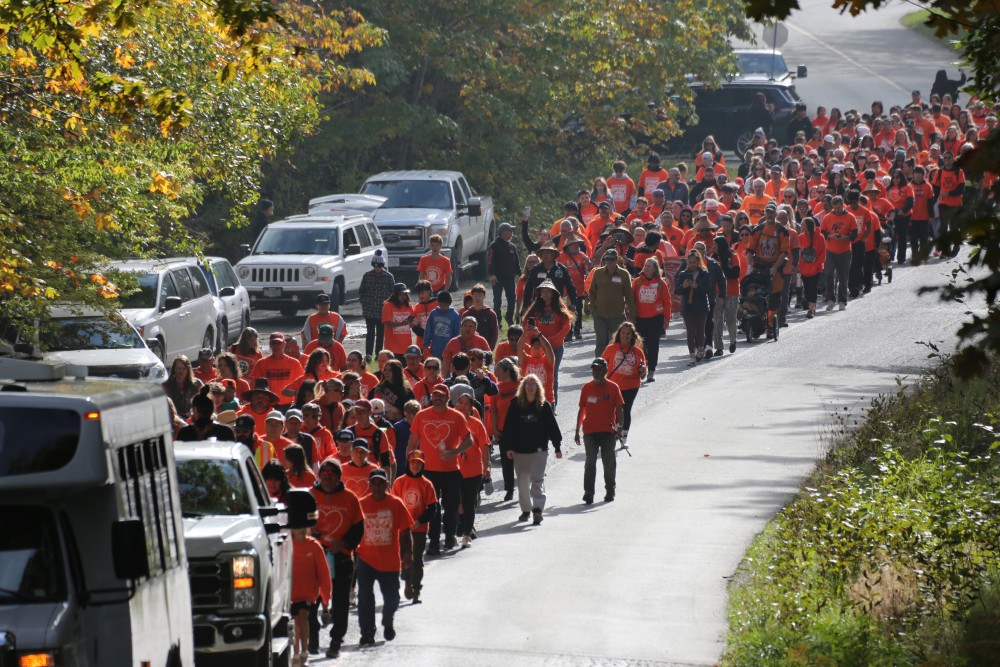
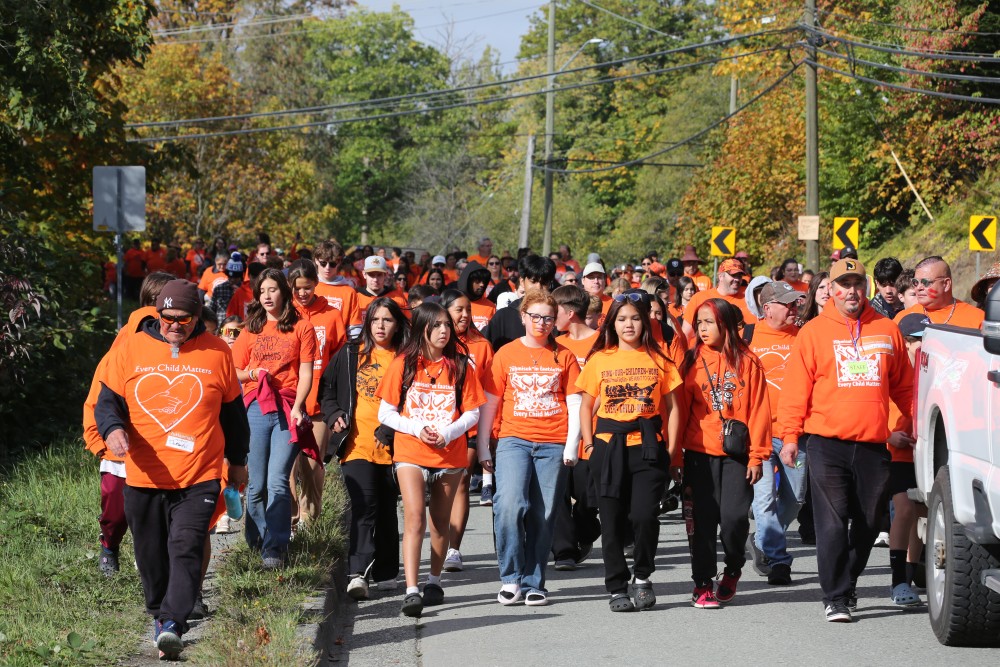
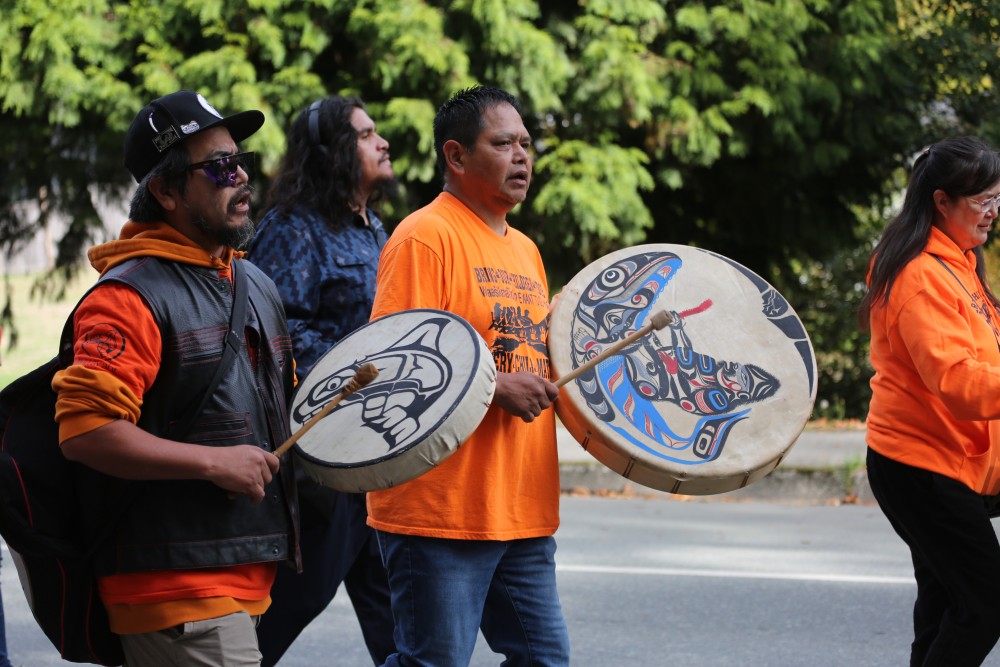
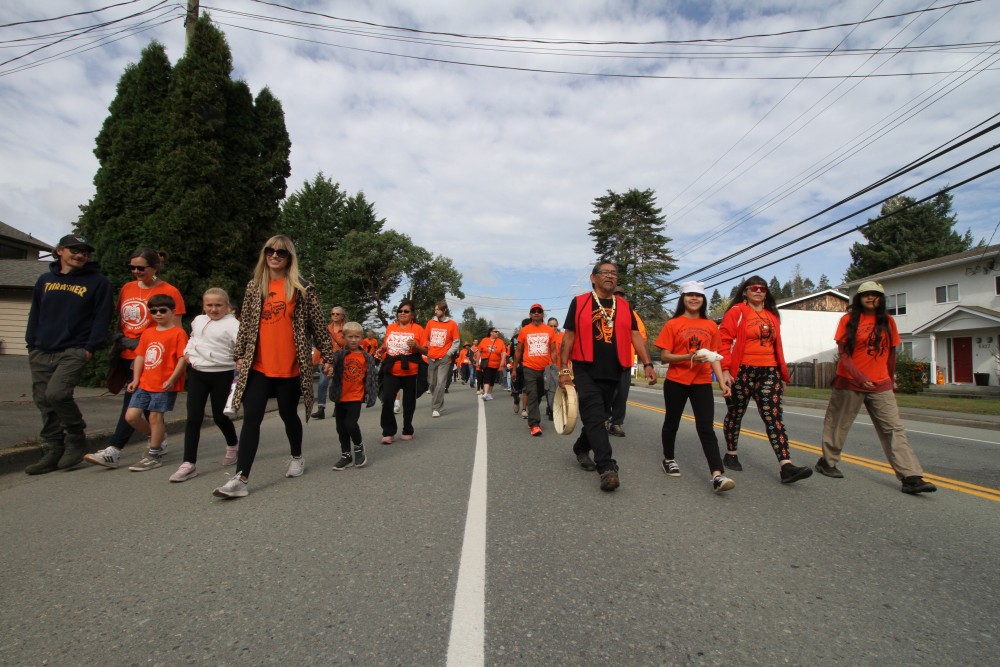
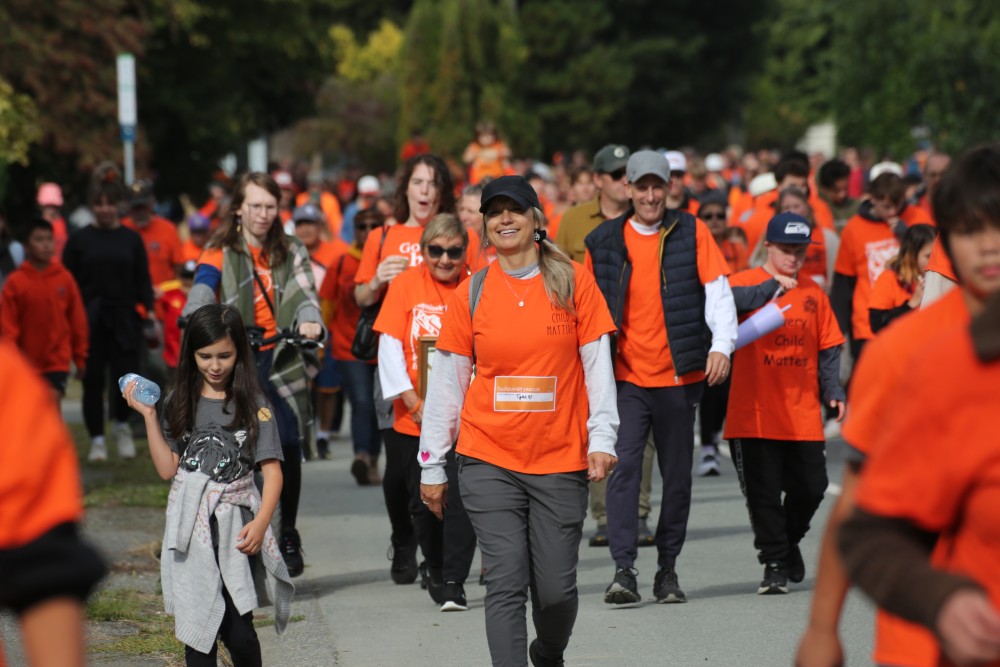
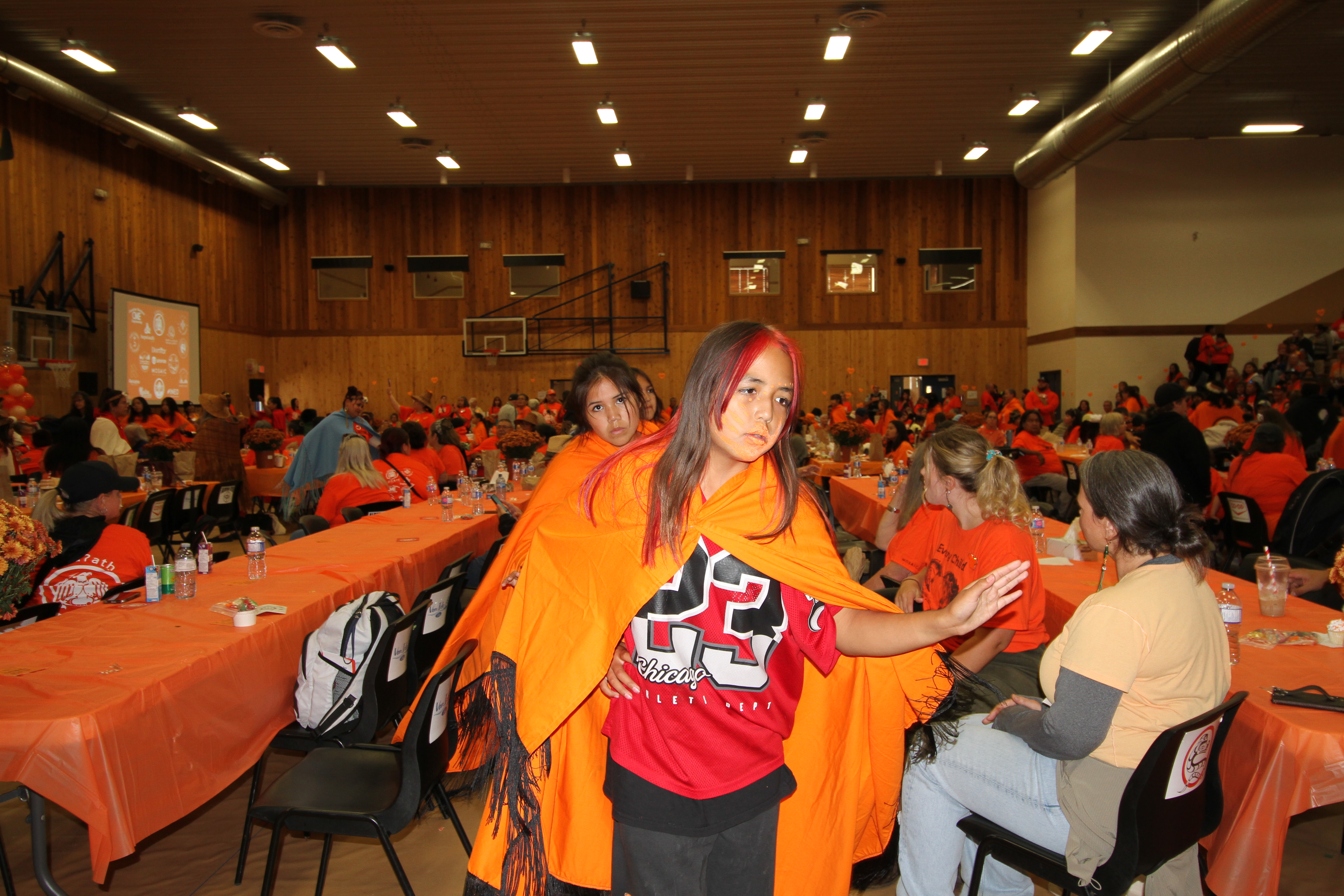
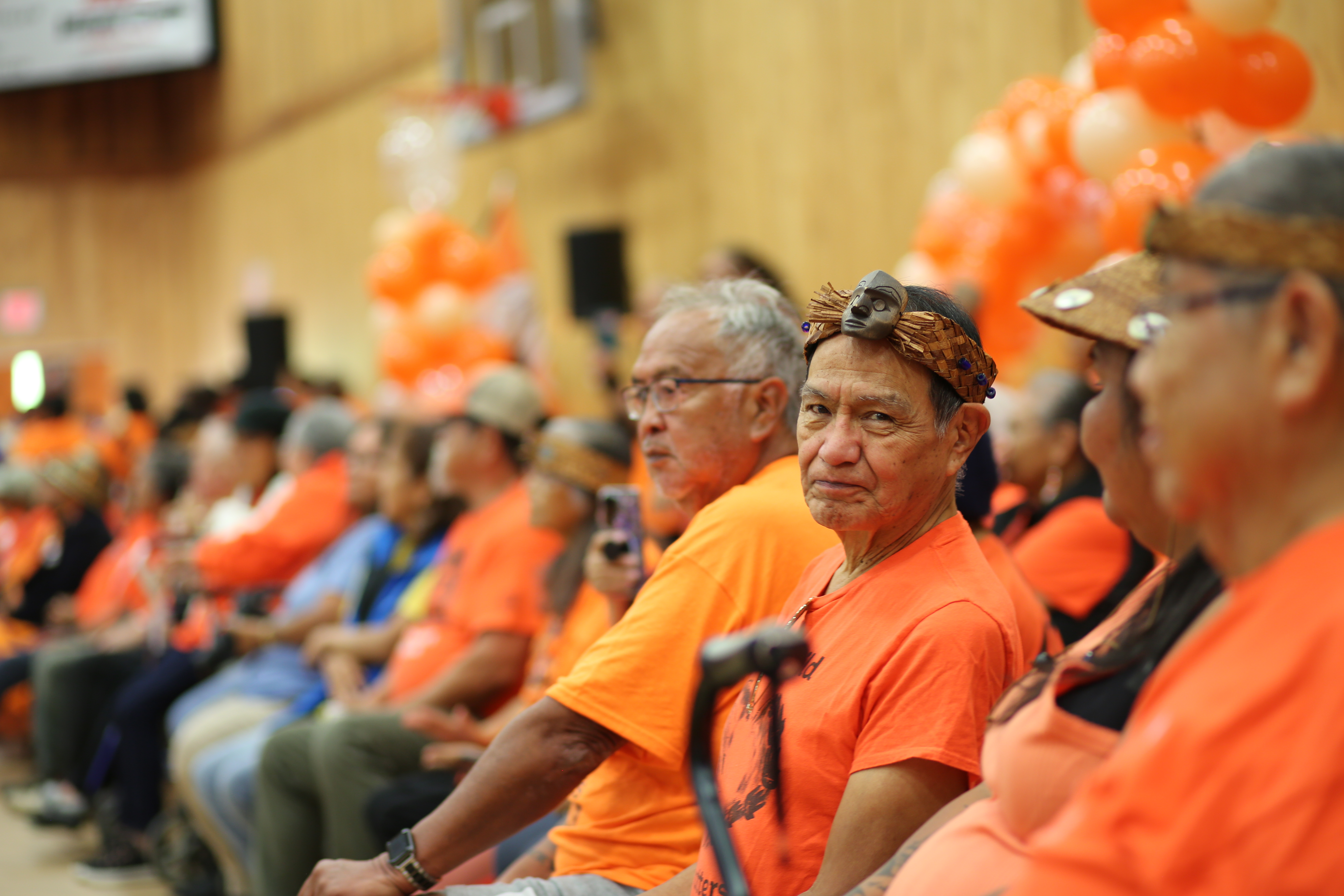
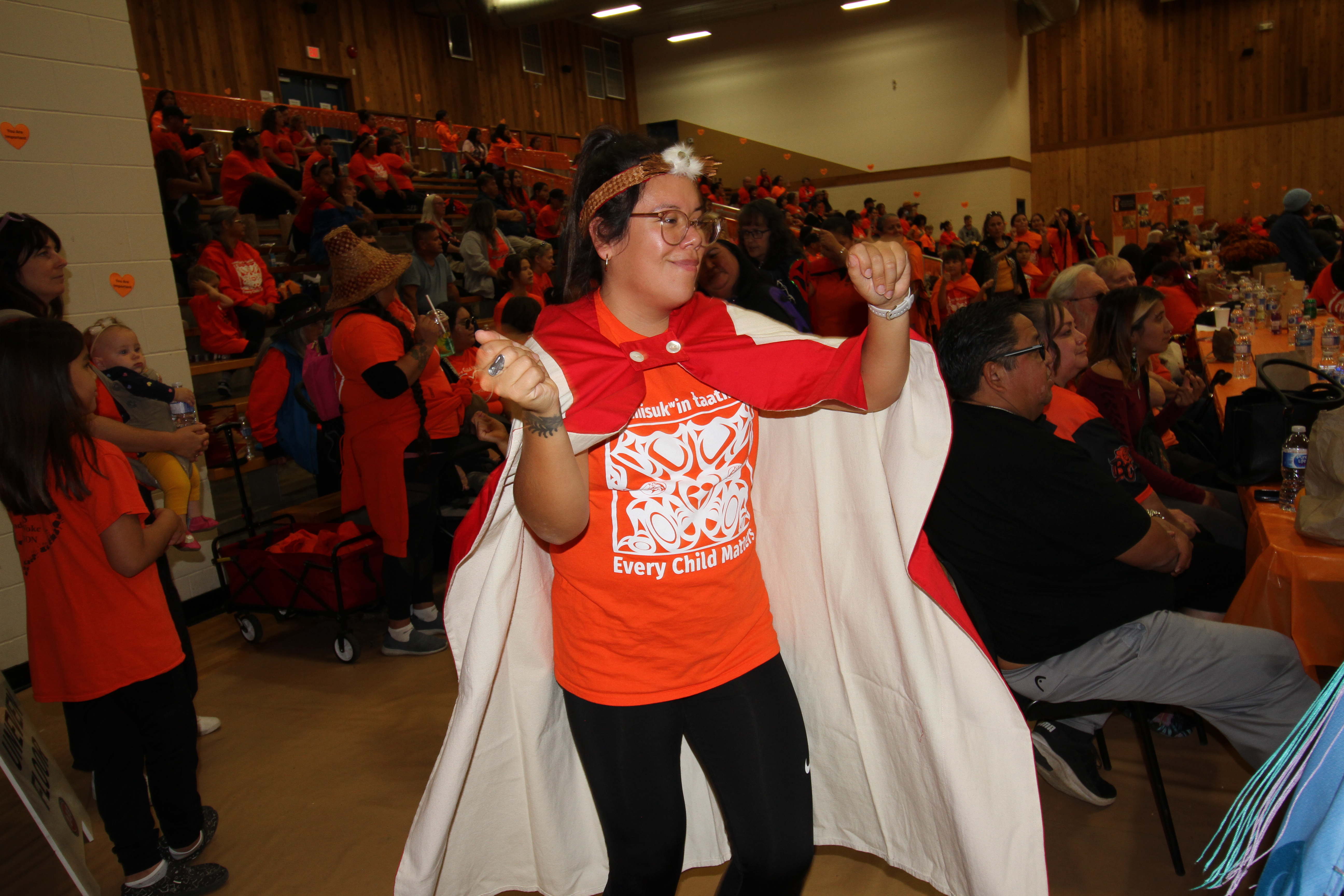
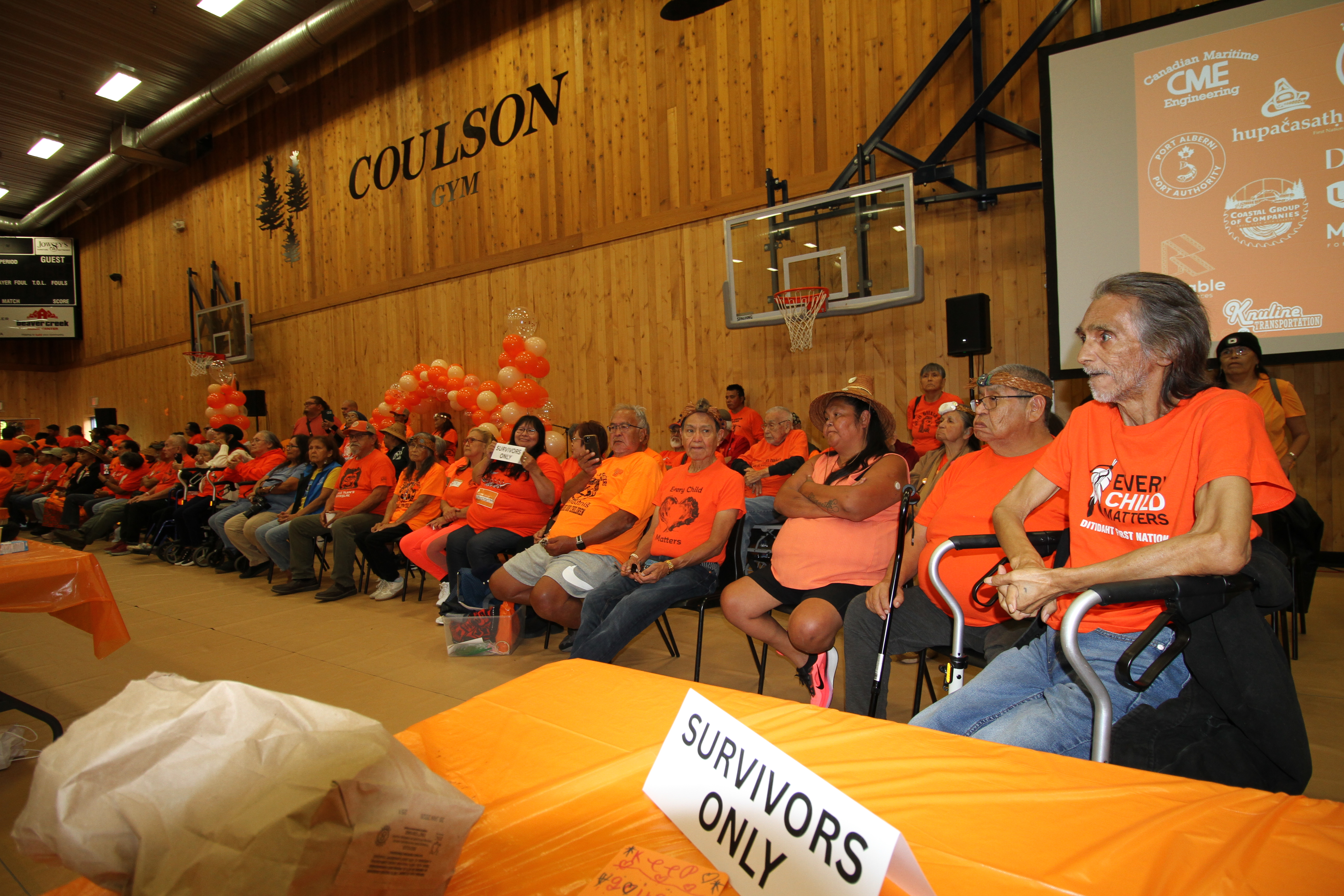
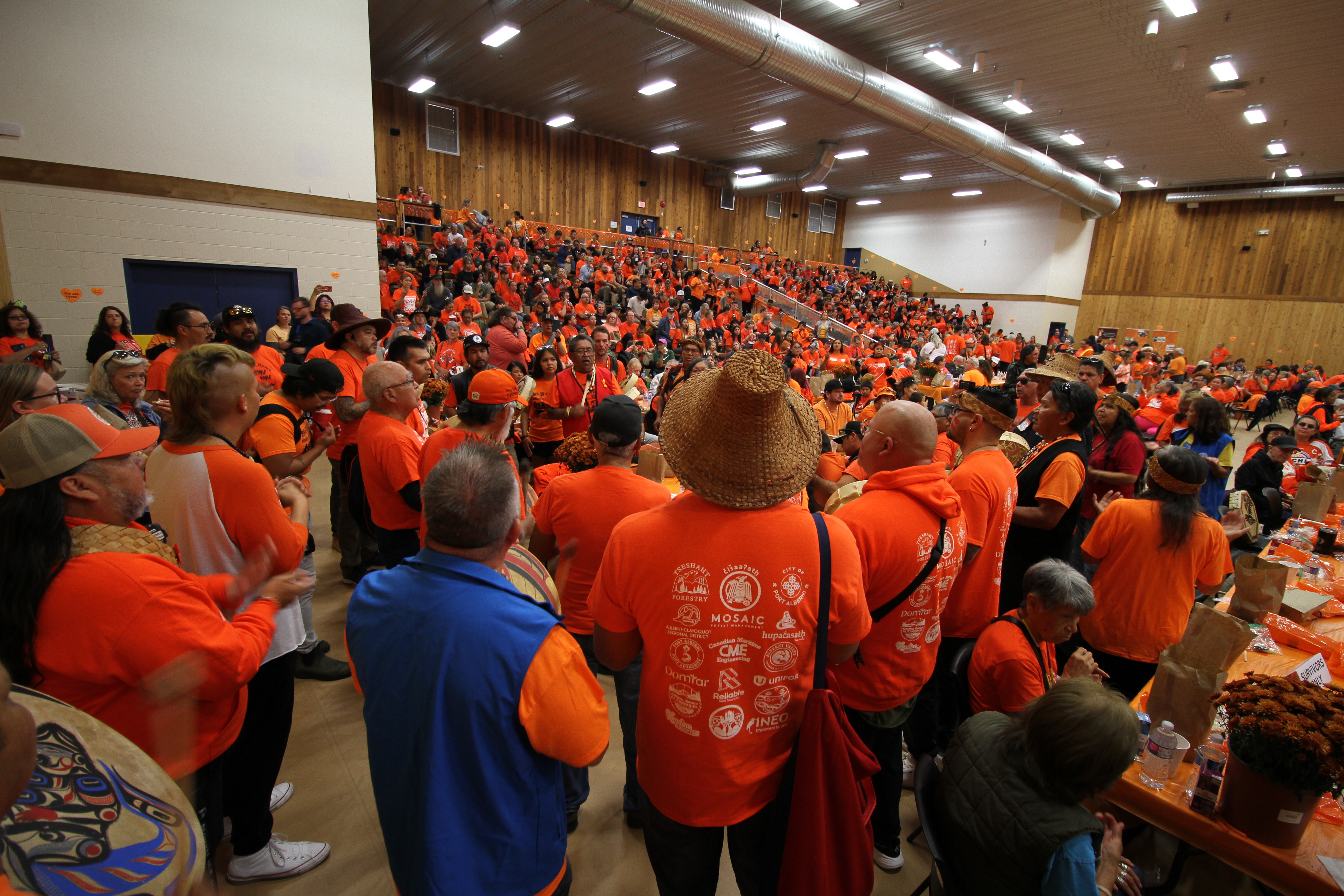
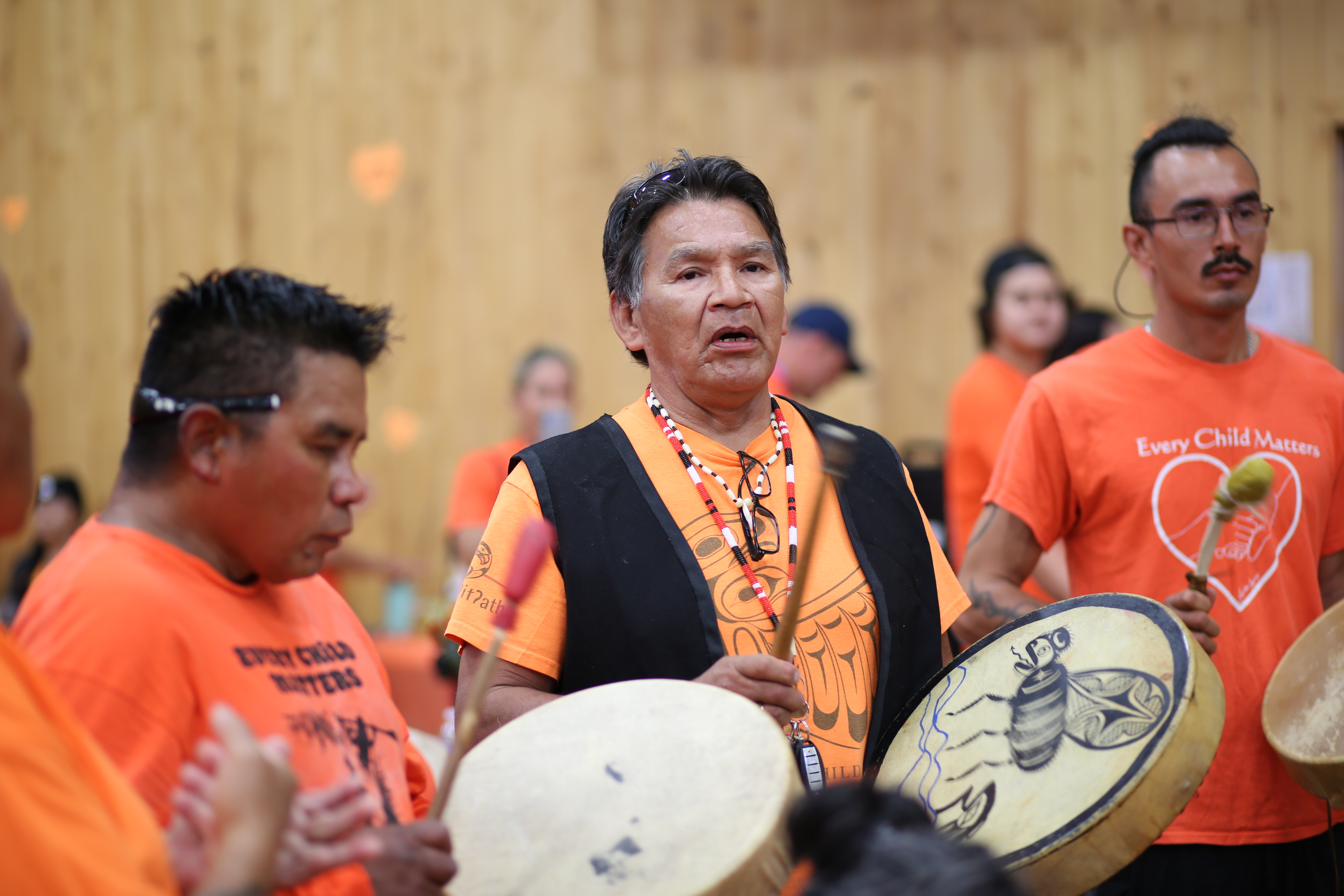
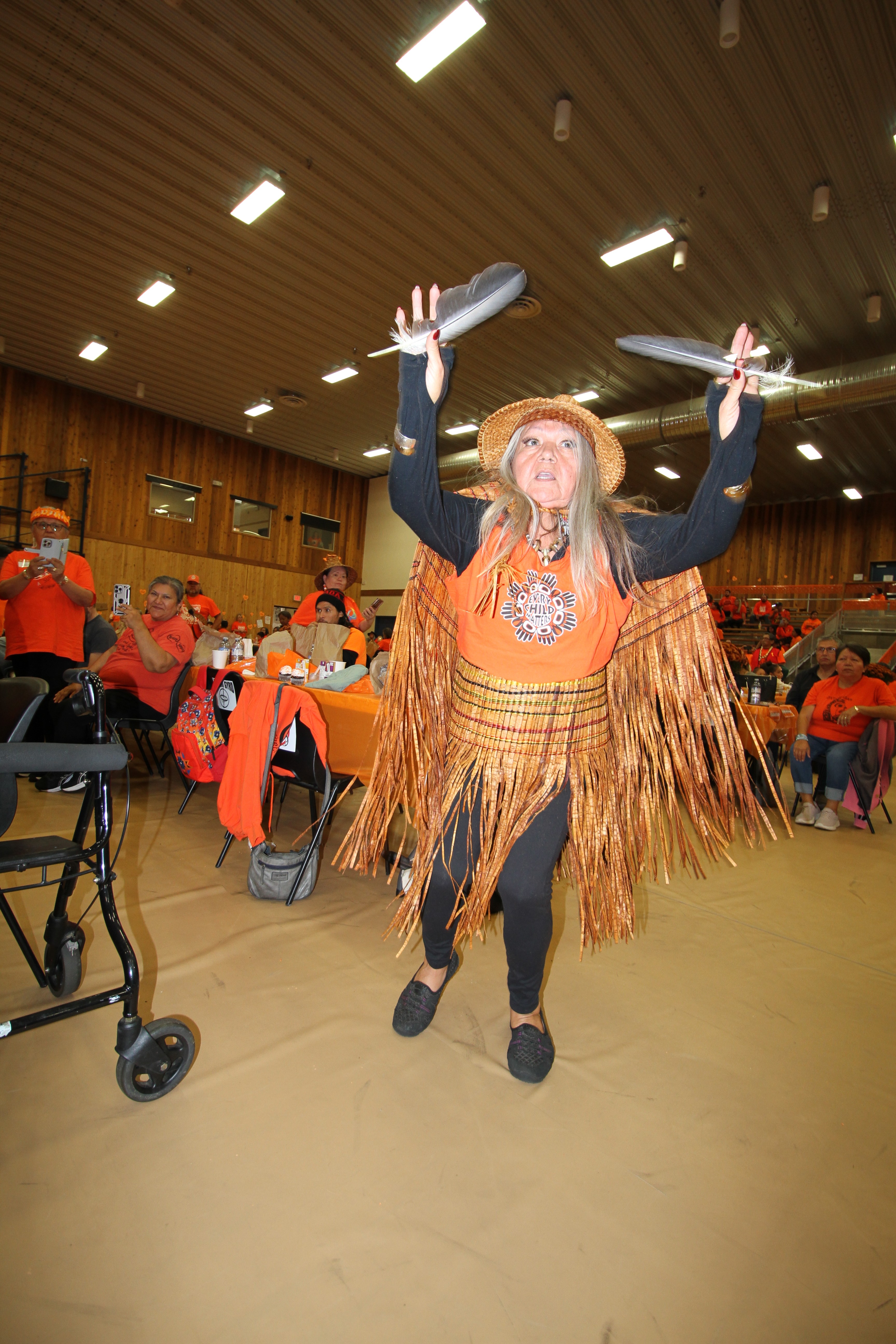
Nearly 60 years later, about 1,000 people flooded Port Alberni’s streets in recognition of the injustice faced by the Keitlah sisters, as well as thousands of other First Nations children across Canada who were mandated by the federal government to live in residential schools. Sept. 30 marks Orange Shirt Day, now known coast to coast as the National Day for Truth and Reconciliation.
Port Alberni has carried a particularly painful legacy from its residential school, which stood on Tseshaht territory by the Somass River in various forms from 1893-1973. The event this year brought an announcement from the Tseshaht First Nation that the Caldwell Hall building will be demolished in March 2027, with committed funding from the federal government. This includes a gathering that will enable former students from the institution to witness and possibly even participate in the teardown.
“The whole project is over half a million, but that also includes the event cost,” said Tseshaht Chief Councillor Ken Watts. “Our priority is to make sure we secure some type of funding to help survivors come.”
The demolition of Caldwell Hall - and the federal government’s commitment to fund it – was originally announced during Orange Shirt Day in 2023, but plans to remove the building got put off. Last April Tseshaht was declined the federal go ahead, but as the year progressed this turned around and the First Nation’s plans were approved.
“I think they were worried they didn’t budget for this year, but they found funds internally somewhere,” said Watts of Ottawa’s change of plans to back the Caldwell Hall demolition. “Part of the problem with this building is that it’s just full of asbestos and lead.”
With the building’s demolition another memorial piece is being designed by Tseshaht artist Connie Watts, who made a sculpture about the residential school that currently stands on the former site. Fundraising is underway for the new piece, which would carry the names of people who attended AIRS over its years of operation.
Judith Sayers’ mother was one of those students. She said that for many Caldwell Hall remains as a “symbol” of the pain left by the institution.
“My mother went, she never recovered to be a full person because of the trauma she faced,” she said.
Sayers, who is president of the Nuu-chah-nulth Tribal Council, sees that the painful legacy of the residential school system continues to impact the children and grandchildren of those who attended through the current drug crisis
“We just try to deal with it, provide services to people to deal with the trauma through counselling, land-based healing,” she said. “We’ll never get over it…but we just have to deal with it, use our hearts and minds and souls, culture, our strength as a people to deal with this and all of the other colonial effects that we’ve had.”
“I know it was there I learned shame, I learned I was good for nothing, I learned that I was stupid,” reflected Agnes Keitlah. “Those words never came to me until I was there. I had to ask someone what that meant. I didn’t fully understand everything, and all I did was cry every night.”
With her own grandchildren Agnes has had to reverse what was instilled in her.
“At the beginning of my healing it took everything inside of me to be able to accept that other people don’t deserve my trauma – especially my children and my grandchildren,” she said. “Now I have to turn that around and incorporate being a grandparent to tell my grandchildren, ‘Oh, you’re doing a good job. Oh, I’m so proud of you.’ Words that I never heard as a child.”
Over the years those impacted by the residential school system have seen a transformation in Canadian society, beyond the days when Agnes was asked to sit in the back of a public bus. The sea of orange that floods Port Alberni each Sept. 30 serves as a reassurance of this progress.
“We know that today we are part of the fabric of Port Alberni,” said Sayers. “Of course, there is still some racism, but for the most part cooperation between the First Nations, the city and B.C. has changed so much.”
“A huge percentage of our walkers are non-Indigenous people who are standing shoulder to shoulder with us,” added Watts. “There’s more people who support us than don’t.”
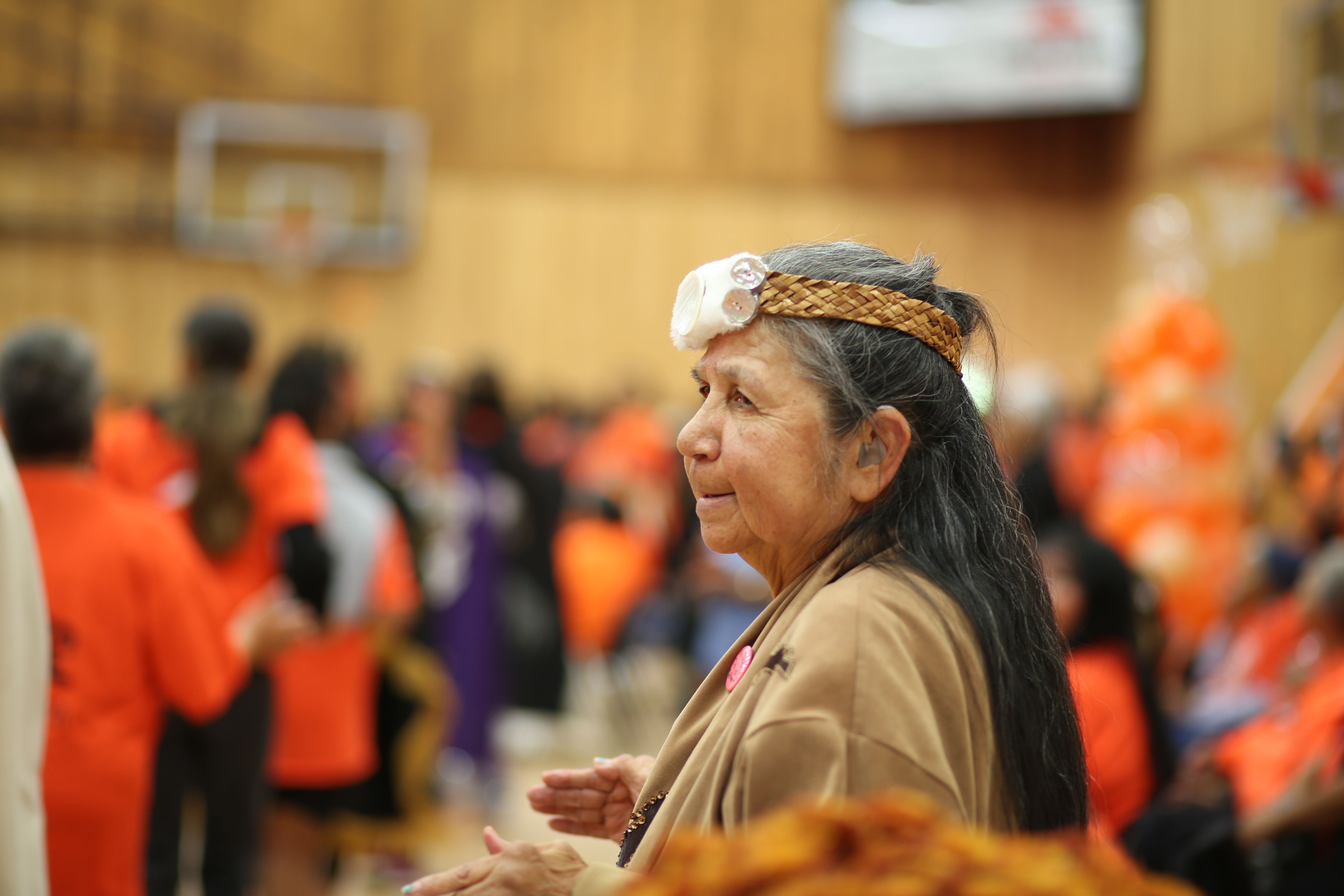
Once Caldwell Hall is torn down, the Maht Mahs gymnasium will be the only remaining structure from the Alberni Indian Residential School. Tseshaht members have voted to demolish Maht Mahs as well, but the gym remains a hub of activity for Nuu-chah-nulth-aht as a regular venue for basketball tournaments, community gatherings, funerals and even potlatches.
Meanwhile Tseshaht is moving ahead with plans to build another gym, elsewhere on its main reserve, with some federal funding committed to help with part of this development. The First Nation is working on designs for a large facility to be built on a five-acre lot between its cultural centre and youth centre.
Watts expects that construction will begin in 2027 on a building similar in size to the existing Alberni Athletic Hall.
“It’s going to be large enough to have two full basketball games,” he said. “It’s not just for Tseshaht; it’s going to help out the region, broader Port Alberni.”
These plans aren’t being made for the former AIRS site, as it sits too close to a Tsunami inundation zone. But for the time being, Maht Mahs will remain in use.
“The current Maht Mahs will stay up until Canada is ready to pay for that teardown too,” said Watts.