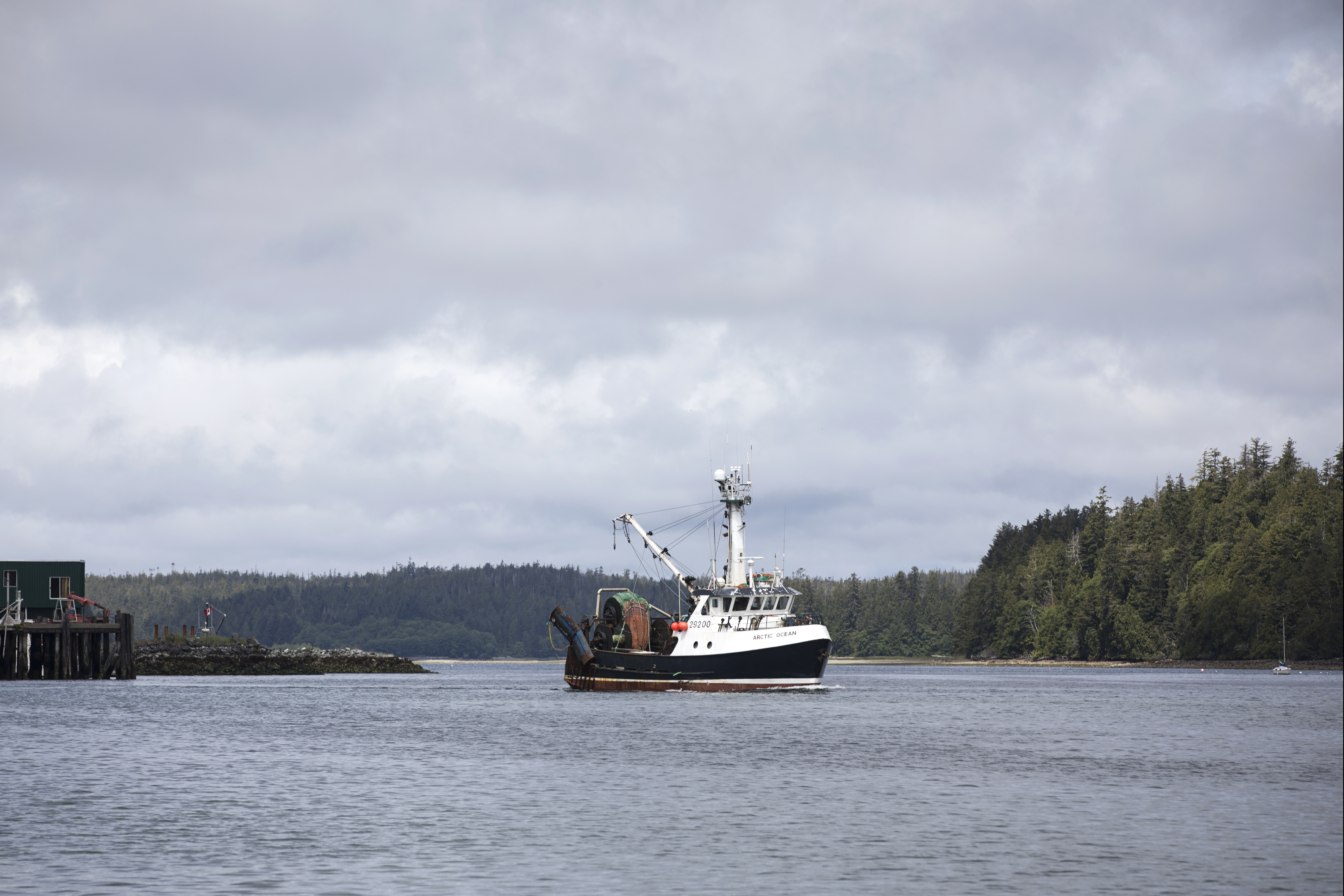
To protect threatened salmon stocks destined for the Fraser River, DFO has announced a widespread chinook closure west of Vancouver Island – but the restriction has sparked opposition from First Nations that underwent years of court battles to fish commercially.
As of June 5, chinook harvesting is prohibited by Fisheries and Oceans Canada for the offshore region stretching from south of Nitinaht Narrows to the northern tip of Vancouver Island. Effective one nautical mile from the surf line, this restriction applies to commercial and recreational fishing, as well as the rights-based T’aaq-wiihak harvesting undertaken by the Ahousaht, Hesquiaht, Tla-o-qui-aht, Mowachaht/Muchalaht and Ehattesaht/Chinehkint. Some chinook retention for First Nations food, social and ceremonial purposes is still permitted by DFO, as is fishing by Maa-nulth treaty nations for domestic use.
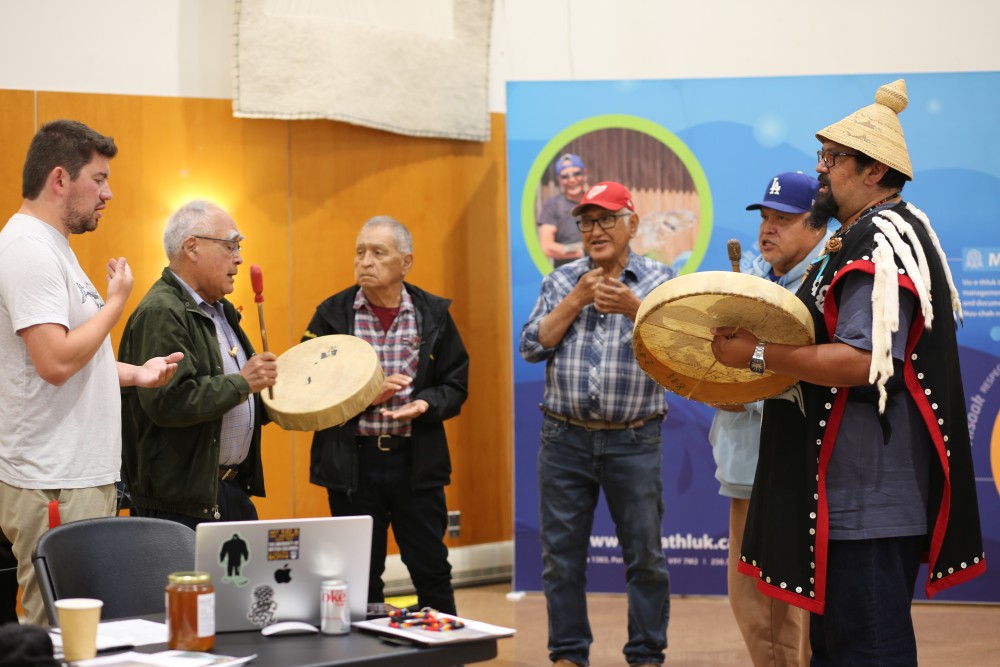
Restrictions were introduced for some areas before June, as Ahousaht fisherman Andy Webster reported during a Council of Ha’wiih Nuu-chah-nulth Forum on Fisheries meeting on June 3.
“It was as recent as last week when our fishers were being harassed offshore,” said Webster. “They were given the message, because you’re over one mile, you cannot sell. The fish you’re bringing in will be considered food, social and ceremonial. That’s what they were told.”
These measures were introduced to protect three different stocks of chinook salmon that are migrating offshore west of Vancouver Island to the Fraser River.
“These stocks are recommended for listing as endangered, special concern or threatened by the Committee on the Status of Endangered Wildlife in Canada,” wrote DFO in an email to Ha-Shilth-Sa. “Areas inside one nautical mile seaward of the surf line are open, as these areas do not typically have significant encounters for Fraser River chinook stocks of concern that migrate in the offshore areas back to the Fraser River.”
It remains to be seen when these chinook restrictions will be eased.
“As these are interim measures, a further announcement on possible revised management actions will be announced in a subsequent fishery notice,” stated DFO in a notice for the recreational catch.
While keeping the chinook salmon is prohibited, recreational fishers can still practice non-retention, which is catching the fish and releasing them from their hooks. A mortality rate of 20 per cent is expected from this practice, some of which will be Fraser chinook, according to Uu-a-thluk, the Nuu-chah-nulth Tribal Council’s fisheries department.
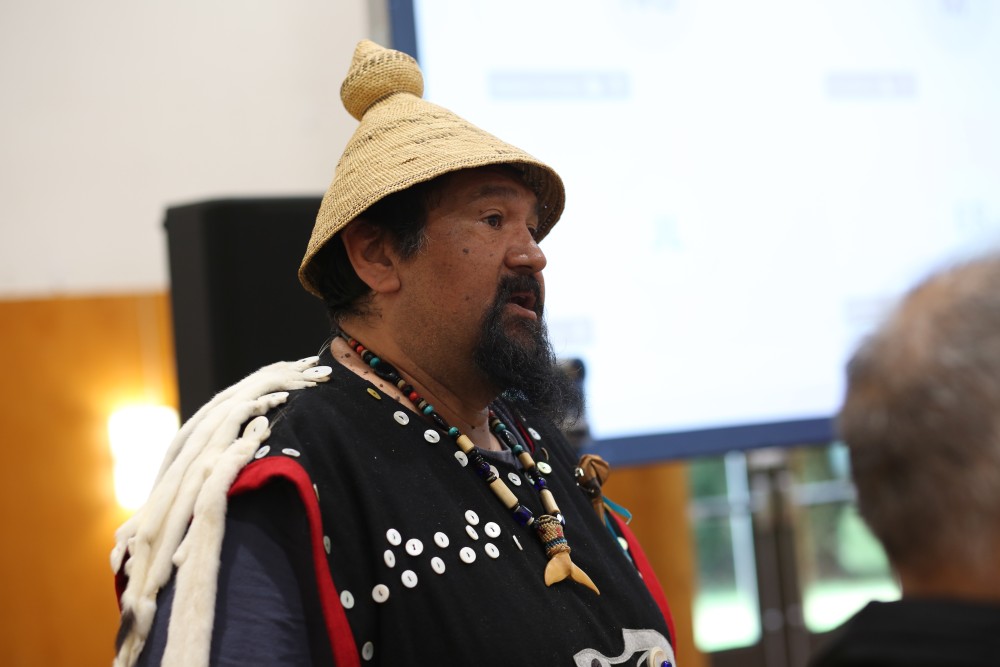
These restrictions were vigorously criticized during the recent Council of Ha’wiih forum, and Ahousaht Acting Tyee Ha’wilth Hasheukumiss even authorized his fishers to go beyond the one-mile limit. He said the restrictions show DFO’s refusal to recognise Ahousaht’s jurisdiction over its territorial waters.
“I don’t ask permission from DFO to do what I’m doing in my backyard for management,” said Hasheukumiss. “Going forward, it’s just up to us to do it our way.”
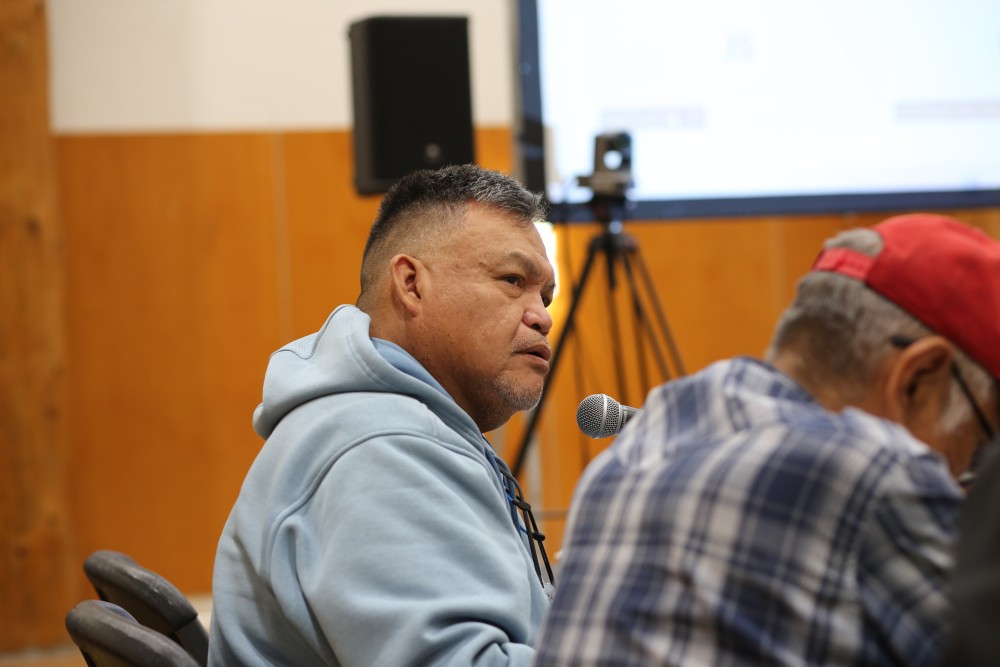
“We don’t want to be oppressed by your policies and guidelines,” said Ahousaht representative Kiista to DFO representatives during the meeting. “We will no longer accept the harassment that our fishers have gone through over the years, and last week.”
DFO said that its officers will continue patrolling to enforce the chinook restrictions, using their boats and aircraft and even in partnership with the Canadian Coast Guard.
“Fisheries officers use their discretion to employ a range of responses to instances of non-compliance,” wrote DFO, adding that these can entail “education, penalties” or other actions.
The rights-based T’aaq-wiihak Fisheries are the outcome of a court battle that spanned several years. Commonly known as the Ahousaht et al. case, the litigation dates back to 2003, when Nuu-chah-nulth nations filed a writ of summons against Canada and the province of B.C. for not honouring their Aboriginal fishing rights. This eventually led to a 2009 B.C. Supreme Court ruling that the Ahousaht, Hesquiaht, Tla-o-qui-aht, Mowachaht/Muchalaht and Ehattesaht/Chinehkint have the right to harvest and sell fish from their respective territories.
The federal government unsuccessfully challenged this ruling several times, until the B.C. Court of Appeal determined in 2021 that the five nations have the right to “a non-exclusive, multi-species, limited commercial fishery aimed at wide community participation, to be conducted in their court-defined area for fishing, which extends nine nautical miles offshore.”
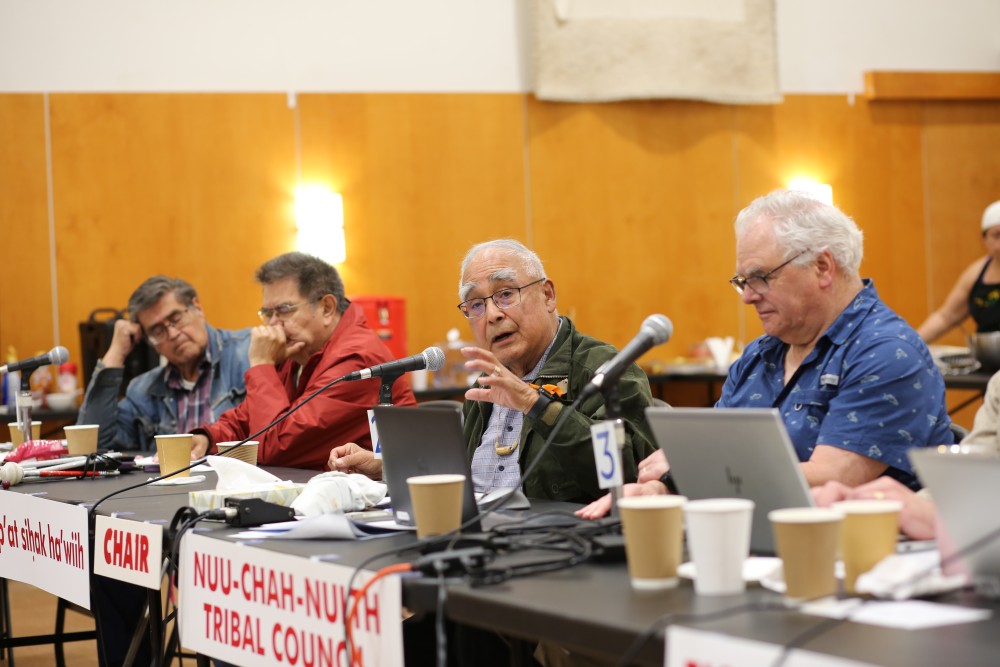
“We have a small fishery that we won,” said Council of Ha’wiih Chair Cliff Atleo during the meeting in early June. “It’s very frustrating for us.”
During the forum Tseshaht Councillor Les Sam mentioned that the Somass River fisheries are managed by a collective table that meets every week to determine harvest and escapement. With representatives from DFO, the commercial fleets, the recreation fishery, Maa-nulth nations as well as the local Tseshaht and Hupacasath, Sam sees the roundtable as significant progress from the conflict that marked the 1970s and 1980s on the Somass River.
“There were 256 charges against us when it finally came to a head,” said the Tseshaht representative.
“When we first started, I thought we would kill each other,” continued Sam about the Area 23 fisheries table. “We don’t always agree on everything - as a matter of fact sometimes we disagree - but we work through it to make it happen for us.”