
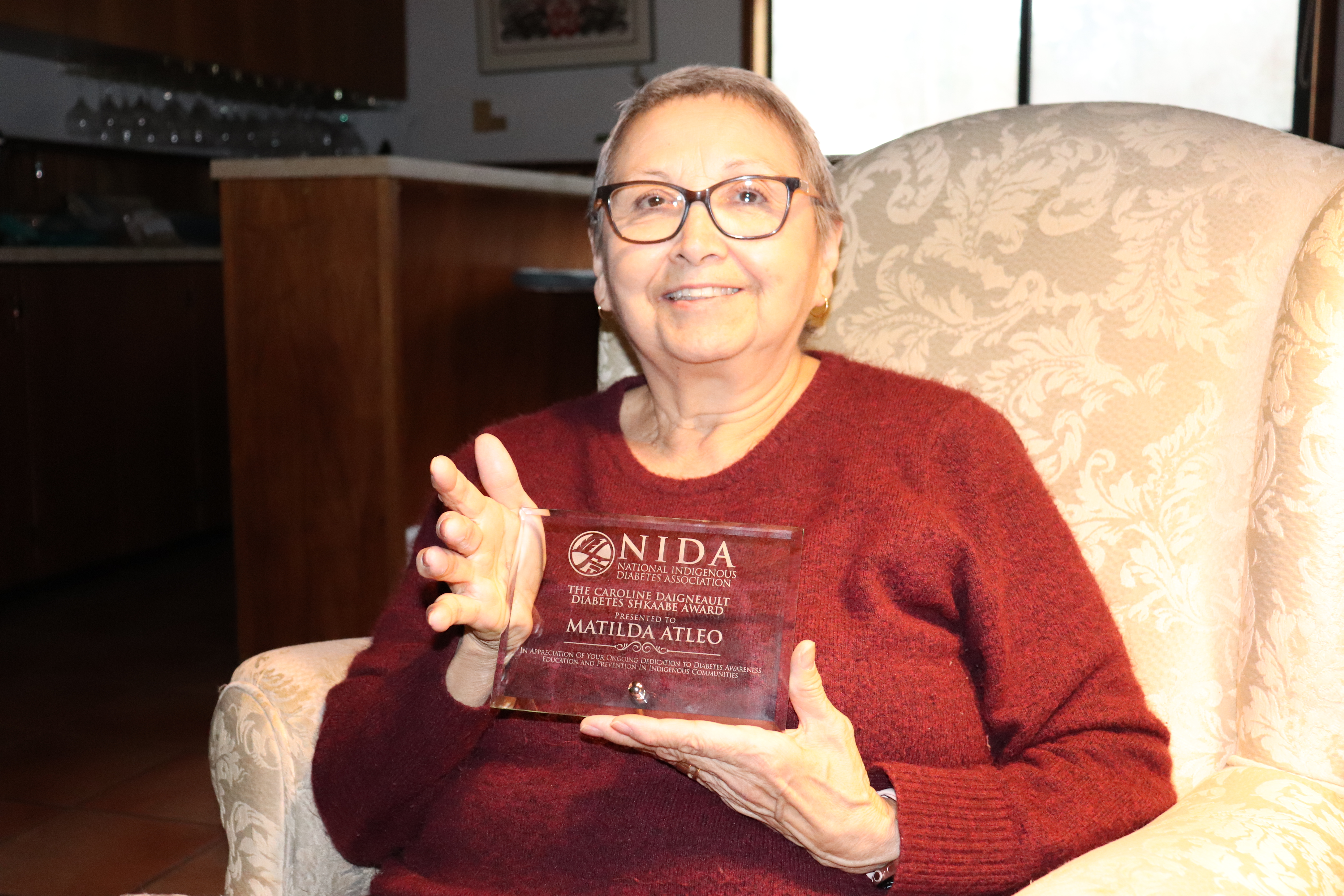
Matilda Atleo is passionate about helping people live longer. She has dedicated the past two decades teaching Indigenous people about the signs of diabetes and how they can keep themselves healthy.
Atleo’s determination to teach about health awareness started about 2005, following the sudden passing of her husband, Wameesh, George Watts. Wameesh was a hard working, nationally recognized leader who fought for the rights of Indigenous people and was instrumental in the launch of the Nuu-chah-nulth Tribal Council (formerly West Coast District Council).
On that spring day in 2005, Matilda remembered that they had been helping their son’s family move from one Nanaimo apartment to another and that George, a diabetic, was making frequent stops to restrooms.
“My late husband had diabetes and he was quite stubborn. He wasn’t going to listen to anyone,” she recalled.
He would tell everyone that he was taking medication, but he would do things his own way.
Matilda said that she asked to take him to the hospital, but he refused. On that final day, he had gone upstairs to use the restroom when he collapsed and died of a heart attack. He was only 59.
With the loss of her husband, and knowing that other family members had diabetes, Matilda decided she had to do something to raise awareness…to teach people how to prevent diabetes, or, if they have diabetes, how to live with it or even reverse it.
Atleo also believes that anyone with a family member diagnosed with diabetes should learn about it.
“They can be supportive if they know about it, they can know what the risk factors are,” Atleo said.
And so, Atleo spent many years working at the Nuu-chah-nulth Tribal Council and at the First Nations Health Authority teaching people about the dangers of white sugar, maintain a healthy diet and monitoring glucose numbers. She made presentations in communities and taught people about diabetes, nutrition and resource awareness. Her work included both diabetes and kidney checks and she also arranged health screenings at public events.
“I loved doing the random screenings,” she shared.
She developed lasting relationships with people living with diabetes over the years and she likes to check in on them.
“I ask them how are you doing. It’s important to take the time to listen to their stories. You can learn a lot from listening. Then they don’t feel alone,” Atleo said.
It is important to keep people with diabetes engaged, says Atleo, because health outcomes can be severe when symptoms are overlooked.
“It can be hard to get information out to the people that need it,” she said, adding that health is not a priority when it’s a struggle just to survive.
A simple cut on a toe can get infected and lead to amputation for a diabetic.
“When people start losing their limbs to diabetes, it starts at the bottom and goes up, from toes to feet to lower legs,” said Atleo.
For her years of dedication to healthcare education, the National Indigenous Diabetes Association presented Atleo with the 2026 Caroline Daigneault Diabetes Shkaabe Award in late November at a ceremony held in Vancouver.
The National Indigenous Diabetes Association (NIDA) established the award in 2020 to honour the memory of their late board director, Caroline Daigneault, who passed away in April 2020.
Born and raised in Fishing Lake First Nation in Saskatchewan, Daigneault was a retired social worker who dedicated many years to the health and social sectors, including diabetes.
“Caroline joined NIDA's Board of Directors in 2018 and generously shared her knowledge and wisdom with respect, love and kindness,” said Céleste Thériault, NIDA executive director. “She volunteered her time within her community, bringing Elders and community members together to share their experiences with diabetes and support one another on their respective wellness journeys.”
The annual award recognizes individuals or community groups leading diabetes prevention, education, and management for Indigenous Peoples.
According to Thériault, Matilda Atleo was selected as the 2024 Caroline Daigneault Diabetes Shkaabe Award recipient at their annual general assembly in November 2025.
“As an organization, we place great importance on honouring our recipients in person whenever possible. Due to personal circumstances that affected Matilda's ability to travel, we were unable to formally present her with the award at an earlier date,” said Thériault, noting that this is why the award wasn’t presented until Matilda was able to attend on Nov. 20, 2026.
A nation-wide award, Matilda Atleo is the first to bring the Caroline Daigneault Diabetes Shkaabe Award to the province of British Columbia.
Atleo says it felt very good to win the award, but she can’t take all of the credit.
“It wasn’t me alone, it was a team of people that arranged gatherings, nurses that provided screenings,” she said. “This award is a thank you to them, too.”
Now, at age 70 Atleo is retired, but she says she misses work and still checks in on some of her people whot live with diabetes, asking them to check their numbers. She still does what she can to support health care work by making toques and washcloths for prizes or gifts.
A surprise diagnosis
Living next to the Somass River in the home she built with George, she can sit in a warm easy chair overlooking the river as she works on her crafts. Atleo gazes out at the sandbags and, with another late November rainstorm in the forecast, worries that the river will rise past the sandbags. But if that happens, Atleo will have support.
While she’s been busy helping other people, Matilda is now facing her own health challenge. Earlier this year, Atleo received concerning news from her doctor.
Following the Port Alberni wildfires of 2025, Atleo developed a persistent cough. At first, the cough was attributed to an infection, and she was prescribed puffers and antibiotics.
Further testing in the spring of 2026 revealed that Atleo had lung cancer. She was never a smoker, so the diagnosis was unexpected. But she soldiered through with surgery that removed a portion of her lung. She continues with therapy and a positive attitude.
Atleo says she feels okay, though she wishes she could do more. With recovery comes fatigue, but her family helps to support her. They help with house cleaning and yard work.
Rather than focus her own cancer, Atleo wants people to know that they should learn about their cancer risk. She has learned that the Canadian Cancer Society now recommends that women over the age of 40 should be screened for breast cancer.
To be more specific, those (women, trans, non-binary and gender diverse people age 40-74) with average risk of breast cancer should have a screening mammogram every two years as recommended by the Canadian Cancer Society.
For Matilda, knowledge is power and it is important to know about your body and health if you want to live a long, happy life.
“As a grandmother, I like to remind people that they want to stay healthy, long enough to enjoy grandchildren. I just love seeing my grandchildren. They light up my life,” said Atleo.


