A recent study of British Columbia Chinook salmon found that the species’ food chain varies by location and season.
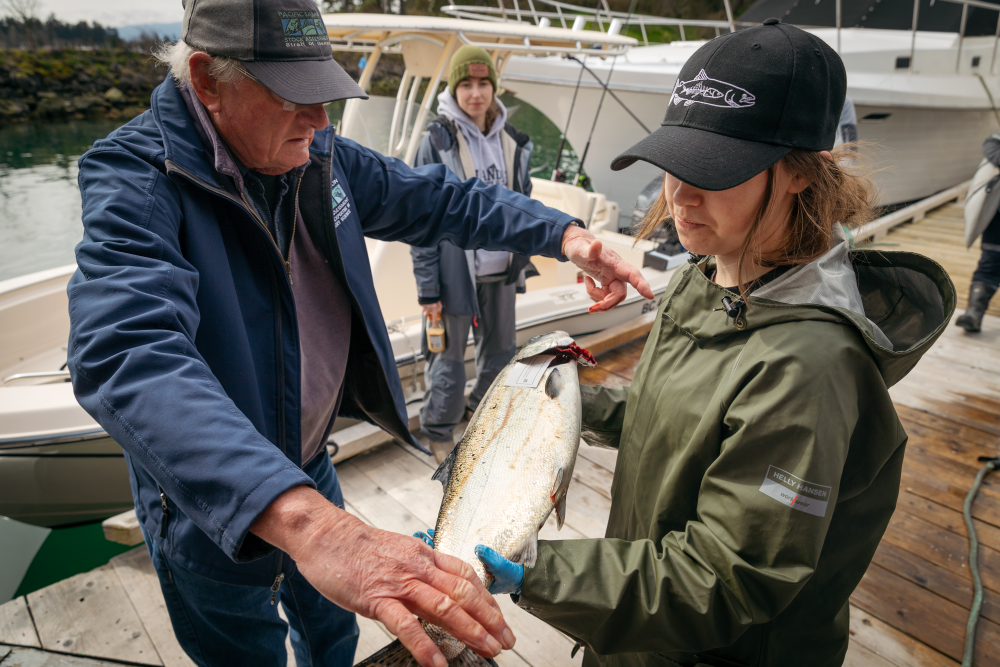
The study, led by PhD student Wesley Greentree in partnership with the Pacific Salmon Foundation, analyzed thousands of salmon stomachs collected by recreational anglers as part of the Adult Salmon Diet Program. The findings, recently published in Fisheries Oceanography, show that salmon diets are closely linked to location and seasonal change.
“Chinook salmon are not picky eaters. What you see in their diet tends to reflect what is in the water when they are feeding,” said Greentree.
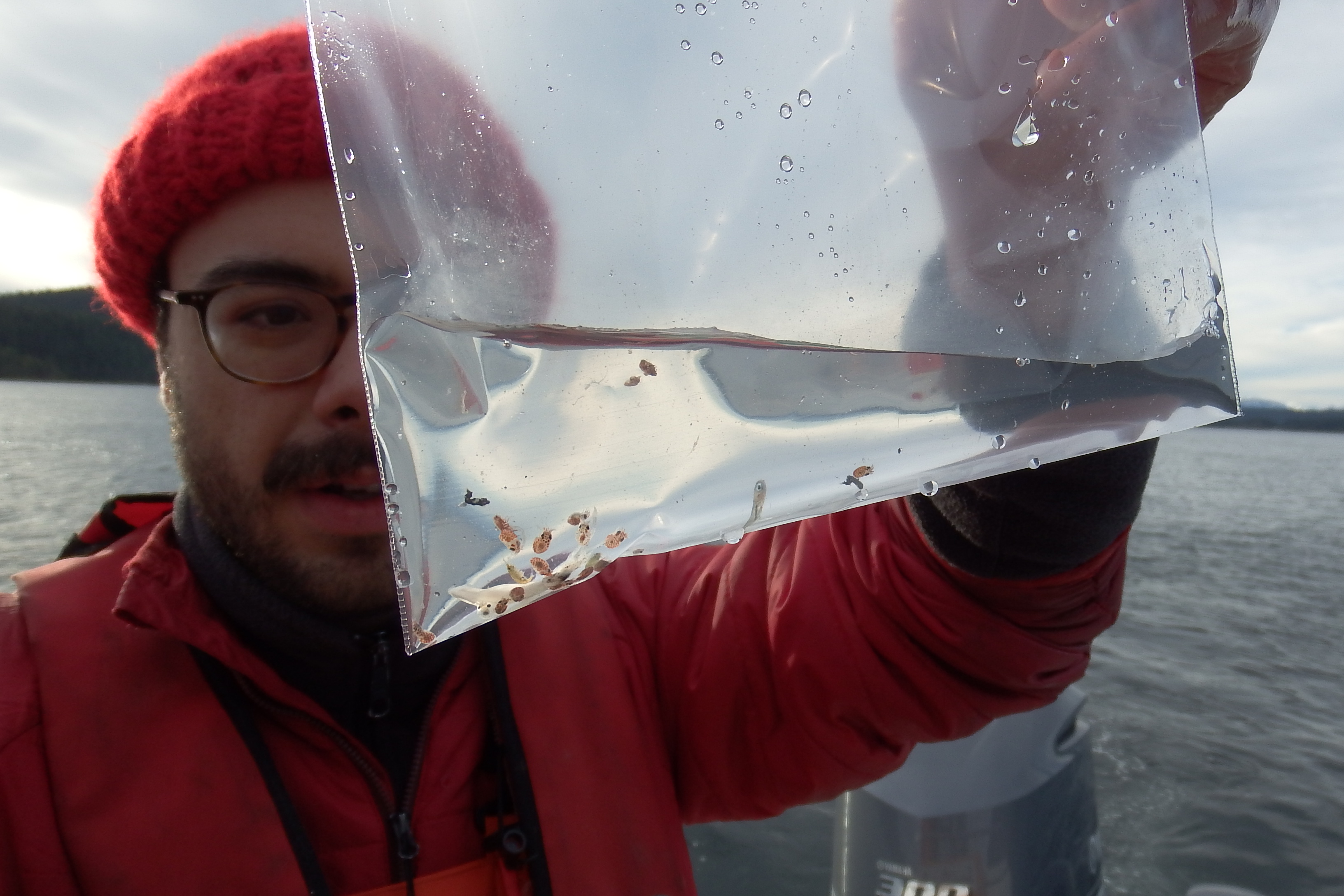
Greentree and his team found that Pacific herring remain the most important food source for adult Chinook salmon throughout the year. However, other prey species varied according to location. Anchovies were often found in stomach samples from Howe Sound, while sand lance appeared more frequently in salmon caught around Victoria and Sidney.
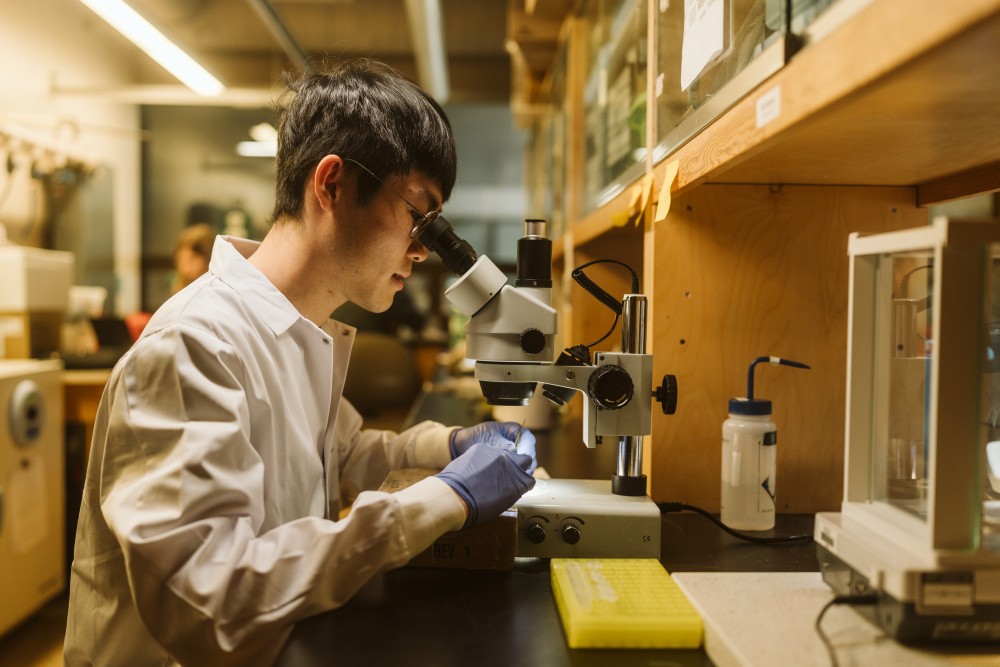
Typically, researchers analyze salmon stomachs to identify prey diversity. However, when the contents were too indistinct to identify, the study team developed a catalogue of fish bones to determine the prey species.
“We can identify the fish and other prey that are in the stomachs that are not digested easily,” said Greentree. “We can pull out these specific bones that we know and get a better understanding of all these prey that otherwise we just have to say we don’t know what they are.”
The study also found that Chinook salmon consume a greater diversity of prey in winter than in summer. Crustaceans became a constant food source in winter diets in the Sooke areas, while lanternfish appeared more frequently in salmon diets in Campbell River and Victoria.
According to Greentree, the fish prey identified in the study corresponded with major oceanographic features in the Salish Sea. The team suspects freshwater inputs from the Fraser and Squamish rivers may help support anchovies in the Strait of Georgia, while tidal activity near Campbell River and Victoria pulls lanternfish within reach of salmon.
An unexpected observation during the study was multiple instances of lantern fish in the stomach contents, as they are deep-sea species that would normally be out of range for salmon to consume.
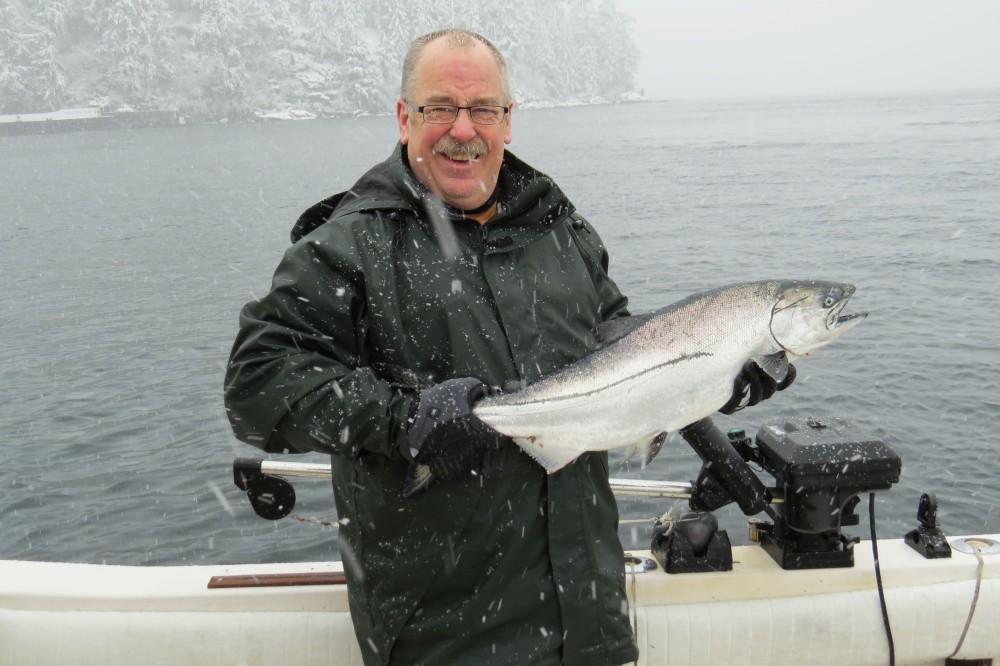
“If you look at the samples that I turn in, about 30 per cent of the Chinook have lantern fish in them, which is a far higher composition than elsewhere in the Strait of Georgia from people fishing out of Nanaimo or Victoria,” said Jeremy Maynard, a fishing guide from Campbell River and volunteer for the Adult Salmon Diet Program.
Greentree thinks the tides might have pulled deep-sea creatures like the lantern fish into a place where salmon could see and eat them during the day, explaining their sudden presence in the salmon diet.
Traditional surveys of salmon prey can be expensive and difficult to conduct at scale, but the angler-based sampling approach allowed Greentree to conduct an extensive, cost-effective study of salmon diets across different areas and seasons.
“One of the goals of our projects is to use salmon’s stomachs as an early detection system for changes in the ocean,” said Greentree. “[We intend] to keep this project going as long as we can, so if a new type of prey fish enters British Columbia from the south, we will detect it in the salmon’s stomachs.”
The Adult Salmon Diet Program, a community science initiative led by UVic biologist and Liber Ero Chair for Fisheries Research Francis Juanes and Pacific Salmon Foundation (PSF) biologist Will Duguid, originated from the Avid Anglers Program, a group of fishers that collected DNA samples for scientific study.
PSF biologist Will Duguid got the idea of asking local anglers to send the contents of salmon stomachs to researchers for analysis of diet consistency, with the goal of studying seasonal and interannual variations.
Since 2017, more than 250 recreational anglers in the Salish Sea, from eastern and southern Vancouver Island to the central coast and Haida Gwaii, have submitted the guts of their catches, with researchers analyzing up to 7,600 salmon stomachs to date.
“I’m very interested in all these things we’ve seen [with] the whole ecosystem change in the time I’ve been guiding,” said Rick Hackinen, a local fishing guide in Campbell River and a long-time volunteer to the program. “Perhaps [the study] can be used to help know some things for salmon management or for ecological decisions.”
Greentree said the research had been a baseline to answer the question of whether salmon diets will shift in the future with further studies.
Master students at UVic will continue the project by collecting more salmon stomachs for sampling, aiming to expand their collaboration and build more partnerships with others interested in understanding what salmon are eating.
“Pacheedaht anglers in Port Renfrew have collected stomachs for us and those have been really valuable, because we weren’t getting samples from [that area] and it’s really important [to know] what salmon are eating in Port Renfrew,” said Greentree.
Anglers interested in participating in the Adult Salmon Diet Program can email info@raincoasteducationsociety.org for more information.
“This type of project is only possible with a lot of support and dedication by all of the anglers, as well as other organizations,” said Greentree. “We’re really thankful for all the work that these people have put in. We’re keen to continue to work with our existing scientists and anglers, but also with new people who want to join and learn more about what salmon are eating with us.”
The Adult Salmon Diet Program is funded by the Pacific Salmon Foundation with the support of Fisheries and Oceans Canada, Project Watershed, and World Wildlife Fund Canada.