
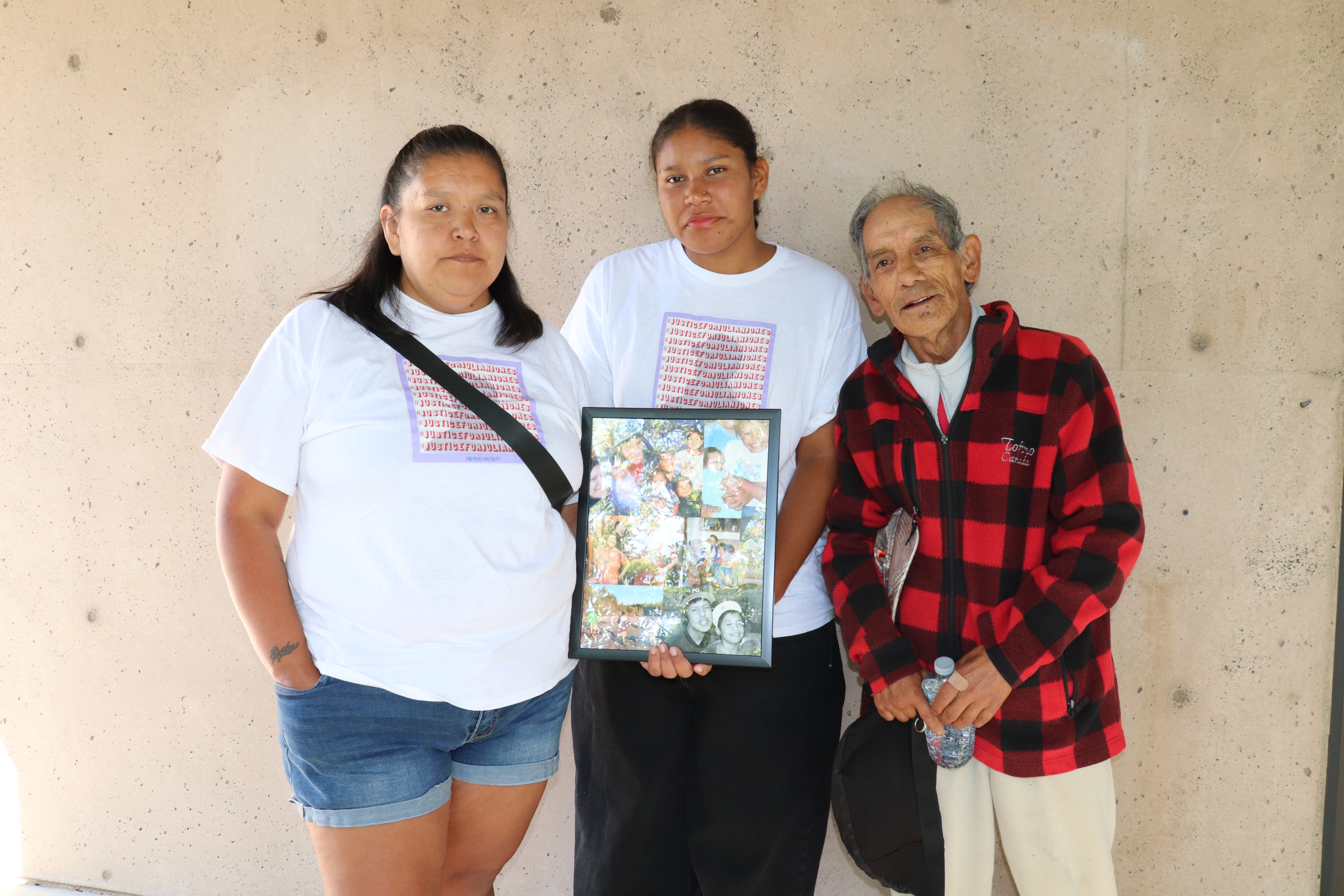
A BC Coroner’s Inquest into the death of Julian Jones in February 2021 is now underway at Port Alberni Law Courts.
Jones, a 28-year-old Tla-o-qui-aht member, was shot and killed by an RCMP police officer following an altercation at a private home on the Opitsaht reserve on February 27, 2021.
The incident started with a 911 call from a female alleging she had been sexually assaulted and was being held against her will at a private home on the Tla-o-qui-aht reserve on Meares Island, Opitsaht.
It was during the COVID-19 pandemic, at about 9:30 p.m. when two RCMP officers from the Tofino detachment responded to perform a wellness check at the home. Located across the inlet from Tofino, a boat trip from Tofino to Opitsaht takes about five minutes in good weather, according to RCMP Const. Daniel MacIntosh, who was there that night.
Once at the house, officers arrested one male before being confronted by Jones, according to investigative reports. The report goes on to say that Mr. Jones advanced on the officers with two objects in hand. He fell to the floor after an officer deployed a taser. When Jones stood up and advanced on officers, he was shot and killed by one of the RCMP officers. It wasn’t until after Mr. Jones was shot the officers discovered that the objects Jones had in his hands were metal sharpening files.
The police-involved shooting death immediately triggered a Coroner’s Inquest. Under Section 18(2) of the Coroners Act, inquests are mandatory for any deaths that occur while a person was detained by or in the custody of a peace officer.
It also launched an IIO (Independent Investigations Office) investigation which concluded in November 2022. The IIO, a civilian-led oversight agency, was on the scene the following day to begin their year-long investigation.
To the dismay of the family and Tla-o-qui-aht community, the IIO cleared the police officers of wrongdoing in death of Julian Jones.
The BC Coroner’s inquest into the death of Julian Jones is not an adversarial, fault-finding inquiry. The inquest allows the seven-member jury to learn about Mr. Jones and the facts surrounding his death. After hearing witnesses, the jury will make recommendations aimed at preventing deaths in similar circumstances.
The first person on the witness stand was Mr. Jones’ sister, Laura Manson, who was not a witness to the incident, but was there to tell the jurors about her brother and his life. Carrying a photo collage of her brother, Ms. Manson told the court that her brother was a human being, was known in the community and was loved. “He was kind, loving and never held a grudge…sure, he’d get mad but by morning it was water under the bridge,” she told the court.
The next witness, Dr. Luke Williston, spoke about the challenges Julian Jones faced in life. From a young age, Julian Jones showed evidence of FASD, Fetal Alcohol Spectrum Disorder, a lifelong disability caused by alcohol exposure in the womb.
His behaviour was described by Williston as impulsive, at times aggressive. There were complaints at the school about sexually inappropriate behaviours. Williston noted that Jones suffered a head injury as a small child when he fell off a bike. He had not been wearing a helmet.
Sometime prior to 2003, Mr. Jones was formally diagnosed with FASD and received treatment in Victoria for his psychiatric issues. He was then followed by a pediatrician. Williston testified that Jones was prescribed medication that they hoped would help with attention, focus and disruptive behavior at school.
Mr. Jones was in and out of foster care and continued to have difficulty. Williston said he was known to be erratic, showed poor judgment, impulsive, and wasn’t able to understand consequences. Williston noted that adding alcohol makes these behaviours worse.
Williston said his impression of Jones is, “he was a young man with substance use disorder.” He went on to say that he sees quite a bit of that.
“He was surrounded by it, he has a reduced capacity to say no,” he added.
Probation Officer David Paruk told the court that Mr. Jones was very decent, friendly and open. But his ability to understand consequences was very limited. In addition, his IQ was in the very low 50s. Paruk said an IQ below 70 is considered significant.
“Julian had severe deficits,” said an emotional Paruk.
The court then heard emotional testimony from the woman that called 911 for help. They heard a recording of the 911 call in which she said she had been sexually taken advantage of. She named the brothers and reported that they would not let her leave the house. The woman said she was in another room, with the door closed, when she heard the shots.
The following day the court heard from Const. Daniel MacIntosh, who spoke at length and in detail about what happened that Feb. 27 evening. He noted that it was dark, foggy and tides were running for the boat ride to Opitsaht.
Approaching the house, he recalled that there were no lights on outside or inside the main living areas. The officers used their flashlights as they made their way to the front door.
MacIntosh said that he knew the brothers from other incidents. Mr. Jones, known by the police and others as J.J., was known to be initially combative when confronted, according to MacIntosh. He would make threats but then he’d calm down and become polite, according to MacIntosh.
The court heard that Const. David Robichaud fired the fatal shots but that he would not be providing a statement at the inquest. Robichaud, the court heard, has retired from the police force and resides outside of British Columbia, therefore, cannot be compelled to make an appearance at the BC Coroner’s Service Inquest.
Const. Robichaud was cleared of criminal responsibility for the death of Julian Jones by the IIO in 2022.
Const. MacIntosh’s testimony continued for the remainder of day two.
A coroner’s inquiry seeks to ensure public confidence that the circumstances surrounding the death of an individual will not be overlooked, concealed or ignored.
The inquest is scheduled for six days beginning August 18 and concluding August 26. Witnesses include family members, doctors, police officers and emergency services workers. The presiding coroner is Larry Marzinzik.
There were members from Mr. Jones’ family in attendance on the first day accompanied by supporters. Jones’ mother, Carol Manson, passed away in 2025. She is on the witness list. The court heard that her statement will be read into the record.
The BC Coroners Service is livestreaming the inquest. To join the livestream, go to the BC Coroners Service website and follow the instructions.
https://www2.gov.bc.ca/gov/content/life-events/death/coroners-service/i…


