
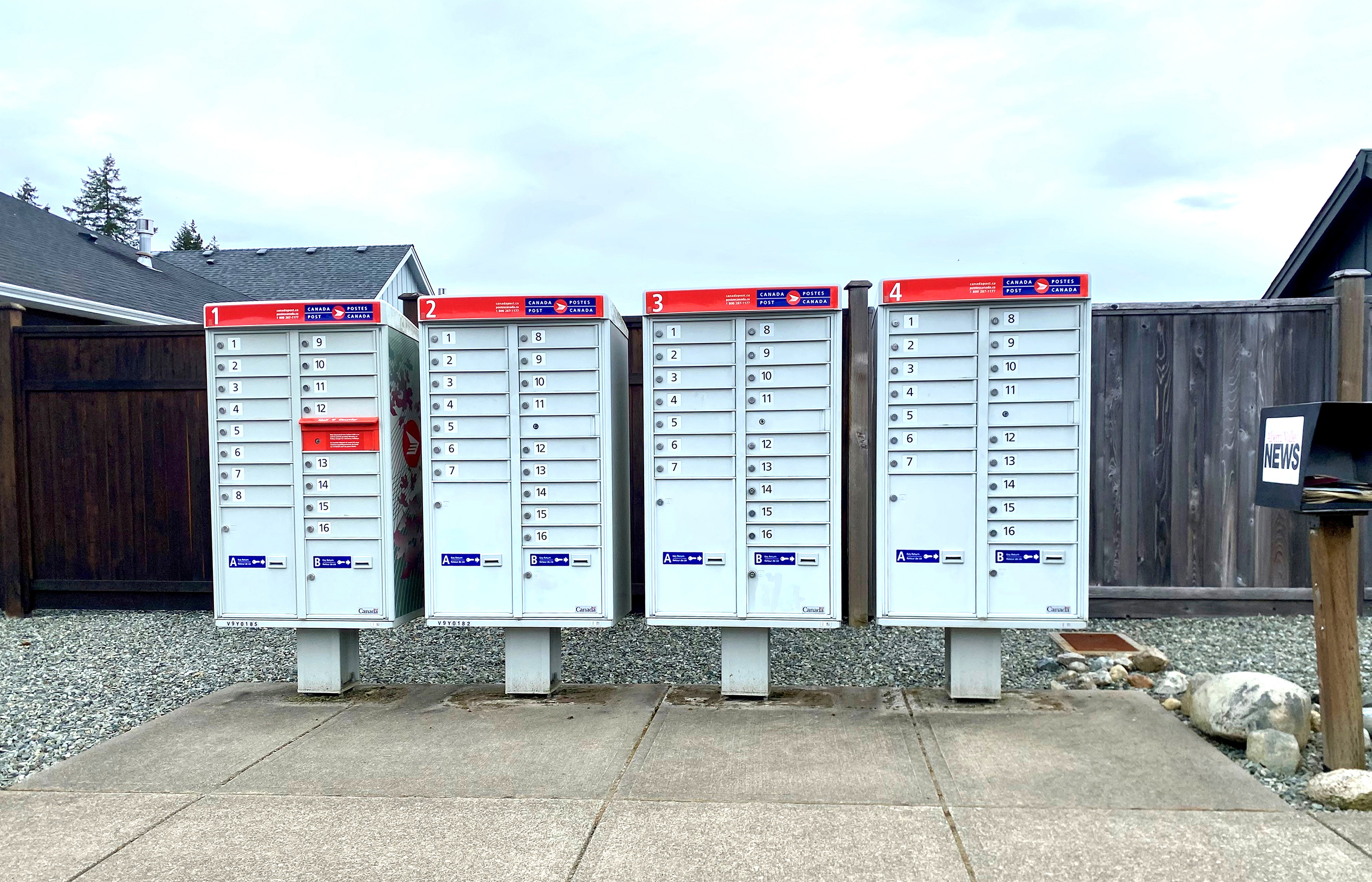
The future of mail delivery across the country is changing now that Canada Post has announced it is ending door-to-door mail delivery. The corporation is facing major debt issues and drastically lower letter volumes.
The announcement to end door-to-door delivery came last fall from Joël Lightbound, minister of Government Transformation, Public Works and Procurement.
A statement from the government of Canada says that, since 2018, Canada Post has accumulated more than $5 billion in losses. In 2024 alone it lost more than $1 billion, and in September 2025 it was on track to lose close to $1.5 billion by the end of that year.
Earlier in 2025, the federal government provided a $1-billion injection to keep the corporation operational. In the second quarter of 2025 Canada Post posted its worst quarterly results ever, losing $407 million. Today, the corporation is losing approximately $10 million every day.
“This situation is unsustainable,” Lightbound said in the statement. “Canada Post is effectively insolvent, and repeated bailouts are not a long-term solution. Transformation is required to ensure the survival of Canada Post and protect the services Canadians rely on.”
Twenty years ago, Canada Post delivered 5.5 billion letters annually. Today, it delivers 2 billion, even as the number of households has grown, which means fewer letters are being delivered to more addresses.
According to the federal government’s statement, parcel volumes — which should have been Canada Post’s growth opportunity — have declined. In 2019, Canada Post delivered 62 per cent of parcels in Canada. Today, its market share has dropped below 24 per cent, with private competitors taking the lead.
“Structural challenges combined with outdated restrictions and stalled negotiations between labour and management, have further limited the corporation’s ability to adapt,” Lightbound said. “I am announcing today a series of measures to stabilize the corporation’s finances and enable its modernization.”
Announced measures include adjusting standards so that non-urgent mail can move by ground instead of air, which should save Canada Post more than $20 million per year. The switch to community mailboxes was also announced as a cost saving measure.
“Currently, three-quarters of Canadians already receive mail through community, apartment, or rural mailboxes, while one-quarter still receive door-to-door delivery. Canada Post will be authorized to convert the remaining 4 million addresses to community mailboxes, generating close to $400 million in annual savings,” Lightbound said.
In addition, the moratorium on rural post offices, in place since 1994, will also be lifted. The rural moratorium covers close to 4,000 locations. Areas that used to be rural may now be suburban or even urban but are still required to operate as rural post offices. Canada Post must return to the government with a plan to modernize and right-size its network.
“The government is also reviewing the process for increases to the stamp rate to modernize and shorten it,” Lightbound said. “Transforming an institution of this size will take time, but it is necessary to protect postal services for the future.”
In an email from Canada Post media relations, the corporation said they are currently consulting with their unions regarding transformation initiatives.
“We want to conclude those important initial discussions before we share more details publicly. We hope to be in a position to share further details publicly in the coming weeks,” said the Crown corporation.
An updated statement from Canada Post says the Government of Canada is lifting long-standing barriers to reform and directed the corporation to implement transformative changes to ensure they can meet evolving needs of Canadians - without becoming a recurring burden on taxpayers.
“We continue to work closely with the government on the details of our proposed transformation plan,” says the statement. “At the same time, given the government’s direction to begin taking initial steps, we are reaching out to our bargaining agents to consult on our approach to several proposed changes.”
The proposed changes include converting the remaining addresses that still receive delivery at the door to community mailboxes and modernizing the retail network.
“Once initial consultations with our bargaining agents are complete, we will begin engaging municipal officials and other key stakeholders,” says the statement. “We are also collaborating with the government on updates to our delivery standards for letter mail, which will require amendments to the Canadian Postal Service Charter.”
Canada Post said they will provide as much advance notice as possible of any changes coming into affect.